Vk.Com: совпадения лиц при поиске
VK (ВКонтакте) is one of the largest sources of public face data for Russian-speaking users, which makes it a recurring hit in reverse image searches involving people from Russia, Belarus, Ukraine, Kazakhstan, and the wider post-Soviet diaspora. When a face appears in FaceCheck.ID results with a vk.com URL, that match often carries more identifying context than a typical Western social profile, because VK profiles tend to expose real names, hometowns, schools, friend lists, and long photo histories.
Why VK profiles matter for face search
VK has been indexed by face-search engines for years because much of its content is public by default and easily crawled. A single VK profile often contains hundreds of photos uploaded over a decade, including tagged group shots, school photos, vacation albums, and reposts from communities. That density of facial data increases the chance that a query face matches a real person rather than a stock photo or AI generation.
Several traits make VK matches especially useful in identity work:
- Profile pages frequently display the user's full real name, birth year, city, and education history
- Photo albums are often unrestricted, including older images going back to teenage years
- Community memberships hint at interests, employer, military service, or political views
- Reposts and tags connect the subject to friends, family, and partners whose own profiles can be cross-checked
- Many users keep the same display photo for years, which helps confirm a match across time
Common investigation scenarios
VK results show up regularly in romance scam investigations. A face presented on Tinder, Hinge, or Instagram as an American or European professional sometimes traces back to a vk.com profile belonging to a real Russian or Ukrainian woman whose photos were stolen years ago. The original VK profile may still be active, with current posts that contradict the scammer's persona.
VK also surfaces in:
- Catfishing checks where the target's photos were lifted from a long-dormant VK album
- Background research on someone who claims no Russian-speaking ties but has a VK history under a different name
- Missing person and family reconnection cases involving emigrants from former Soviet states
- Vetting of online sellers, dating matches, or remote contractors with thin Western footprints
A reverse image hit on VK does not automatically mean the subject is Russian or that the profile owner is the scammer. Stolen photos travel widely, and a VK match may simply be the original victim of identity theft.
Reading VK matches carefully
Match confidence on VK photos can be inflated by the same image being reposted across dozens of community pages. FaceCheck.ID may surface multiple URLs that all trace back to one source photo, which looks like corroboration but is really duplication. Treat repeated copies of the same image as one data point, not many.
VK also has a heavy population of lookalike accounts, including fake profiles built from celebrity photos, models, and stock imagery used to inflate community follower counts. A high-confidence match to a VK page does not always mean the page belongs to the person in the photo. Confirm by checking:
- whether the matched image appears in personal albums, not just shared community posts
- whether the profile shows continuity over time with the same face at different ages
- whether tagged friends and family also appear in the photos
Limits of a VK match
A VK hit confirms that a face exists somewhere on that platform. It does not confirm identity, current location, or intent. Profiles can be abandoned, hacked, impersonated, or built entirely from someone else's photos. Names on VK are user-supplied and can be changed at will. Privacy settings have tightened over the years, so newer accounts may show less than older ones, and some profiles are only visible to logged-in users, which can make verification harder than the search result suggests.
A VK match is a strong lead, not a conclusion. Treat it as one source to be cross-referenced against other platforms, document evidence, and direct contact before drawing identity conclusions.
Часто задаваемые вопросы
Что такое Vk.com и почему этот домен может появляться в результатах поисковиков по распознаванию лиц?
Vk.com — домен социальной сети VK. В выдаче face recognition search engines он может появляться, когда сервис сопоставляет загруженное лицо с изображениями, найденными на страницах VK (например, аватар, фотоальбомы, записи, публичные страницы) или с копиями/репостами VK-контента на сторонних сайтах, которые затем связываются обратно с vk.com.
Какие типы страниц VK чаще всего оказываются «привязанными» к совпадениям по лицу (vk.com) и почему это важно для проверки?
Чаще всего встречаются ссылки на: личные профили (аватар и миниатюры), фотоальбомы и отдельные фото, публичные страницы/сообщества, посты с прикреплёнными фото, а также «зеркальные» страницы предпросмотра. Важно учитывать контекст: совпадение по лицу может вести на пост или альбом, где фото размещено третьими лицами, а не владельцем профиля.
Почему ссылка на Vk.com из результатов поиска по лицу может не открываться или показывать другой контент при переходе?
Причины обычно практические: страница требует входа в VK, часть контента ограничена настройками приватности, материал удалён или перемещён, ссылка ведёт на устаревший предпросмотр/редирект, либо доступ зависит от региона/возраста/настроек аккаунта. Также лицо могло быть найдено по копии изображения, а исходная VK-страница уже изменилась.
Как правильно интерпретировать совпадение с Vk.com в сервисах поиска по лицу (например, FaceCheck.ID), чтобы не ошибиться?
Относитесь к ссылке на vk.com как к «зацепке», а не доказательству личности. Проверьте: (1) совпадает ли лицо на исходной странице (а не только миниатюра), (2) совпадают ли дополнительные признаки — имя/ник, город, круг общения, другие фото, (3) нет ли признаков фан-аккаунта/репоста/агрегатора. Если FaceCheck.ID или другой сервис показывает несколько похожих результатов, сравнивайте их между собой и используйте несколько разных фото, чтобы снизить риск ложного вывода.
Что делать, если поисковик по распознаванию лиц находит мои фотографии на Vk.com, и я хочу уменьшить видимость именно на стороне VK?
Начните с VK: сделайте фото/альбомы и профиль менее публичными через настройки приватности, удалите нежелательные изображения или ограничьте доступ к ним, проверьте отметки (теги) и чужие публикации с вашим лицом. Если фото размещены без согласия, используйте механизмы жалоб/обращений VK (на нарушение прав, персональных данных или правил площадки). Учтите: даже после удаления в VK копии могли сохраниться на сторонних сайтах или в кэше, поэтому иногда требуется параллельно добиваться удаления первоисточника и его репостов/зеркал.

Рекомендуемые публикации, связанные с vk.com
-
Как Найти Людей на VK.com по Фотографии
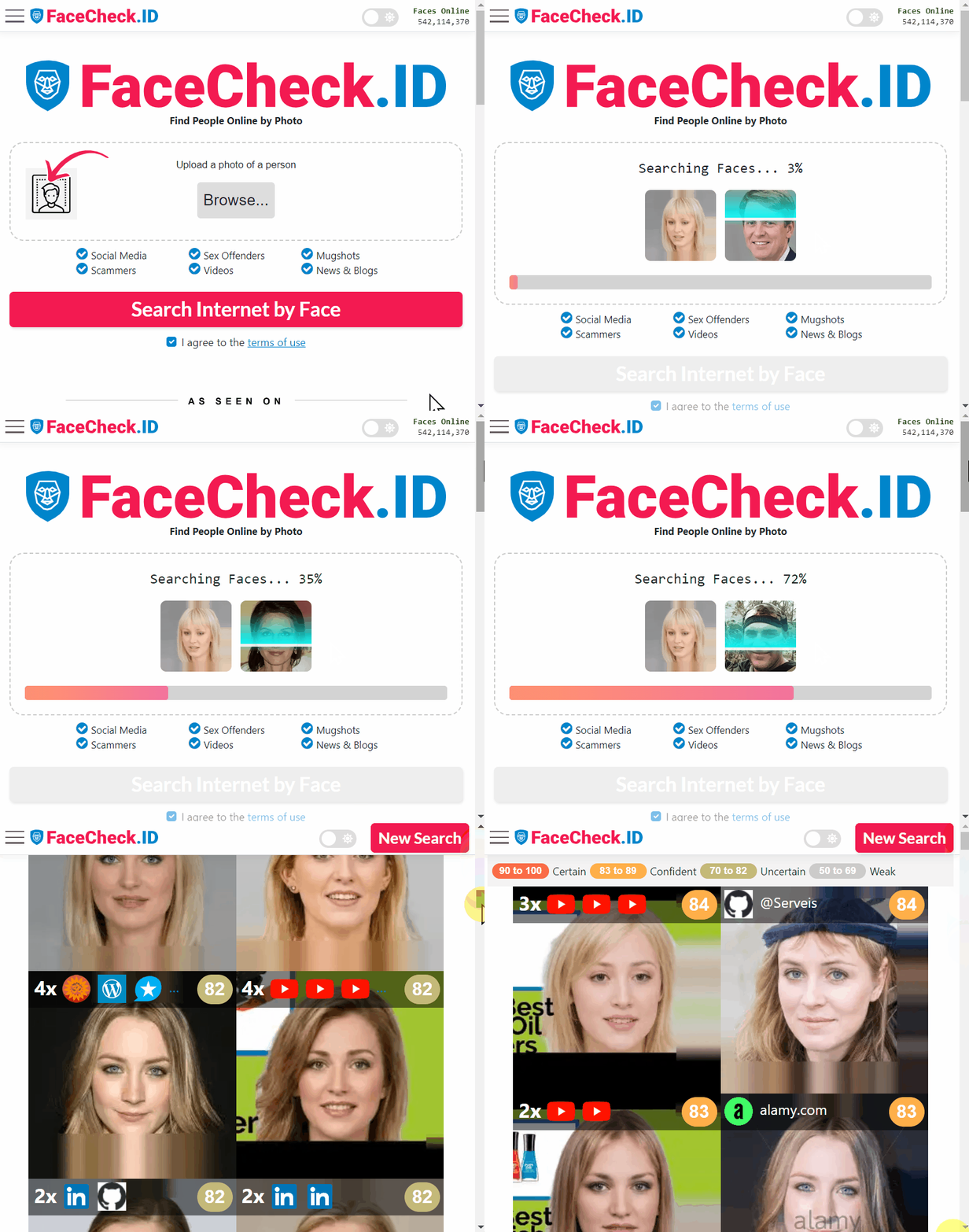
Восстановление Связи на VK.com стало Проще. Это руководство проведет вас через процесс использования FaceCheck.ID для поиска людей на VK.com, используя лишь их фотографию. FaceCheck.ID - это поисковый движок, который использует технологию распознавания лиц для сопоставления фотографий с общедоступными профилями на различных социальных медиа-платформах, включая VK.com.