LinkedIn 人脸搜索匹配解读
LinkedIn profiles are one of the most useful data sources for face search. The photos are usually front-facing, well-lit, and tied to a real name, employer, and location, which makes them strong reference points when verifying identity through reverse image lookup on FaceCheck.ID.
Why LinkedIn headshots produce strong face-search matches
Most LinkedIn profile photos follow a predictable format: head and shoulders, neutral background, even lighting, and a direct gaze into the camera. That format is close to ideal for face recognition models, which depend on clear visibility of the eyes, nose bridge, mouth corners, and jawline. Compared to party photos, group shots, or sunglasses-heavy Instagram posts, LinkedIn images give the matcher a clean facial signature to work with.
Several behaviors push LinkedIn matches further up the result list:
- The same headshot is often reused across personal websites, conference pages, company "About" pages, podcast guest bios, and Medium author profiles, creating multiple indexed copies of the same face.
- Profile photos tend to stay in place for years, so older crawls and newer ones reinforce each other.
- Names, job titles, and employers indexed alongside the photo make it easier to confirm a tentative match against external evidence.
When a face search returns a LinkedIn-style result, it is often the anchor that lets an investigator pin a face to a real-world identity, profession, and geography.
Common LinkedIn-related scenarios in face search
Face-search results pointing to LinkedIn show up in several recurring situations.
Verifying someone met online. A person on a dating app, Telegram, or WhatsApp claims to be a doctor in Boston. A FaceCheck.ID search may return a LinkedIn profile under a completely different name, country, or industry. That mismatch is one of the clearer signals of a catfish or romance scam.
Spotting stolen headshots. Scammers frequently lift LinkedIn photos to populate fake dating profiles, fake recruiter accounts, or fake investment advisor pages. Reverse face search can reveal the original LinkedIn owner, who is usually a real person with no involvement in the scam.
Background checks on business contacts. Before signing a contract or accepting an offer, a face search can confirm whether the LinkedIn profile, the email signature photo, and the company website headshot all belong to the same individual.
Investigating fake recruiters. A growing class of fraud uses fabricated recruiter profiles to lure job seekers into fake interviews and credential theft. If the recruiter's photo also appears on an unrelated LinkedIn account or stock-photo library, that is a meaningful red flag.
Reading LinkedIn matches carefully
A LinkedIn hit is informative but not proof. Several patterns can mislead an investigator:
- Stolen-photo profiles. The LinkedIn account itself may be fake, built on someone else's headshot. The face matches but the name does not belong to the photo.
- Duplicate accounts. People sometimes maintain two LinkedIn profiles, one stale and one current, which can produce conflicting employer or location data.
- Lookalikes. Two different people with similar bone structure, hair, and glasses can score high on a face matcher, especially in passport-style portraits where pose variation is minimal.
- Outdated photos. A LinkedIn headshot from a decade ago may match poorly against current photos, lowering confidence even when the person is correct.
Treat a LinkedIn match as a lead, not a verdict. Cross-check the name with the employer's public directory, look for the same photo on a personal domain, and compare additional images such as conference talks or news articles. When the face appears under one name on LinkedIn and a different name elsewhere, the question is which identity is real and which is borrowed.
What LinkedIn matches cannot tell you
A face appearing on LinkedIn does not prove the account is genuine, current, or operated by the person in the photo. It also does not confirm the listed job title, since LinkedIn does not verify employment for most users. Face search narrows the field of possibilities. Confirming identity still requires corroborating signals: matching domains, consistent biographical detail across independent sources, and, when stakes are high, direct verification through official channels.
常见问题
在人脸识别搜索引擎的语境里,“LinkedIn”通常指什么?
在这个语境里,“LinkedIn”通常不是指“身份已被确认”,而是指:搜索结果中出现了与 LinkedIn 相关的公开页面线索(例如公开个人主页、公司员工页、公开帖子、公开头像/缩略图、被第三方转载或缓存的 LinkedIn 图片)。它更多是一类“来源/平台指向”的线索标签,提示你可能需要去核验该链接背后的页面内容、发布时间、以及页面是否仍公开可见。
人脸识别搜索引擎为什么会返回 LinkedIn 的链接或“LinkedIn 头像”类结果?
常见原因包括:1)目标照片本身来自公开可访问的 LinkedIn 页面或其公开可抓取的图片资源;2)同一张头像/照片被转载到其他网站(招聘页、新闻稿、公司官网、数据聚合站)并被索引,页面里提到了 LinkedIn 或包含指向 LinkedIn 的链接;3)引擎保存的是“预览图/截图/缓存”,即使原 LinkedIn 页面后来改为私密、删除或需要登录,也可能仍在结果中出现。结论上应把它当作“可能的来源线索”,而不是身份定论。
搜索结果指向 LinkedIn 个人主页,是否就等于确认了真实身份?
不等于。原因是:1)人脸相似不代表同一人,存在误匹配;2)LinkedIn 资料可能被他人冒用、盗用照片或“撞脸”;3)页面上的姓名、职位、城市等字段可能过期或被错误填写;4)同一人也可能有多个账号或更换头像。更稳妥的做法是把 LinkedIn 结果当作“待核验线索”,并用多要素交叉验证(例如同一头像是否同时出现在公司官网/新闻稿/其他一致的公开渠道;时间线是否一致;是否存在明确的自证内容)。
在 LinkedIn 相关线索里,怎样做一个最小化风险的核验流程,避免误认或越界?
建议流程:1)先只在公开可访问范围内核验,不尝试绕过登录/权限或使用非公开数据;2)优先验证“同图同源”(同一张头像是否在多个独立站点以一致方式出现),再验证“同人证据”(同一人不同照片在同一可信来源的连续出现);3)记录证据链时仅保存必要信息(链接、截图、日期),避免扩散敏感信息;4)不要基于单一匹配进行指控、骚扰、雇佣决策或“人肉”;5)若用于合规调查,应遵循当地法律、平台条款与最小必要原则。
像 FaceCheck.ID 这类工具在检索 LinkedIn 线索时可能带来什么价值?使用时要注意什么?
可能的价值:帮助你从一张人脸照片出发,发现互联网上与该脸相似的公开图片与页面线索,其中可能包含与 LinkedIn 相关的转载页面、公开头像、或指向 LinkedIn 的引用,从而用于“线索扩展”和“来源追溯”。注意事项:1)把结果当线索而非结论,尤其是评分/相似度仅代表算法相似;2)避免用于跟踪、骚扰、歧视或“找人报复”等高风险用途;3)上传照片前评估你是否有合法授权与正当目的,尽量使用最少量、最低敏感度的图片;4)发现误关联时,优先通过平台/服务的纠错、下架或申诉渠道处理,并同步减少该照片在公开站点的可获取性。

与linkedin相关的推荐文章
-
如何在网上找到任何人:一份全面的互联网侦查指南
除了使用正确的关键词外,您还可以利用搜索技巧来优化您的搜索。例如,使用减号(-)排除某些词(例如,"John Smith" -baseball)或使用 site: 操作符在特定网站内搜索(例如,site:linkedin.com "John Smith")。. TruthFinder:TruthFinder 是一个专门提供背景调查服务和访问公共记录的平台。通过提供有关个人的详细信息,TruthFinder 使用户能够做出明智的决策,并评估他们寻求联系或了解更多信息的人的背景。US Search:US Search 是一个人物搜索引擎,为用户提供在美国的联系信息、地址等。凭借全面的数据库和用户友好的界面,US Search 方便用户在全国范围内查找和了解人物。Hunter:Hunter 是一个实用的工具,帮助用户查找和验证专业电子邮件地址。通过简化查找和验证电子邮件联系人的过程,Hunter 简化了通过电子邮件帐户在线查找个人的任务。RocketReach:RocketReach 是一个为用户提供专业和企业联系信息,包括电子邮件地址和电话号码的平台。通过提供广泛的联系数据,RocketReach 使用户能够建立联系并与各行各业的专业人士互动。LinkedIn Sales Navigator: LinkedIn Sales Navigator是一个高级LinkedIn工具,提供高级搜索选项和洞察力,以寻找专业联系人。通过为用户提供强大的搜索功能和关于潜在联系人的详细信息,Sales Navigator使用户能够建立和扩展他们的专业网络。.
-
如何利用人脸识别识破虚假远程 IT 员工(2026 指南)
LinkedIn 公开个人资料照片. 保存候选人的 LinkedIn、GitHub 或简历照片. 申请筛选扫描 LinkedIn / 简历照片过滤库存照片、AI 人脸、已知别名30 秒.
-
社交媒体查找:通过照片找到任何人的个人资料
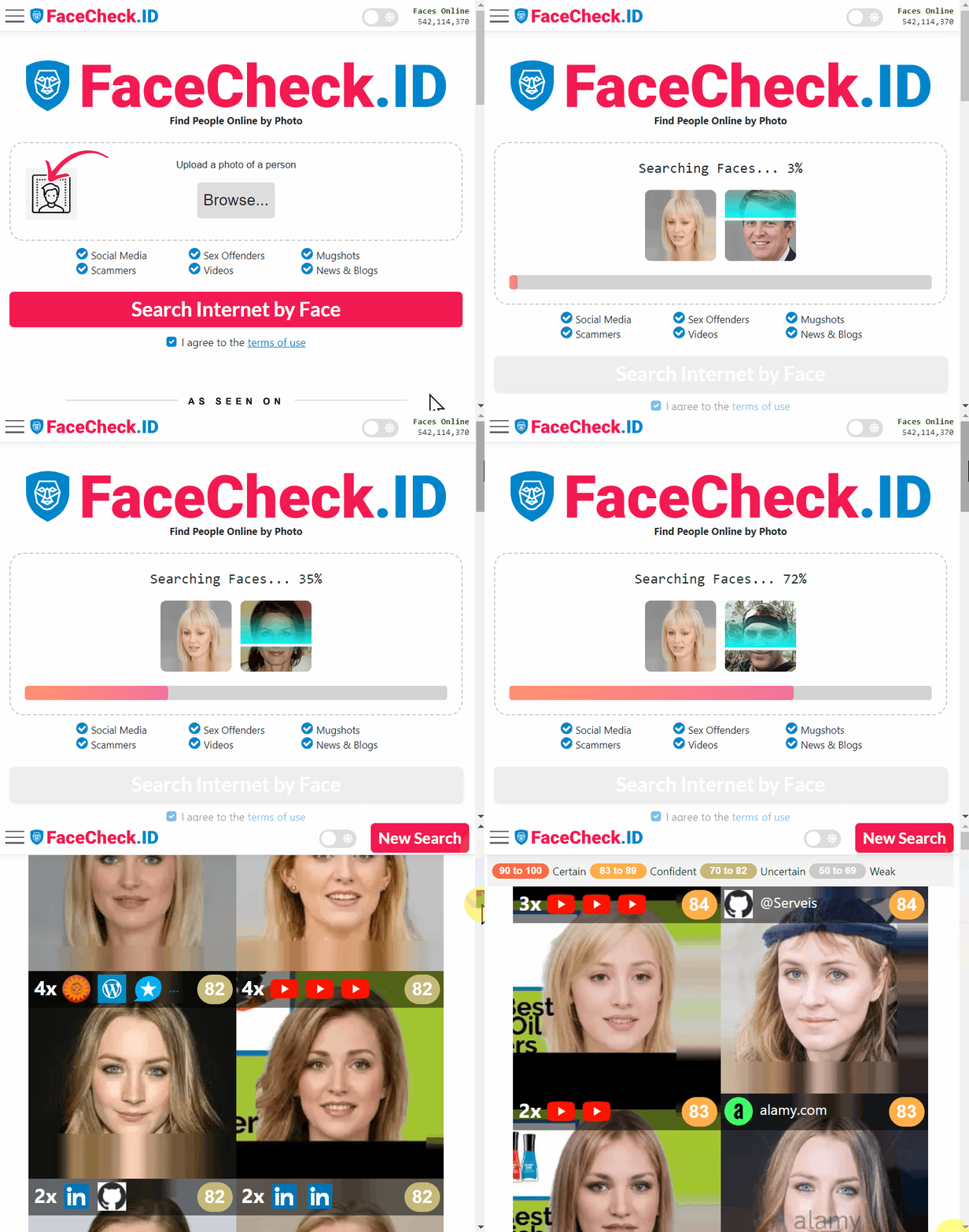
FaceCheck.id 可搜索 Instagram、Facebook、Twitter/X、LinkedIn、TikTok、YouTube、嫌犯照片数据库、新闻网站等来源。它能够处理裁剪过的照片、低分辨率截图,甚至从倾斜角度拍摄的照片。搜索无需注册账户。. 查看结果。每条匹配结果都会显示缩略图、照片所在的平台,以及指向个人资料的链接。通常会看到来自 Instagram、Facebook、LinkedIn、Twitter/X,以及其他使用者公开展示照片的平台的结果。. 覆盖率高: Instagram(公开个人资料)、Facebook(公开个人资料)、Twitter/X、LinkedIn、YouTube、VK、展示公开照片的交友网站,以及新闻和博客网站。.
-
通过图片搜索引擎查找使用照片的Facebook个人资料
最后,如果您想要找到某人的Facebook个人资料,您可以随时向他们询问他们的用户名或电子邮件地址。如果这不是一个选项,FaceCheck.ID还允许您使用人物的照片在Twitter、LinkedIn、YouTube、Instagram、Facebook、OnlyFans等许多其他社交媒体平台上进行搜索。.
-
通过面部识别技术使用LinkedIn反向图片搜索找到LinkedIn个人资料