iPhone照片如何影响人脸搜索结果
The iPhone matters to face search less as a product and more as the device that captures, stores, and uploads most of the photos that end up in face-recognition results. When someone runs a reverse face search on FaceCheck.ID, a large share of the matched images were originally shot on an iPhone, then posted to Instagram, dating apps, LinkedIn, or news sites where search engines indexed them.
How iPhone photos shape face-search results
iPhone cameras produce images with characteristics that affect match confidence in predictable ways. Front-camera selfies tend to be well-lit, close to the face, and shot at a flattering angle, which makes them strong inputs for face embeddings. Portrait Mode adds artificial background blur, which usually does not interfere with face detection but can crop or soften the edges of the face in ways that slightly change the embedding.
Several iPhone-specific behaviors are worth knowing if you are interpreting matches:
- HEIC format. iPhones save photos as HEIC by default. When users upload to platforms that re-encode to JPEG, fine detail is lost. The same face photo can therefore appear at multiple quality levels across the web.
- Live Photos. A Live Photo stores a short video clip alongside the still. Some platforms extract a different frame than the one the user thought they were posting, which is why a face search can surface near-duplicate images that look slightly off.
- Computational processing. Smart HDR, Deep Fusion, and Night mode change skin tone, contrast, and texture. Two photos of the same person taken on different iPhone generations can look meaningfully different to a face recognition model.
- EXIF metadata. Photos exported directly from an iPhone often carry device, timestamp, and sometimes GPS data. Many social platforms strip this on upload, but images shared through email, iMessage cloud links, or direct file transfer often retain it.
Face ID is not the same as face search
Users sometimes confuse Apple's Face ID with the kind of recognition FaceCheck.ID performs. They are unrelated systems.
Face ID is an on-device biometric lock. It uses a structured-light depth sensor to build a 3D map of one specific face and compares incoming scans only against that stored template. The data never leaves the Secure Enclave, and Apple does not have access to it.
Face search engines work on flat 2D images scraped from the public web. They generate a numerical embedding of a face and look for visually similar embeddings across an index of public pages. The two systems share the word "face" but solve different problems. Unlocking your iPhone has no bearing on whether your photos appear in reverse face-search results. What matters there is whether your face has been posted to a publicly indexed page.
iPhone photos in catfishing and scam investigations
Many romance scams and catfish profiles reuse photos that were originally taken on an iPhone by the real person, then stolen and reposted. When investigating a suspicious profile, an iPhone-shot selfie has useful properties: consistent framing, predictable lighting, and often a long history of reuse across platforms. A face search can surface earlier appearances of the same image on Instagram, an old blog, a news article, or a tagged photo from a wedding website, which often reveals the genuine owner.
The reverse pattern also occurs. Scammers screenshot iPhone photos from victims' Instagram or TikTok accounts, which strips metadata and reduces resolution. Those degraded versions still match the originals well enough for a face-search engine to connect them.
What an iPhone-related match cannot prove
Identifying a photo as iPhone-shot, or finding it on multiple sites, does not by itself prove identity, ownership, or intent. A match only shows that the same face appears across pages. It does not tell you who took the photo, who first posted it, or whether the person in the image consented to its current use. Identical twins, close lookalikes, and heavily filtered shots can all produce high-confidence matches that point to the wrong person. Treat face-search results from any source as leads that require corroboration, not as conclusions.
常见问题
在“人脸识别搜索引擎”的讨论里,提到“iPhone”通常是在指什么?是 iPhone 的 Face ID 吗?
通常指的是“用 iPhone 拍摄/保存/分享的人像照片(或截图)”被拿去做反向人脸检索的场景,而不是指 iPhone 的 Face ID 本身。Face ID 是设备端的解锁/验证机制(偏 1:1 验证),而人脸识别搜索引擎是把一张脸拿去在库里做 1:N 检索,输出的是“相似脸/相似页面线索”,两者目的与风险完全不同。
用 iPhone 拍的照片拿去做人脸识别搜索前,如何在不明显降低识别效果的前提下做“最小化数据暴露”?
优先只保留“脸部必要区域”:在 iPhone 上裁剪掉背景、路牌、门牌、工牌、电脑屏幕等可定位信息;避免上传包含多人或儿童的人像。其次尽量移除元数据:分享前可导出为不含定位信息的副本(关闭“位置”写入、或在分享时选择不附带位置),并避免把“原始文件”直接发给不可信对象。最后用“副本”而不是相册原图进行上传/检索,减少原始照片被二次传播的概率。
用 iPhone 截图(例如社交媒体头像截图)去做人脸识别搜索,为什么经常更容易命中“截图站/预览图”,而不是原始页面?
因为截图在网络上更常被二次转载:同一张头像/视频封面可能被搬运到论坛、聚合页、缩略图缓存或镜像站,搜索引擎更容易先索引到这些“更公开、更可抓取”的页面。截图还可能带有 UI 边框、水印、压缩痕迹,导致引擎更倾向匹配“同类截图版本”,而不是追到最早的原帖。做线索追溯时,应把截图命中视为“传播路径线索”,再回到页面上下文、发布时间、作者信息与多来源交叉核验。
如果我想用 iPhone 拍一张“更适合检索”的人脸照片(用于自查或合规核验),拍摄时哪些设置/姿态更关键?
尽量选择:自然光或均匀光、正脸或轻微侧脸(避免大角度偏转)、五官无遮挡(墨镜/口罩/大刘海会显著干扰)、表情放松(避免夸张表情)、分辨率足够且对焦在眼鼻区域。若必须用现成照片,优先选清晰度更高、脸部占画面更大、压缩更少的版本,并裁剪到“只含单人脸”的区域以减少误匹配。
在 iPhone 上使用 FaceCheck.ID 这类人脸搜索服务做线索排查时,最值得注意的“安全操作习惯”是什么?
把它当作“线索发现工具”而不是“身份结论工具”:即使出现高相似度,也应以原页面上下文、时间线、更多照片对比与多来源交叉验证为准。操作上建议:只上传最少必要的图片(优先裁剪脸部、用副本而非原图)、避免上传包含敏感背景/未成年人/多人合照的照片、不要在结果未核验前转发或公开指认,且对涉及犯罪/成人/诈骗等敏感标签的结果保持更高的误伤警惕,必要时仅做私下留存与合规渠道处理。

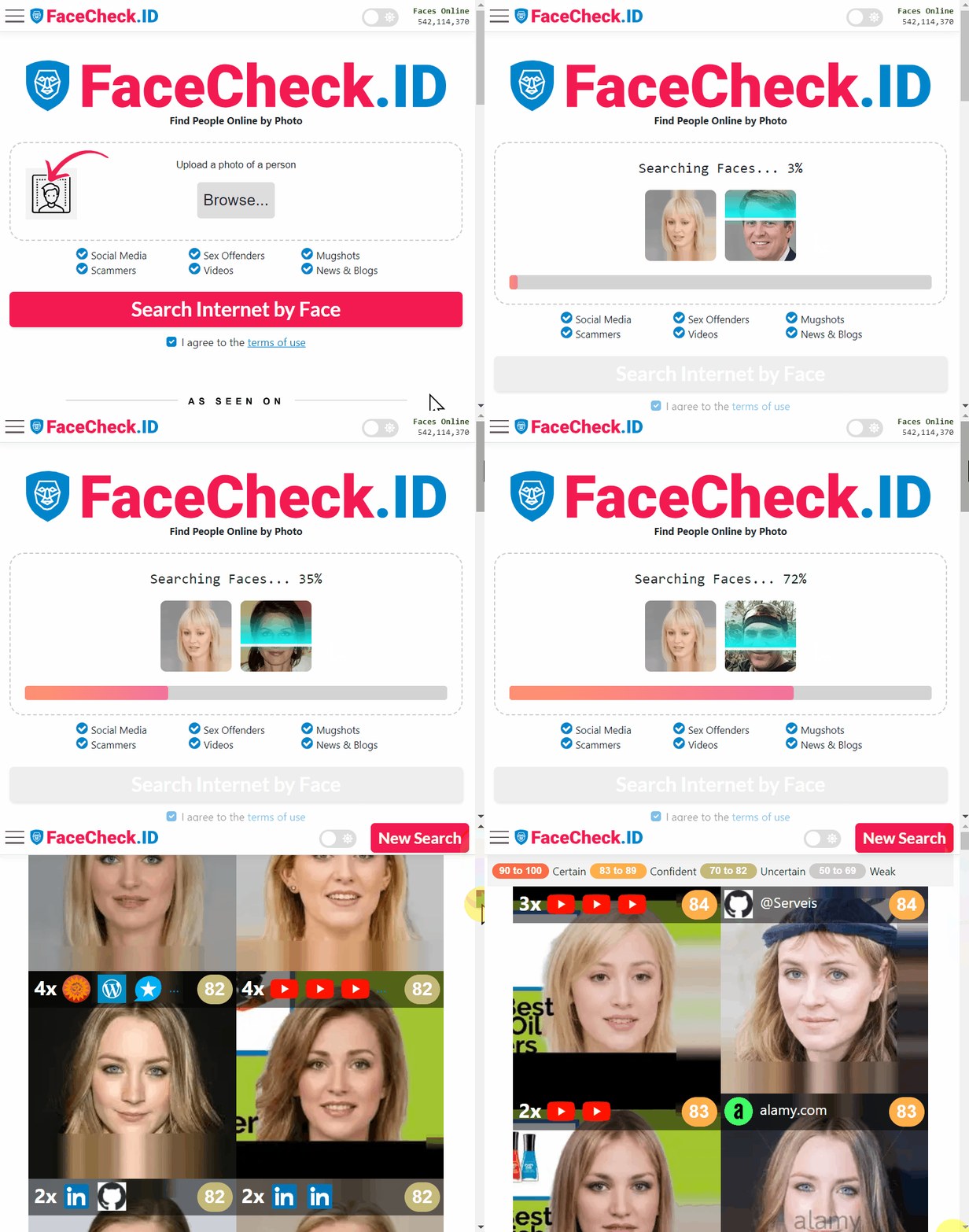
与iphone相关的推荐文章
-
如何从你的iPhone进行反向图片搜索
FaceCheck.ID的反向图片搜索网络应用程序与包括iPhone 14 Pro,iPhone 14,iPhone 13,iPhone SE,和iPhone 12等最新的iPhone兼容。. 第 1 部分:从 iPhone 进行反向图像搜索的基本方法. 关于 iPhone 上的反向图像搜索的介绍.
-
如何在 Yandex 上进行反向图片搜索(以及它与 Google 有何不同)
如何在 Android 和 iPhone 上使用 Yandex 反向图片搜索. 在 iPhone 上,先将屏幕截图或下载的图片保存到“照片”,然后从媒体资料库中选取。. Android 或 iPhone 是否有 Yandex 反向图片搜索应用?.
-
真正有效的免费反向图片搜索工具(2026年)
当然可以。在 iPhone 和 Android 上,都可以通过 Google 应用使用 Google Lens。Yandex 和 TinEye 可通过各自的移动网站使用。FaceCheck.id 也能在移动浏览器中运行。使用这些工具都无需下载应用。.