Account Takeover Explained: Causes, Signs & Prevention
Definition
Account takeover is a type of fraud where an attacker gains unauthorized access to a user account and then uses it as if they are the legitimate account owner. The goal is usually to steal money, sensitive data, loyalty points, or to commit further scams using a trusted identity.
How account takeover happens
Attackers typically take over accounts by exploiting weak security or stolen credentials, including:
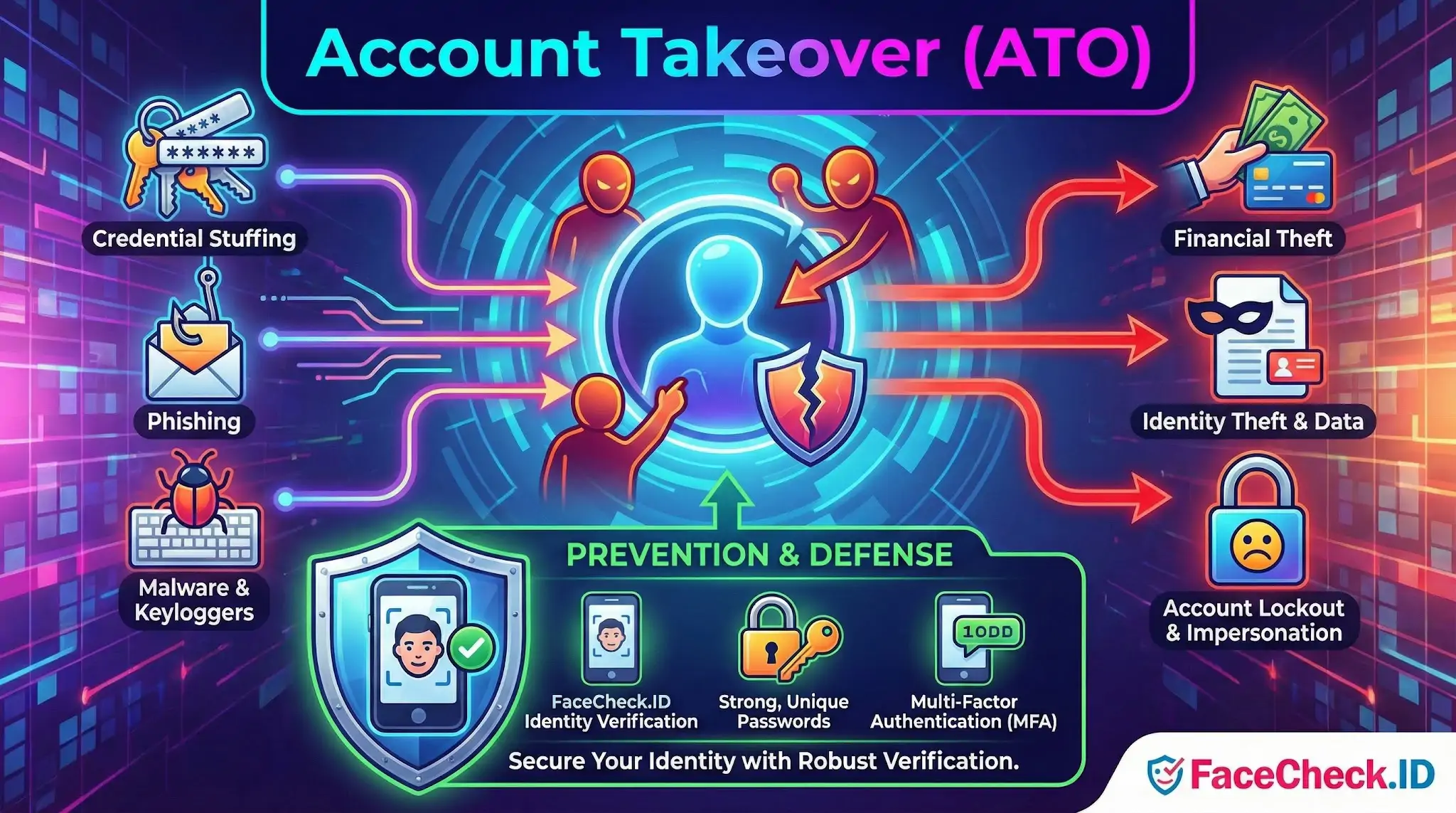
- Credential stuffing using leaked username and password pairs from past data breaches
- Phishing emails, texts, or fake login pages that trick users into sharing login details
- Malware or keyloggers that capture passwords and session data
- Social engineering that convinces support teams to reset passwords or change account details
- SIM swapping to intercept one time passcodes sent by SMS
- Session hijacking using stolen cookies or compromised devices
- Weak or reused passwords that are easy to guess or crack
Common targets
Account takeover can affect almost any account type, but common targets include:
- Online banking and payment apps
- Ecommerce and marketplace accounts
- Email accounts that can be used to reset other passwords
- Social media accounts used for scams and impersonation
- Gaming accounts and virtual goods inventories
- Subscription services with stored payment methods
- Business tools like CRM, advertising, and cloud platforms
What attackers do after taking over an account
Once inside, attackers often try to increase control and monetize quickly:
- Change the password, email, or phone number to lock out the real user
- Add new payment methods or redirect payouts
- Make unauthorized purchases or transfers
- Redeem gift cards, loyalty points, or store credit
- Harvest personal data for identity theft
- Send spam or phishing messages from a trusted account
- Create new fraudulent accounts using the compromised identity
Signs of an account takeover
Common warning signs include:
- Login alerts from unfamiliar locations, devices, or IP addresses
- Password reset emails you did not request
- New devices or sessions you do not recognize
- Unexpected changes to account profile details or security settings
- Unrecognized transactions, orders, or reward redemptions
- Support tickets opened that you did not create
Why account takeover is a serious risk
Account takeover can cause direct financial loss and long term damage:
- Chargebacks, refunds, and operational costs for businesses
- Loss of customer trust and brand reputation
- Data exposure and privacy violations
- Downstream fraud when attackers use the account to target others
- Regulatory and compliance consequences in some industries
How to prevent account takeover
Strong defenses combine user habits, security controls, and monitoring:
For individuals
- Use unique, long passwords for every account and store them in a password manager
- Enable multi factor authentication, preferably authenticator app or security key
- Avoid clicking login links in unexpected emails or texts and type the site address directly
- Review account activity and sign out of unknown devices
- Keep devices and browsers updated and use reputable anti malware protection
For organizations
- Detect credential stuffing with rate limiting, bot management, and anomaly detection
- Use strong MFA options and risk based step up authentication
- Monitor for unusual login patterns, device changes, and high risk actions
- Require reauthentication for sensitive actions like payout changes and password updates
- Harden account recovery with identity verification and anti social engineering processes
- Use secure password storage, modern hashing, and breach password checks
- Implement alerting and incident response playbooks for suspected takeovers
What to do if your account is taken over
- Reset your password immediately and change passwords on any reused accounts
- Enable MFA and remove unknown devices, sessions, and connected apps
- Check and reverse unauthorized transactions where possible
- Update recovery options like email and phone number
- Contact the service provider support and document key details and timestamps
- Scan devices for malware if compromise is suspected
FAQ
What does “Account Takeover (ATO)” mean in the context of face recognition search engines?
Account Takeover (ATO) is when an attacker gains control of an online account (social media, email, marketplace, dating app, etc.) and then uses that account to impersonate the real owner. In face-recognition-search contexts, ATO often shows up as a hijacked profile that suddenly uses different photos, or as a stolen profile photo that appears across multiple accounts after an attacker reuses it.
How can face recognition search engines help detect a suspected account takeover?
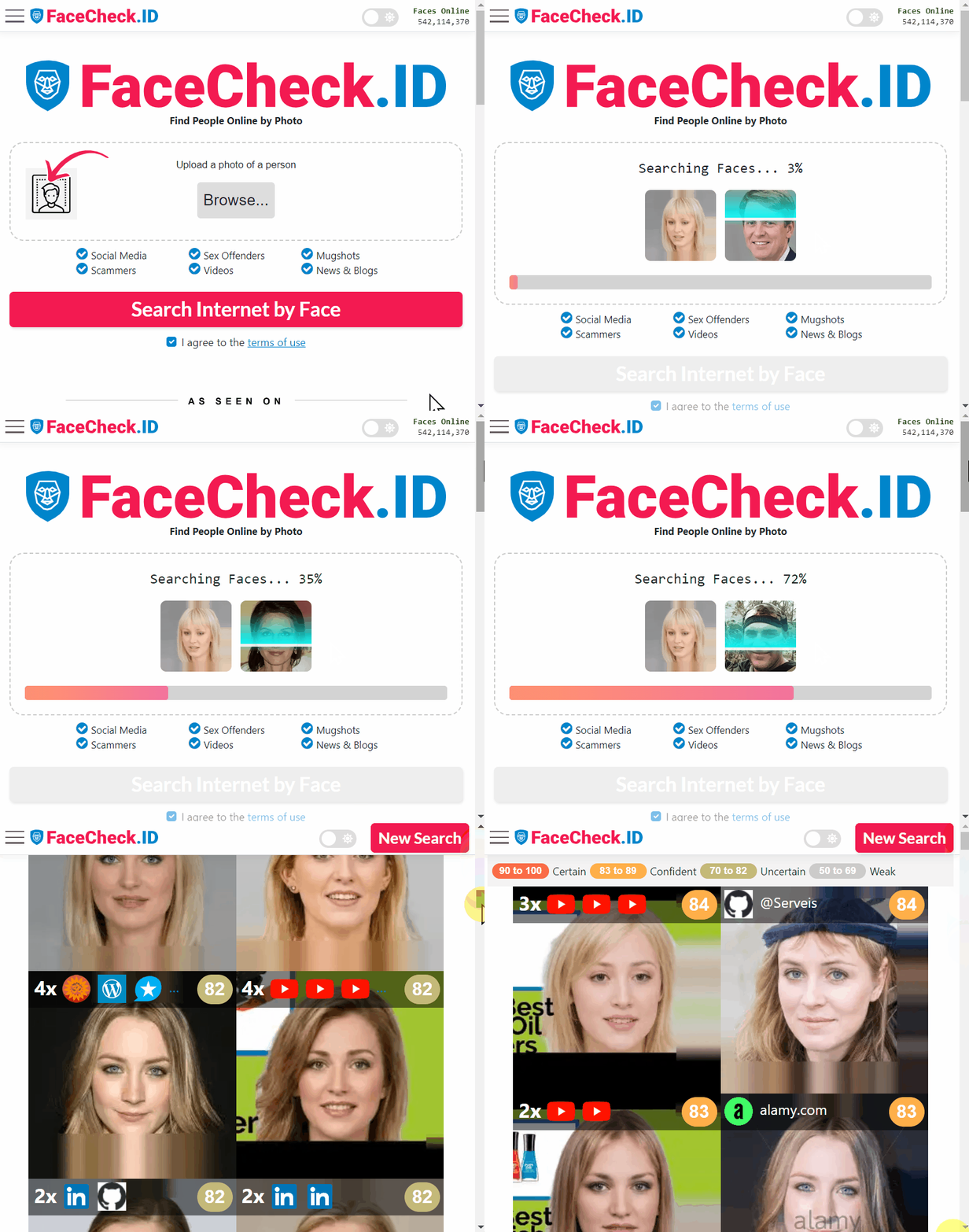
They can help you check whether the profile’s face photos appear elsewhere on the public web. ATO suspicion increases when the same face image (or very similar face photos) is found on many unrelated accounts, especially if the timestamps, usernames, or locations conflict. The results should be treated as investigative leads, not proof of takeover.
What face-search result patterns are common red flags for ATO vs normal reposting?
Common red flags include: (1) the same headshot appearing across multiple different names/usernames; (2) the “same person” matches are concentrated in scam-report, fake-profile, or spammy pages; (3) the earliest/most credible source looks like a legitimate person’s long-standing profile, while newer copies appear suddenly; (4) the account you’re checking recently switched photos, bio, or handle and the new face photo matches a different identity trail online.
If a face search returns matches, does that confirm an account was taken over?
No. Matches can occur because the person is widely reposted (public figure), the photo is a stock/model image, the account owner reused their own photos across platforms, or the result is a look-alike/false match. ATO is more plausible only after you validate sources (original posts, consistent usernames, consistent history) and confirm the account’s behavior changed (new messages, unusual requests, new payment details, etc.).
How can I use FaceCheck.ID (or similar tools) more safely when investigating a possible account takeover?
Use it to compare multiple photos from the account (older and newer) and look for consistent identity trails across credible sources. Prefer high-quality, front-facing images and sanity-check top hits by opening the source pages and verifying context (date, profile history, repost vs original). Avoid doxxing, harassment, or public accusations; if you suspect ATO, use platform reporting tools, secure your own accounts (password manager, unique passwords, MFA), and document findings privately in case the platform or the account owner needs evidence.

Recommended Posts Related to account takeover
-
140+ Common Romance Scammer Lines, Excuses & Red Flags to Watch For in 2026
These are often account takeover attempts.