Account Takeover (ATO) Explained: Signs & Prevention
.webp "Account Takeover (ATO)")
Account takeover (ATO) is a type of cybercrime where an attacker gains unauthorized access to a user online account and uses it as if they are the legitimate owner. The goal is usually to steal money, personal data, stored payment methods, loyalty points, or to use the account for scams and further attacks.
Account takeover can affect email, banking, eCommerce, social media, ride sharing, gaming, and workplace accounts.
How account takeover works
Attackers typically follow a simple flow:
- Get access to valid login details using theft, guessing, or social engineering
- Log in successfully and avoid detection
- Lock out the real user by changing the password, email address, or phone number
- Abuse the account for fraud, data theft, or spreading scams
Common ways attackers perform ATO
- Phishing
Fake emails, texts, or websites trick users into entering passwords, one time codes, or recovery details.
- Credential stuffing
Attackers use stolen username and password pairs from previous data breaches to log in on other sites where people reused passwords.
- Brute force and password spraying
Automated guessing of passwords, often targeting weak passwords or commonly used ones across many accounts.
- SIM swapping and OTP interception
Criminals hijack a phone number to receive SMS verification codes and reset account access.
- Malware and keyloggers
Malicious software steals passwords, session cookies, or authentication tokens.
- Session hijacking
Stolen cookies or tokens let attackers access an account without knowing the password, sometimes bypassing multi factor authentication.
- Social engineering and support abuse
Attackers convince customer support to reset credentials or change account ownership.
Signs of an account takeover
- Unrecognized logins, devices, or locations
- Password reset emails you did not request
- Changes to your profile, email, phone number, or shipping address
- New payment methods added or existing ones removed
- Unexpected purchases, transfers, or withdrawals
- Security alerts, MFA prompts, or verification codes you did not initiate
- Friends or contacts receiving strange messages from your account
Why ATO is dangerous
- Financial fraud: purchases, chargebacks, account draining, and refunds sent to attackers
- Identity theft: access to personal data used to open new accounts or commit fraud
- Privacy breaches: stolen messages, documents, photos, and contact lists
- Business damage: loss of customer trust, increased support costs, and compliance risk
- Fraud chains: compromised accounts used to target other users through spam or phishing
Account takeover prevention
For individuals
- Use unique, strong passwords and a password manager
- Turn on multi factor authentication using an authenticator app or security key when possible
- Be careful with links and attachments, verify login pages before entering credentials
- Keep devices and browsers updated
- Review account activity and security settings regularly
- Avoid sharing verification codes and never approve unexpected login prompts
For businesses
- Enforce MFA and support phishing resistant options for high risk actions
- Detect anomalous logins (new device, impossible travel, risky IP, unusual behavior)
- Rate limit and monitor login attempts to reduce brute force and password spraying
- Use bot detection and defenses against credential stuffing
- Add step up verification for sensitive changes like email, password, payout, or shipping address
- Monitor for breached credentials and prompt password resets when needed
- Secure account recovery and customer support workflows
- Use fraud signals like device fingerprinting, risk scoring, and transaction monitoring
Account takeover vs credential stuffing
Credential stuffing is a method used to try stolen passwords at scale. Account takeover is the outcome when an attacker succeeds and controls the account.
Account takeover vs identity theft
Identity theft is broader and focuses on misusing someone identity data. Account takeover is specifically about gaining control of an existing account. ATO can lead to identity theft when attackers steal enough personal information.
FAQ
How can account takeover (ATO) affect a face recognition search engine user?
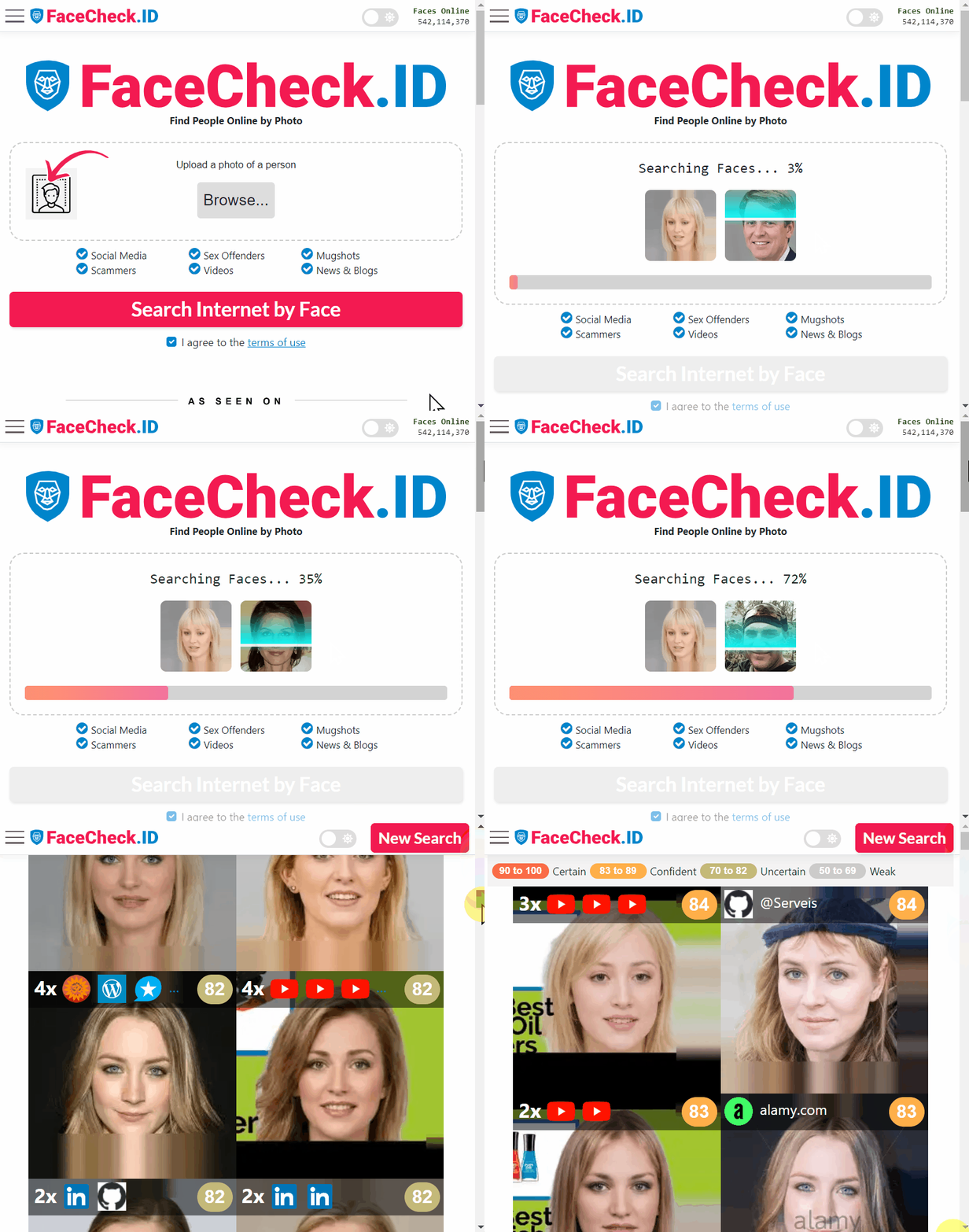
In a face recognition search engine context, ATO means an attacker gains unauthorized access to a user’s account (e.g., via stolen passwords or session hijacking). The attacker may then view prior searches, reuse saved queries, change account settings (email/password), consume paid credits/subscriptions, or use the account in ways that create privacy, legal, or reputational risk for the account owner.
What are common attacker goals after taking over a face-search account?
Common goals include: (1) harvesting account history (what was searched, when, and possibly links/pages viewed), (2) running high-volume searches to extract leads for scams, doxxing, or impersonation, (3) draining credits or triggering charges, (4) locking the owner out by changing credentials or recovery options, and (5) using the compromised account to make activity appear attributable to the victim.
What security controls should a face recognition search service implement to reduce ATO risk?
Key controls include strong password policies (and support for password managers), multi-factor authentication (MFA) options, login notifications, rate limiting and bot detection, suspicious-login checks (new device/location), session management (short-lived tokens, logout-from-all-devices), robust account recovery protections, and clear audit logs. If a service like FaceCheck.ID offers MFA, login alerts, or session controls, enabling them materially reduces ATO risk.
What immediate steps should I take if I suspect my face search account has been taken over?
Act quickly: (1) change the account password (and any reused passwords elsewhere), (2) enable MFA if available, (3) log out of all sessions/devices, (4) verify and correct account recovery details (email/phone), (5) review recent logins, searches, and billing/credit usage, (6) contact the provider’s support (e.g., FaceCheck.ID support) to flag suspected compromise and request account lockdown if needed, and (7) scan your device for malware if you suspect the theft came from your endpoint.
How can I minimize privacy harm if an attacker accessed my face-search history?
Assume any accessible history may have been viewed. Minimize harm by: deleting saved searches/history if the service allows, rotating credentials and revoking active sessions, reviewing what sensitive images or cases were searched, notifying affected stakeholders if appropriate, and tightening future operational security (unique passwords, MFA, minimal uploads, and avoiding uploading images that contain unnecessary personal data). If the tool provides controls for history retention or deletion (including services such as FaceCheck.ID), use them to reduce ongoing exposure.

Recommended Posts Related to account takeover (ato)
-
140+ Common Romance Scammer Lines, Excuses & Red Flags to Watch For in 2026
These are often account takeover attempts.
-14.webp "Account Takeover (ATO)")