Deepfake Image Explained: Meaning, Uses & Risks
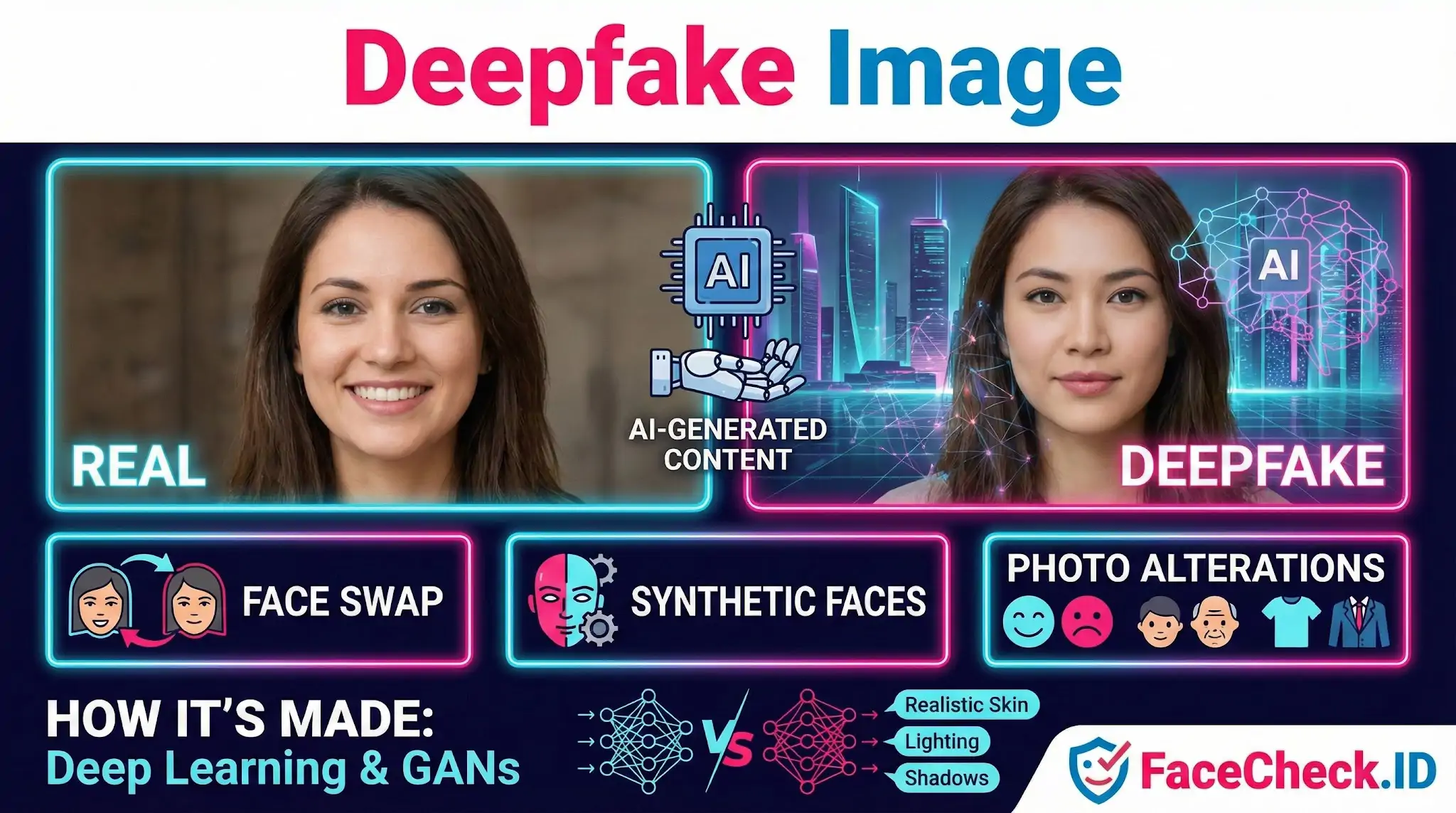
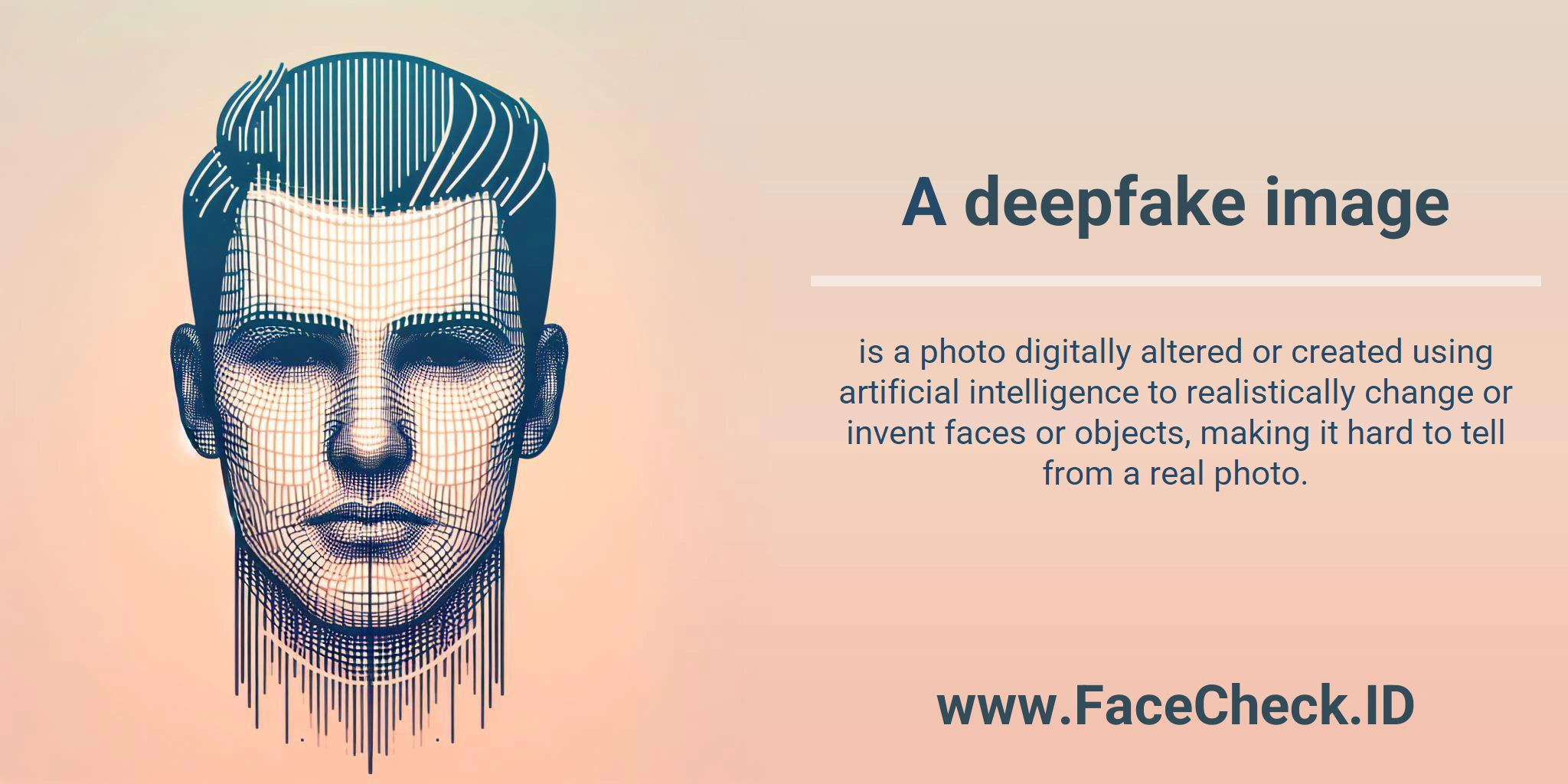
A deepfake image is a photo that has been edited or created with artificial intelligence to look real, even though it shows something that never actually happened. It can change a face, body, background, or object, or generate a completely new image from scratch.
Deepfake images are commonly used for:
- Face swaps, where one person’s face is replaced with another
- Synthetic faces, where AI generates a new person who does not exist
- Photo alterations, like changing expressions, age, clothing, or scenery
Most deepfake images are made with deep learning models, often generative adversarial networks (GANs) or newer image generation models. These systems learn patterns from large sets of images and can recreate realistic details like skin texture, lighting, shadows, and facial features, which makes deepfakes harder to spot.
Why the term matters
Deepfake images can be used for harmless purposes like entertainment, design mockups, or privacy protection. They can also be used for fraud, misinformation, and impersonation. Knowing what a deepfake image is helps people evaluate online photos more carefully and understand how AI can change visual media.
Deepfake image vs. edited photo
Not every edited photo is a deepfake. A deepfake image usually involves AI generated or AI altered content that aims to look convincingly real, especially when it changes identity, facial features, or key elements of the scene.
FAQ
What is a “Deepfake Image” in the context of face recognition search engines?
A Deepfake Image is a synthetic or heavily manipulated picture (often generated with AI) where a face is altered or swapped to look like a real person. In face recognition search engines, deepfakes matter because the tool may match the deepfake’s facial features to images of the “source” person, the “target” person, or to unrelated look-alikes—creating misleading leads.
Can a deepfake image cause a face recognition search engine to return matches to the wrong person?
Yes. If the deepfake preserves key facial geometry similar to someone else (or blends features from multiple people), the search engine may retrieve pages for a different individual, reposts of the deepfake, or visually similar faces. Treat results as investigative pointers, not identity proof, and verify with multiple independent cues (source page context, timestamps, corroborating images, and consistent biographical details).
If I upload a deepfake image to a face search tool like FaceCheck.ID, what results should I expect?
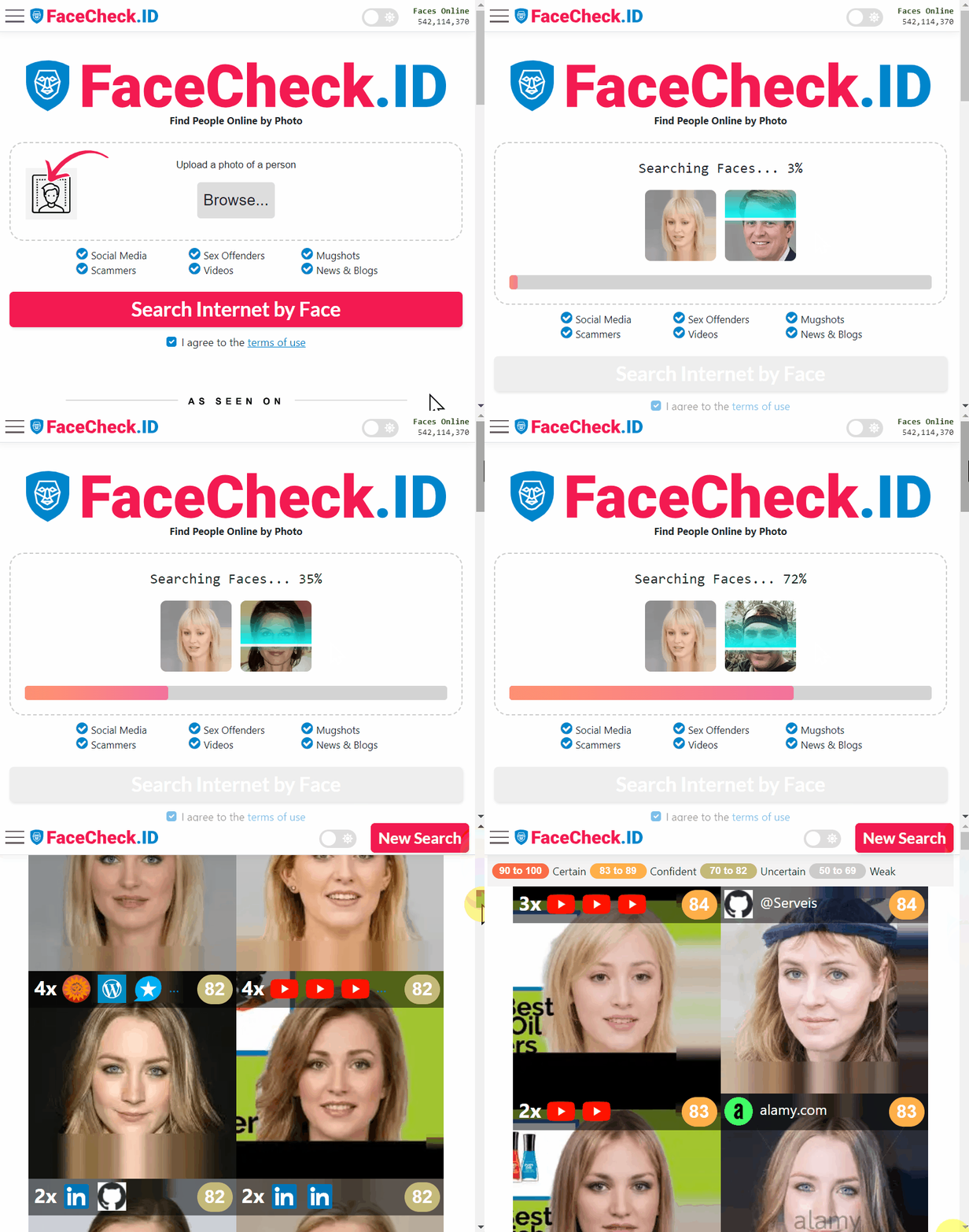
You may see (1) exact or near-duplicate reposts of the same manipulated image, (2) matches to the person whose face was used to generate the deepfake, (3) matches to the person the deepfake is pretending to be, or (4) mixed/weak matches to similar-looking people. On tools such as FaceCheck.ID, review match strength carefully and open the result pages to confirm whether they reference the same real person or simply reused the deepfake.
How can I check whether an image is a deepfake before relying on face-search results?
Look for manipulation signals (inconsistent lighting/shadows, blurred edges around hairline/ears, asymmetrical eyewear or teeth, unnaturally smooth skin, distorted backgrounds, or mismatched reflections). Then cross-check: run searches using multiple frames/photos of the subject, compare facial landmarks across sources, and verify the earliest credible upload or original photographer/site. If the “same face” appears in incompatible contexts (different names, locations, or eras), treat it as high risk for synthetic or stolen imagery.
What are safe, responsible steps if a deepfake image might be involved in a face recognition search?
Avoid public accusations, do not dox or share the image as “proof,” and keep conclusions provisional. Save the result URLs and screenshots for documentation, check for the original source and publication date, and look for corroboration from reputable outlets or official accounts. If the deepfake is harming someone (impersonation, fraud, harassment), report it to the hosting platform and consider contacting the affected person/organization through verified channels; for serious threats or financial fraud, involve appropriate authorities.

Recommended Posts Related to deepfake image
-
How to Find and Remove Nude Deepfakes With FaceCheck.ID: A Step-by-Step Guide
We'll use FaceCheck.ID to find deepfake images. Your Action Plan: Finding Deepfake Images. Most big platforms will help you remove deepfake images online.