Doppelgänger Effect Explained: Why You Find Lookalikes
Definition
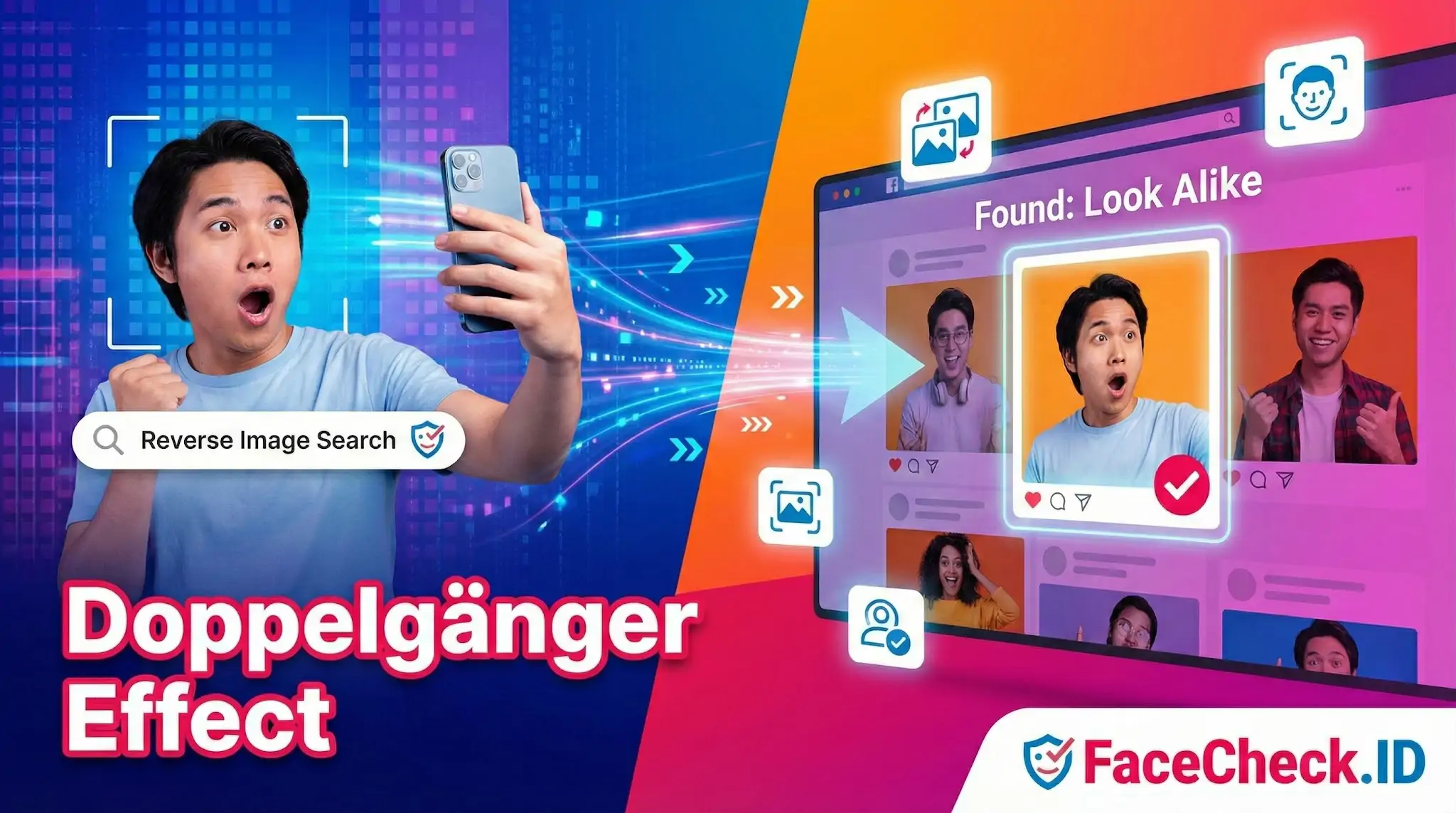
The doppelgänger effect is when someone discovers a person who looks almost identical to them. This is most often found online through reverse image search, social media browsing, or facial recognition search tools.
What it means
The word doppelgänger comes from German and means double or look alike. In everyday use, it describes a near twin who is not actually related.
Why it happens more today
The doppelgänger effect is more common in the digital age because so many photos are posted online. With billions of images across social platforms and public websites, it is easier than ever to match faces and spot look alikes from anywhere in the world.
How people find their doppelgänger
Common ways people discover a look alike include:
- Running a reverse image search using a selfie or profile photo
- Using facial recognition search tools that scan the web for similar faces
- Seeing viral posts, photo tags, or suggested accounts on social media
Related use cases
The term often comes up in conversations about:
- Online identity and privacy
- Social media trends and viral challenges
- Facial recognition technology and image matching
- Mistaken identity and look alike comparisons
FAQ
What is the “Doppelgänger Effect” in face recognition search results?
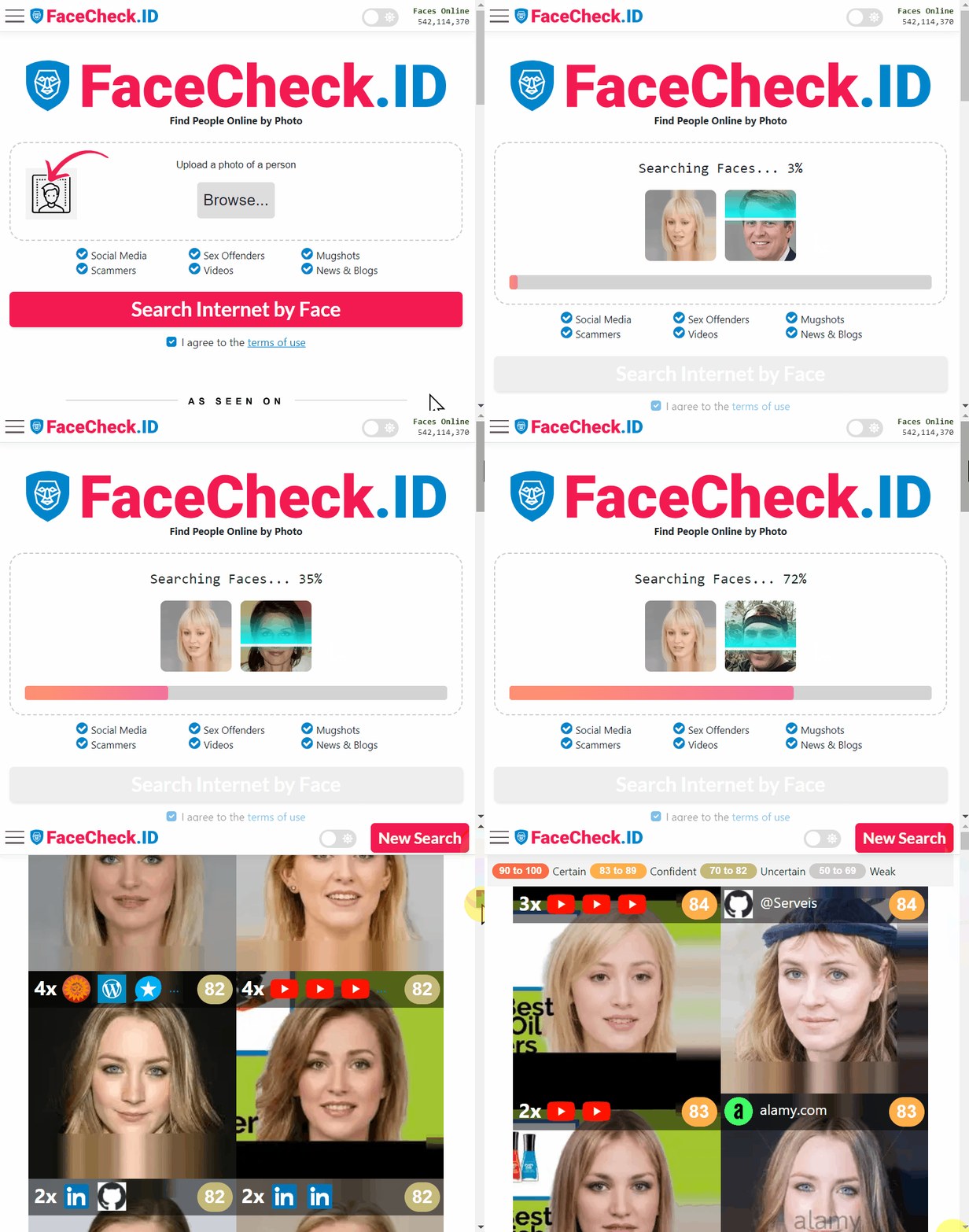
In face recognition search engines, the “Doppelgänger Effect” refers to the tendency of an algorithm to surface visually similar-looking people (look-alikes) when searching for a specific person—especially when the available photo is low quality or ambiguous. These results can appear convincing because the face embeddings (feature vectors) are close, even though the identity is different.
What factors make the Doppelgänger Effect more likely in a face search engine?
The effect is more likely when the input face image has poor lighting, blur, heavy compression, extreme angles, occlusions (masks, sunglasses, hair), strong facial expressions, or significant age differences. It also increases when only a small face region is visible, when the person’s appearance is generic (common facial features), or when the search index contains many near-duplicate photos of other similar-looking people.
How can I reduce Doppelgänger Effect results when doing a face recognition search?
Use a high-resolution, front-facing photo with neutral expression and minimal occlusion, and try multiple photos from different times/angles. Prefer images where the face occupies a larger portion of the frame. If the service provides similarity thresholds or confidence filtering, increase the strictness and prioritize matches that are consistent across several input photos and across multiple independent result sources.
Can the Doppelgänger Effect be amplified by look-alike photos, filters, or AI-generated faces?
Yes. Beautification filters, face-altering apps, cosplay, and AI-generated or heavily edited images can push different identities toward similar-looking feature patterns, making look-alike matches more frequent. Synthetic or stylized faces may also create clusters of similar embeddings that increase false look-alike hits, particularly when the query photo is itself edited or low fidelity.
If I suspect a Doppelgänger Effect result on FaceCheck.ID, what practical checks should I perform?
Treat the match as a lead, not proof. Compare stable identity cues across results (ear shape, moles/scars, hairline, facial asymmetry), and verify context (names, locations, timelines, known associates) on the source pages. Re-run the search with additional photos of the target person and see whether the same URLs consistently reappear. On FaceCheck.ID, prioritize higher-confidence matches and cross-check multiple results rather than relying on a single close-looking image.

Recommended Posts Related to doppelgänger effect
-
Doppelgänger Effect in Facial Recognition Technology
This uncanny experience is known as the "Doppelgänger Effect.". The Doppelgänger Effect has been a subject of fascination for centuries, with many cultures believing that seeing your double was a bad omen or a sign of impending death. In some cases, the Doppelgänger Effect can be a manifestation of our subconscious desires or fears.
