Account Takeover: Face Search Signals
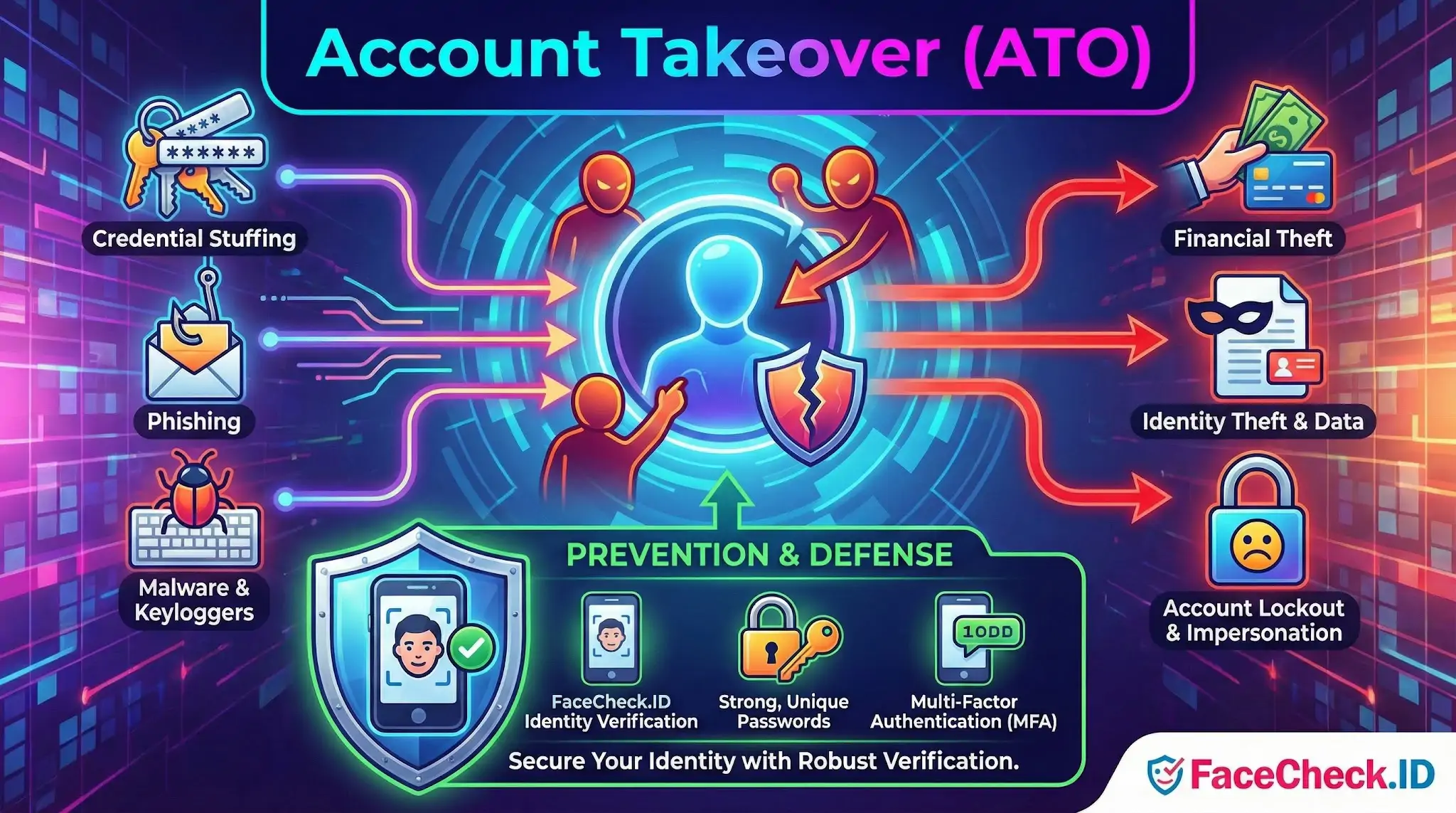
Account takeover (ATO) sits at the intersection of stolen credentials and stolen identity, and it is one of the reasons reverse face search has become useful outside of law enforcement. When an attacker hijacks a real person's social profile, dating account, or messaging app, the photos on that account stay the same, which means the original owner's face is now attached to whatever the attacker decides to do next.
How ATO connects to face search
Most account takeover advice focuses on passwords, MFA, and SIM swapping. The face-recognition angle matters because attackers rarely change the profile photo right away. Keeping the original headshot is what makes the account convincing. Friends, matches, recruiters, and customers see a familiar face and assume the person behind the keyboard has not changed.
This creates a specific investigative pattern. If someone suspects an account they are talking to has been compromised, a reverse face search on the profile picture often surfaces the real owner's other accounts: a long-running LinkedIn page, an old Instagram, news mentions, a personal blog. When those legitimate footprints contradict what the suspect account is saying or doing, that gap is usually where the takeover shows up.
The same pattern works in the other direction. Victims who lose access to an account can use face search to find clones, mirror profiles, or scam pages that reuse their photos after the takeover. Attackers frequently spin up secondary accounts using stolen image sets, and those copies often end up indexed on dating sites, crypto investment scam pages, or fake escort listings.
Reading face-search results in suspected ATO cases
Face matches can suggest takeover, but they do not prove it on their own. A few patterns worth weighing:
- The same face appears on accounts with conflicting names, ages, or locations. Strong indicator that at least one account is fraudulent, though not necessarily a takeover of the original.
- The face matches a public figure, model, or stock photo source. The account is more likely a fake built from scraped images than a hijacked real account.
- The face matches an established profile with years of history, but recent activity on that profile suddenly shifts in tone, language, or topic. This pattern fits ATO more than impersonation.
- The face appears on scam-report sites, romance-scam databases, or breach dumps alongside unfamiliar names. Worth treating any current contact from that account with suspicion.
Image quality changes how much weight to put on these signals. Cropped avatars, heavy filters, low resolution, and off-angle shots all reduce match confidence and increase the chance of lookalike false positives. A single weak match is not evidence of anything.
What attackers do with the face still attached
Once an attacker holds an account, the original profile photo becomes a tool. Common downstream uses that face search can sometimes detect:
- Romance scams run from the hijacked account, where the attacker leans on the existing friend network and photo history for credibility
- Investment and crypto pitches sent from a trusted contact's messenger
- New fake accounts created on other platforms using images pulled from the compromised one
- Marketplace and rental scams where the seller's "verified" photo is really a stolen identity
- Synthetic profiles that mix the victim's real photos with fabricated bios
The faster the original owner notices unauthorized image reuse, the easier it is to get clone accounts taken down before they collect victims.
Limits of face search in ATO investigation
Face search cannot tell you whether an account was taken over, only whether the face on it appears elsewhere online. A profile that matches an older identity could be:
- A genuine takeover
- A fake built from scraped photos with no compromise involved
- The same person legitimately using the same headshot across years of accounts
- A lookalike, especially with low-quality images
Confirming an actual ATO still requires platform-side evidence: login alerts, device changes, password reset records, payment changes, or contact with the real account owner through a verified channel. Face-search results are a starting point for asking sharper questions, not a substitute for the account holder confirming what happened.
FAQ
What does “Account Takeover (ATO)” mean in the context of face recognition search engines?
Account Takeover (ATO) is when an attacker gains control of an online account (social media, email, marketplace, dating app, etc.) and then uses that account to impersonate the real owner. In face-recognition-search contexts, ATO often shows up as a hijacked profile that suddenly uses different photos, or as a stolen profile photo that appears across multiple accounts after an attacker reuses it.
How can face recognition search engines help detect a suspected account takeover?
They can help you check whether the profile’s face photos appear elsewhere on the public web. ATO suspicion increases when the same face image (or very similar face photos) is found on many unrelated accounts, especially if the timestamps, usernames, or locations conflict. The results should be treated as investigative leads, not proof of takeover.
What face-search result patterns are common red flags for ATO vs normal reposting?
Common red flags include: (1) the same headshot appearing across multiple different names/usernames; (2) the “same person” matches are concentrated in scam-report, fake-profile, or spammy pages; (3) the earliest/most credible source looks like a legitimate person’s long-standing profile, while newer copies appear suddenly; (4) the account you’re checking recently switched photos, bio, or handle and the new face photo matches a different identity trail online.
If a face search returns matches, does that confirm an account was taken over?
No. Matches can occur because the person is widely reposted (public figure), the photo is a stock/model image, the account owner reused their own photos across platforms, or the result is a look-alike/false match. ATO is more plausible only after you validate sources (original posts, consistent usernames, consistent history) and confirm the account’s behavior changed (new messages, unusual requests, new payment details, etc.).
How can I use FaceCheck.ID (or similar tools) more safely when investigating a possible account takeover?
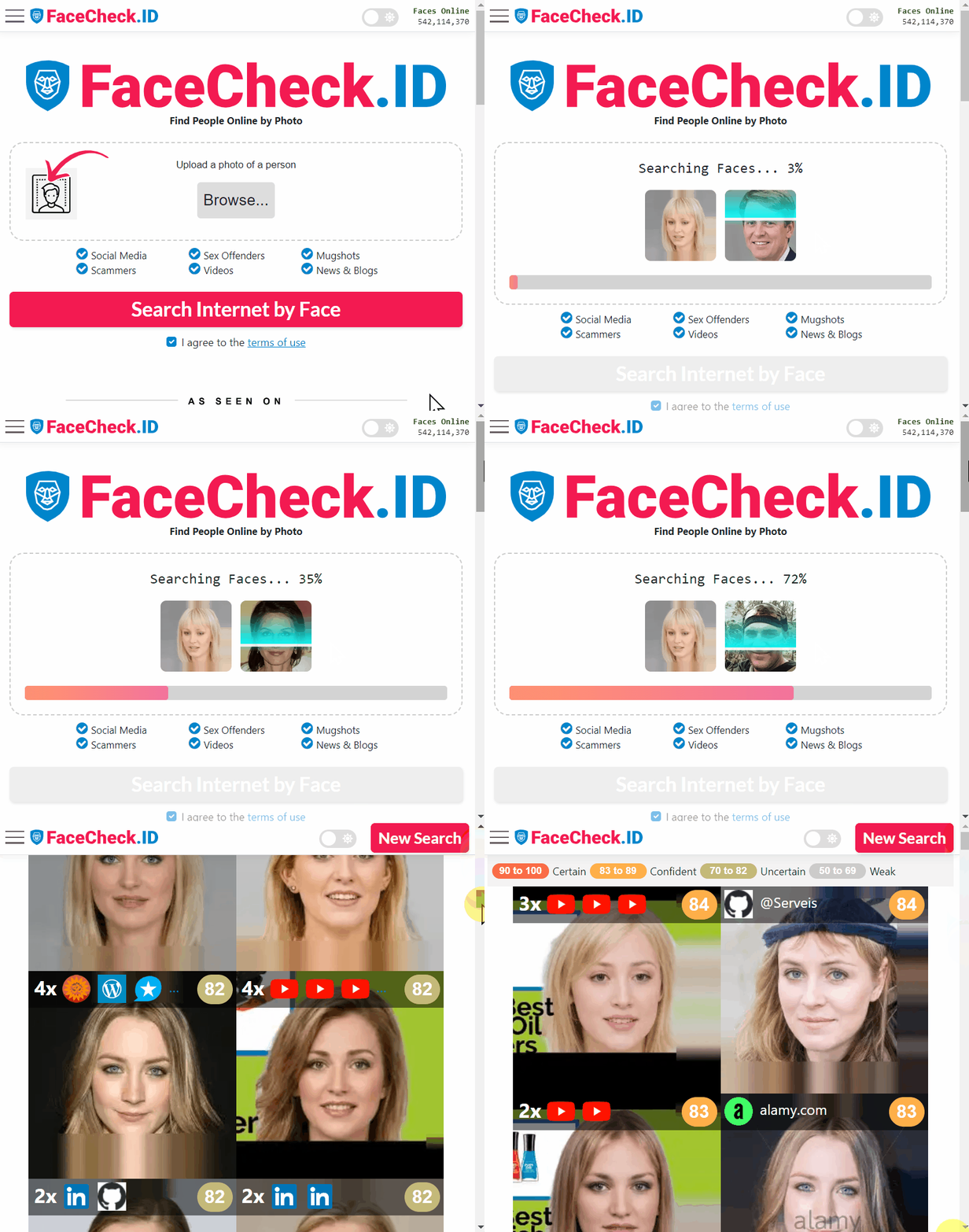
Use it to compare multiple photos from the account (older and newer) and look for consistent identity trails across credible sources. Prefer high-quality, front-facing images and sanity-check top hits by opening the source pages and verifying context (date, profile history, repost vs original). Avoid doxxing, harassment, or public accusations; if you suspect ATO, use platform reporting tools, secure your own accounts (password manager, unique passwords, MFA), and document findings privately in case the platform or the account owner needs evidence.

Recommended Posts Related to account-takeover
-
140+ Common Romance Scammer Lines, Excuses & Red Flags to Watch For in 2026
These are often account takeover attempts.