Contractor Fraud: Vetting Faces Before You Sign
Contractor fraud often starts with a face and a story: someone shows up after a storm, hands over a business card, and promises fast repairs at a fair price. Running that face through a reverse image search can reveal whether the person matches the company they claim to represent, whether they appear under different names on different sites, or whether their photo has surfaced in past complaints, scam reports, or court records.
How face search fits into vetting a contractor
Most homeowners verify a license number or a company name, but they rarely verify the person standing on their porch. That gap is where impersonation thrives. A scammer can borrow a legitimate company's branding, print convincing paperwork, and operate for weeks before the real business hears about it.
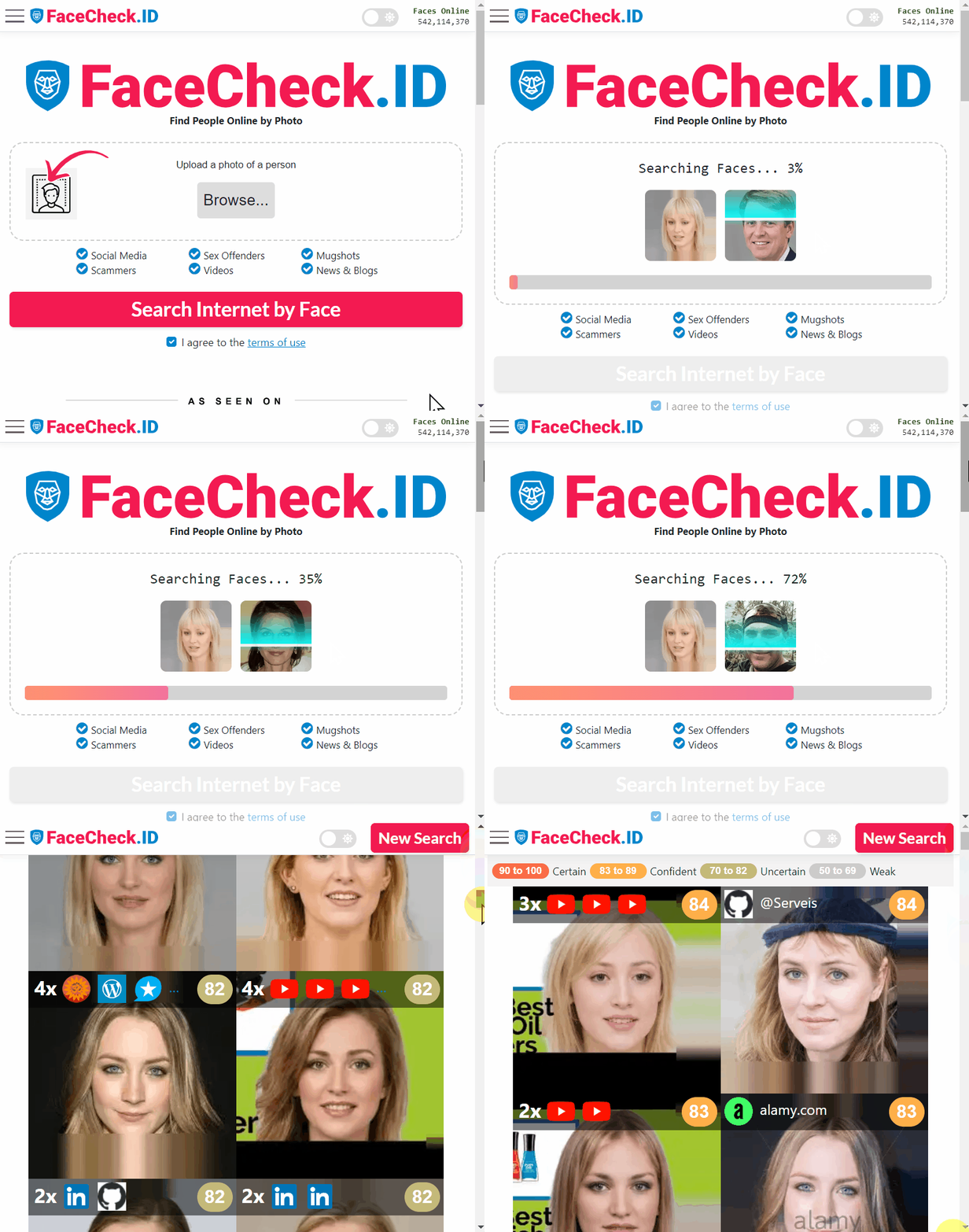
A face search on the contractor, the estimator, or the crew lead can surface useful signals:
- LinkedIn or industry directory profiles that confirm the person actually works for the company they claim
- News coverage or local arrest records tied to construction fraud, theft, or unlicensed work
- Consumer complaint forums, BBB pages, or neighborhood apps where the same face appears under a different business name
- Old social profiles showing the person operating in a different state shortly before storm-chasing season
- Reused stock photos on a contractor website, indicating the "team" page is fabricated
A clean match to a verifiable, long-standing professional presence is reassuring. A face that only appears on a one-page website registered last month is not.
Patterns face search can expose
Repeat offenders in contractor fraud often rebrand. They dissolve one LLC, register another, and keep working with the same crew. The business name changes, but the faces do not. Reverse image search is well-suited to this because it ignores the name on the truck and focuses on the person.
Common patterns worth checking:
- The same face tied to multiple company names across different states
- A contractor photo that also appears on unrelated profiles, such as dating sites or fake review accounts, suggesting an identity built for deception
- Crew members whose faces appear in past mugshot databases for theft, fraud, or assault
- "Storm chaser" operators whose social media places them in a different region every few months, following weather events
- Headshots on a contractor site that match stock photo libraries or photos lifted from another company
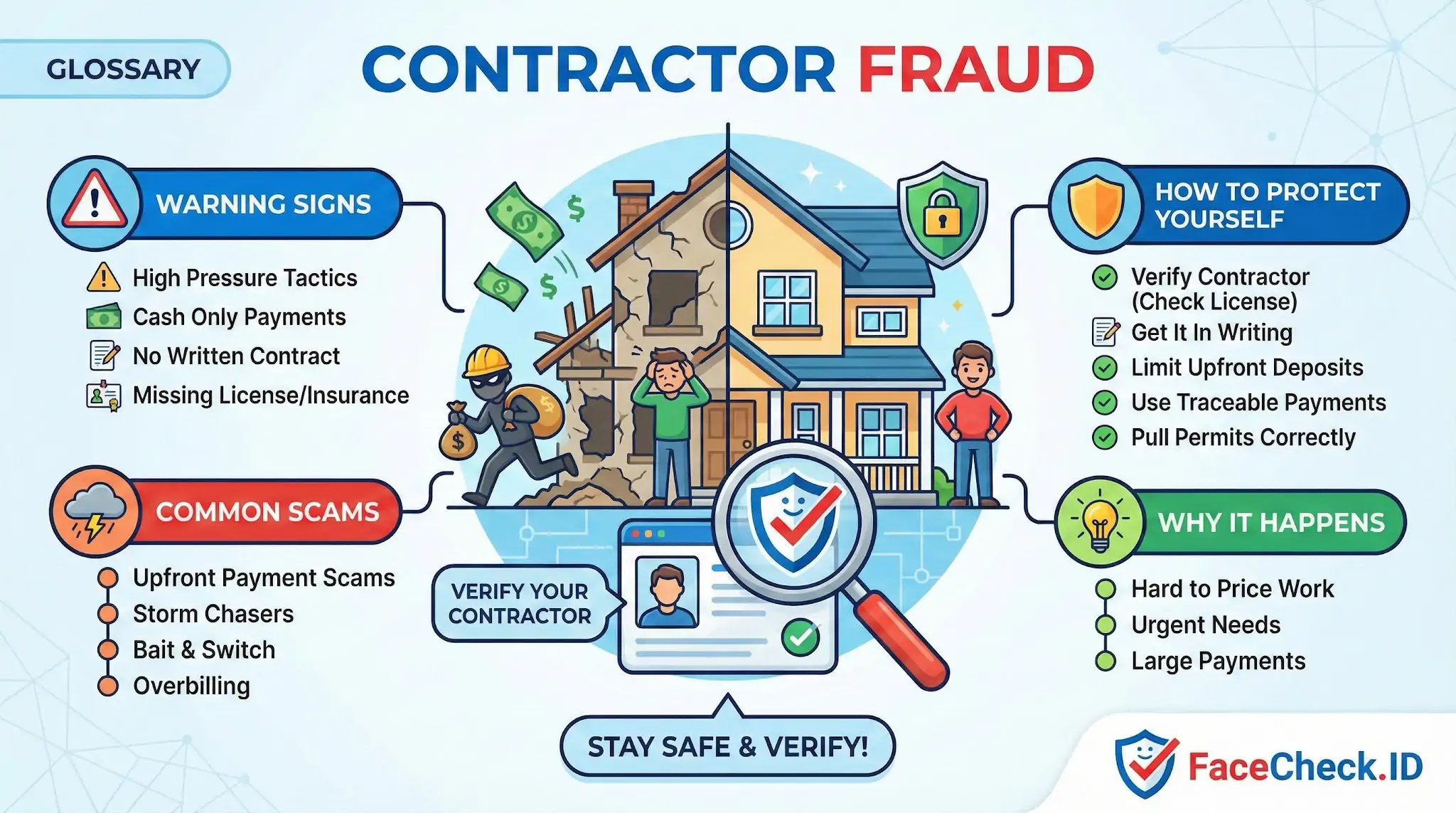
These signals do not prove fraud on their own, but combined with missing licensing, cash-only payment demands, or refusal to sign a written contract, they sharpen the picture.
Practical steps before signing
Before paying a deposit, run the person, not just the paperwork:
- Photograph the contractor and any crew leads during the estimate, with their consent or in a public-facing context such as their truck or branded uniform
- Search those images and compare results to the company's official site and licensing records
- Cross-check any face that appears in scam-warning posts, even if the name is different
- Look for consistency between the person's online history and how long the business claims to have operated
- Save the search results, screenshots, and any matching pages in case you need them later for a complaint or a lien dispute
Document everything in writing. A face match is one input. Licensing status, insurance verification, permit handling, payment terms, and references still matter.
What face search cannot prove
Face recognition can suggest identity. It cannot confirm intent, skill, or honesty. A contractor with a clean online presence can still do shoddy work or disappear with a deposit. A contractor whose face appears in an old news story may have been cleared, misidentified, or reformed. Lookalikes are real, especially for common demographics, and low-quality photos produce more false positives.
Treat face search as a way to surface questions, not deliver verdicts. If results raise concerns, ask the contractor directly, request documentation, and verify through licensing boards and insurance carriers. If results look clean, keep the standard protections in place anyway: written contracts, milestone payments, traceable payment methods, and permits pulled by the contractor. Fraud prevention is a stack of checks, and identity verification through face search is one layer among several.
FAQ
What is “Contractor Fraud” in the context of face recognition search engines?
In face-recognition-search investigations, “Contractor Fraud” commonly refers to a contractor (or alleged contractor) using a false or stolen identity—often via a profile photo that doesn’t belong to them—to win work, get paid, or access systems. A face recognition search engine can help by checking whether the same face photo appears across multiple names, resumes, marketplaces, or scam reports, which can be a warning sign (but not proof) of fraud.
How do scammers use stolen or synthetic face photos to commit contractor fraud, and what can face search reveal?
Scammers may copy a real person’s headshot, scrape images from social media, or use AI-generated (synthetic) portraits to build “credible” contractor profiles. Face search can reveal photo reuse across unrelated contractor listings, different geographic locations, mismatched biographies, or multiple platform accounts—patterns that often indicate impersonation or a fake persona rather than a legitimate business presence.
If I run a contractor’s profile photo through a face search (e.g., FaceCheck.ID) and get matches, what should I do next?
Treat matches as leads: open the source pages and verify context (is it the same person, an old repost, a screenshot, or a look-alike?). Cross-check business identifiers (licensed business name, address, phone, tax/registration info where appropriate), compare timelines, and look for a consistent portfolio history. If results suggest impersonation, contact the platform’s trust/safety team and avoid sending money or sensitive documents until identity and legitimacy are verified.
What are common false positives or misleading patterns when investigating contractor fraud with face recognition search engines?
Misleading patterns include look-alike matches, reposted headshots (e.g., “top contractors” roundups), stock-photo models used in ads, heavily edited/filtered selfies, and low-quality screenshots that change facial features. Another pitfall is assuming that a match to a “scam report” page proves wrongdoing—those pages can contain user-submitted claims or scraped content. Always validate with multiple independent signals before drawing conclusions.
How can I reduce privacy risk and avoid harm when using face search to check for contractor fraud?
Use the minimum necessary image (crop to the face, remove children/other bystanders), avoid uploading IDs or documents, and keep results private until verified. Do not publish accusations based solely on face-search hits; instead, document evidence, verify through official channels (licensing boards, corporate registries, platform verification), and escalate to the marketplace/platform or appropriate authorities if there’s credible fraud risk. If using tools like FaceCheck.ID, follow the service’s rules and use results for due diligence rather than definitive identification.