Pinterest Visual Search vs Face Search

Pinterest Visual Search is one of the better-known consumer examples of image-based search, and it sits in the same category of technology that powers face recognition tools like FaceCheck.ID. Both rely on extracting visual features from an image and matching them against an index, but they serve very different goals: Pinterest matches styles and objects, while face search matches identities.
How Pinterest Visual Search compares to face search
Pinterest analyzes images for color palettes, shapes, textures, and object categories, then returns Pins that share those attributes. The system is tuned for similarity, not identity. If you upload a photo of a striped sofa, it surfaces other striped sofas, including ones from different brands.
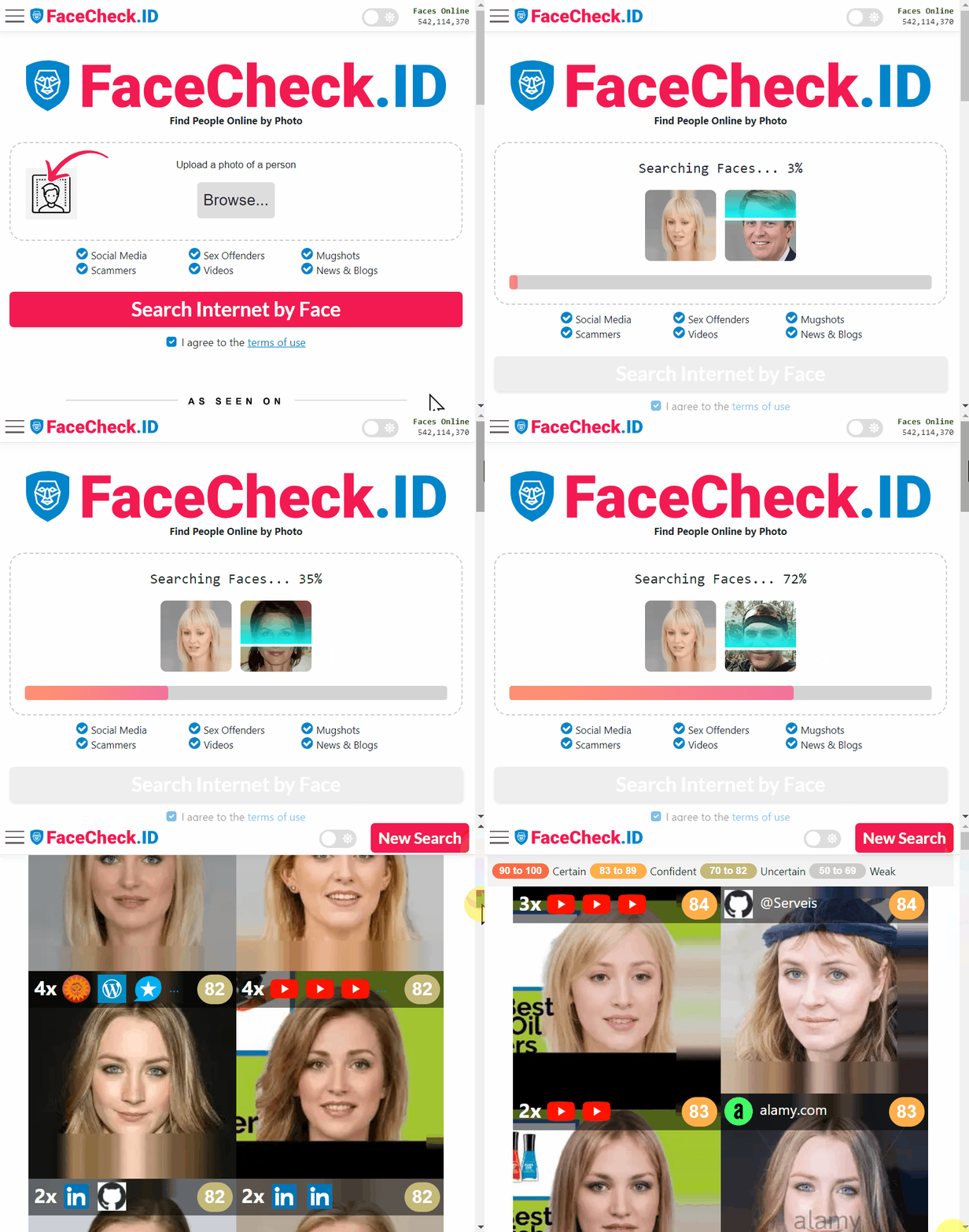
Face search works differently. Instead of asking "what does this look like?" it asks "who is this?" A face-recognition engine extracts a numerical embedding from facial geometry such as eye spacing, jawline, and the relative position of features, then searches for the same person across indexed pages. A Pinterest-style search would happily return ten different people with similar haircuts. A face-search engine ignores the haircut and tries to lock onto the face itself.
This distinction matters when interpreting results. A Pinterest hit means "visually related." A FaceCheck hit means "the underlying biometric pattern matches," which is a much stronger and more sensitive claim.
Why Pinterest images show up in reverse-image investigations
Pinterest is heavily indexed by search engines, and Pins frequently include faces: lifestyle bloggers, models in fashion boards, wedding inspiration photos, influencer headshots, and reposted celebrity images. That makes Pinterest a recurring source in face-search results for several reasons:
- Pins are often reuploaded from original sources, so the same face can appear on dozens of boards under different captions.
- Many Pins strip or alter metadata, which makes attribution harder.
- Aesthetic boards group by style, so a scammer's stolen photo can end up on Pins about "boyfriend goals" or "men's fashion" without the real person ever knowing.
- Pinterest images are commonly scraped and reused on dating profiles, fake accounts, and catfishing scams.
When a face-search result points to Pinterest, it usually is not the source of the identity. It is a secondary surface where someone else's photo has been re-pinned, often without consent or credit.
Practical use in catfish and scam investigations
If you run a face search and Pinterest results appear, treat them as breadcrumbs rather than answers. A useful workflow:
- Click into the Pin to find the original linked source. The pinner's destination URL often leads to a blog, brand site, or social profile that identifies the actual person.
- Check whether the same photo appears on multiple unrelated Pins. Heavy reuse across mood boards is a sign the image is widely circulated and could easily be stolen for a fake profile.
- Compare the Pinterest version to the suspect profile photo. Catfish accounts often crop, mirror, or apply filters to evade simple reverse-image checks, but face-recognition can still match through those changes.
- Look at the Pin's age. An image pinned years before a suspicious account was created is a strong indicator of identity theft.
Limits and what visual matching cannot prove
Pinterest Visual Search and face search both have failure modes worth understanding. Pinterest can confuse similar-looking products, and face recognition can produce false positives on identical twins, lookalikes, or low-resolution images shot at extreme angles. A match on either system is a starting point, not a verdict.
Even a high-confidence face match through a Pinterest-hosted image only proves the photo exists on Pinterest. It does not prove the pinner is the subject, that the subject endorsed the Pin, or that the account using the photo elsewhere is legitimate. Confirming identity still requires corroboration from the original source, direct context, or, in serious cases, contact with the person pictured. Visual matching narrows the field. Human judgment closes it.
FAQ
What is “Pinterest Visual Search,” and is it a face recognition search engine?
Pinterest Visual Search is a visual discovery feature that helps you find visually similar Pins (images) on Pinterest by selecting an image or a region within it. It is not designed as an open-web face recognition search engine for finding the same person across the internet; it primarily matches visual style and objects within Pinterest’s content rather than performing identity-focused face matching across external websites.
Can Pinterest Visual Search identify a person or find their social media profiles from a face photo?
No. Pinterest Visual Search is intended for discovering related visual content on Pinterest (e.g., outfits, makeup looks, decor ideas) and does not reliably identify a person by name or locate their profiles across other platforms. If your goal is an open-web face lookup, you would typically use a dedicated face search engine (such as FaceCheck.ID) and still treat any results as leads, not proof of identity.
Why might Pinterest Visual Search return many look-alike faces or irrelevant people when I search a face?
Pinterest Visual Search can prioritize visual similarity (lighting, pose, makeup style, hair, image aesthetics) rather than confirming the same individual. Faces are also common and visually repetitive across Pins, so “similar-looking” people and themed collections (e.g., “brunette bob haircut”) may rank highly even when they are not the same person.
How can I use Pinterest Visual Search more safely when a photo contains someone’s face?
Use it for inspiration, not identification. If possible, select a non-face region (clothing, background item, hairstyle) to reduce privacy risk and avoid misidentifying someone. Avoid sharing or reposting conclusions about who a person is based on visual matches, and don’t use the tool to target, harass, or dox anyone.
When does it make sense to use FaceCheck.ID instead of Pinterest Visual Search for a “visual search” workflow involving faces?
Use Pinterest Visual Search when you want similar Pinterest content (fashion, beauty, product ideas) from an image. Consider a dedicated face recognition search engine like FaceCheck.ID when your goal is to find other instances of the same face across the public web (for example, checking possible photo reuse or impersonation). Even then, verify matches carefully using source context (dates, usernames, captions, cross-links), and do not treat a face match alone as identity confirmation.