Romance Scam: Face Search Red Flags
Romance scams rely on a single weak point: the victim has no reliable way to confirm who is actually behind the photos and messages. Face search is one of the few tools that can break that asymmetry, because most romance scammers reuse stolen photos of real people, and those photos usually exist somewhere else on the public web.
How face search exposes a romance scammer
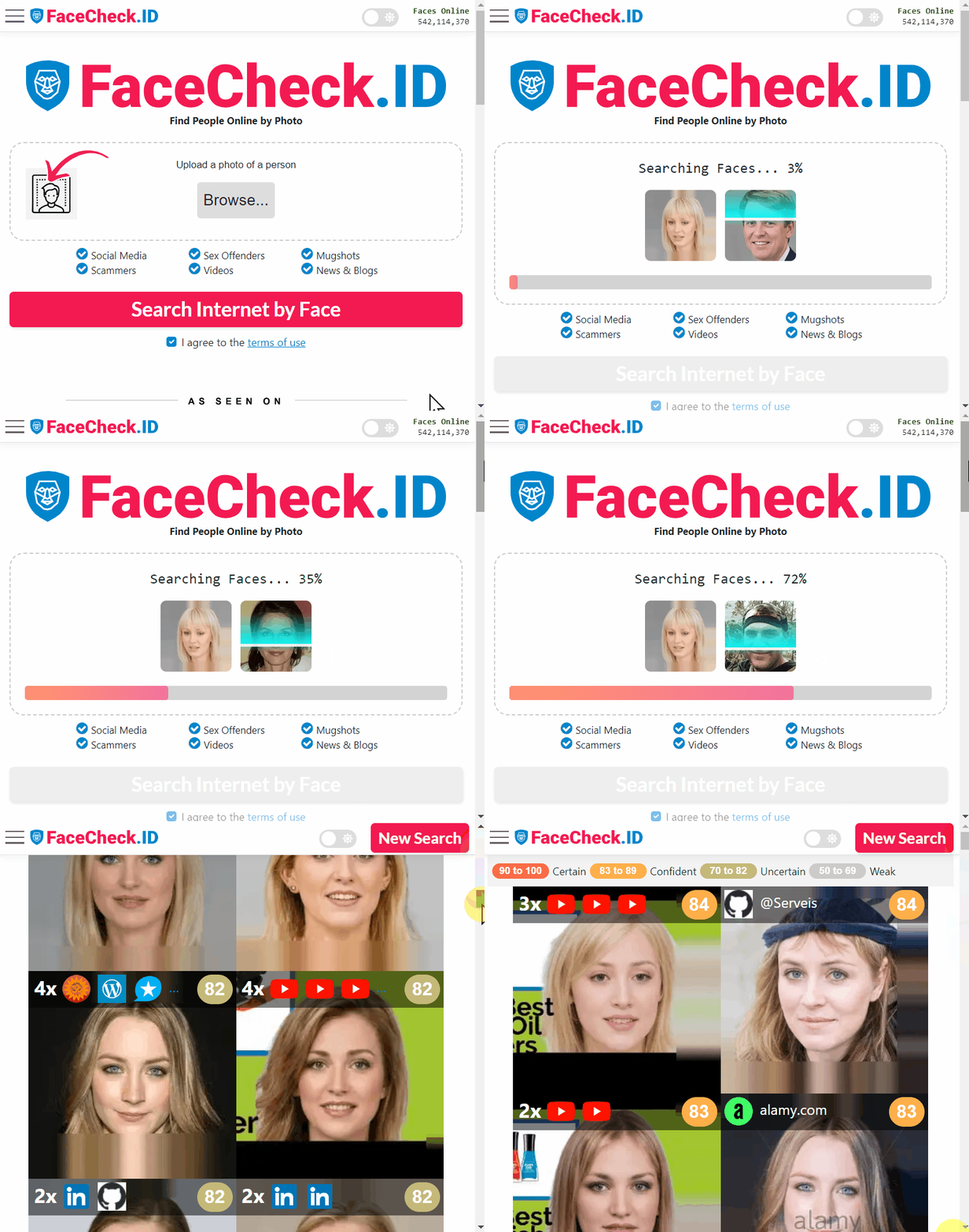
When someone you have met online sends you photos, those images often come from a real person whose pictures were taken from Instagram, LinkedIn, a modeling portfolio, a fitness account, or even an obituary. Running the photos through a reverse face search engine can surface the original source.
What you are looking for is a mismatch between the identity in the chat and the identity attached to the photos elsewhere online. Useful signals include:
- The same face appearing under a different name on Instagram, TikTok, or LinkedIn
- The face linked to a country, city, or profession that contradicts the scammer's story
- The same image showing up across multiple dating profiles with different names and ages
- The face appearing in scam-warning forums, romance-scam databases, or victim support groups
- Photos traced back to a real person who has publicly stated their images are being misused
A clean front-facing headshot tends to produce the strongest matches. Cropped selfies, low-light photos, or heavily filtered images often return weaker results, which is sometimes exactly why scammers send them.
Why scammers are getting harder to catch with photos alone
Skilled scammers test their stolen photos through reverse image search before deploying them, then favor images that return few or no hits. Some now use AI-generated faces, which will not match a real person anywhere because no real person exists. Others run video calls using deepfake filters or pre-recorded clips played in a fake call window.
This means a face search that returns nothing is not proof the person is real. It can mean:
- The photo is AI-generated
- The photo was taken from a private account that search engines do not index
- The image was edited, cropped, or mirrored enough to evade matching
- The photo is recent and has not yet been crawled
A face search that returns clear matches under a different name is much stronger evidence than a face search that returns nothing.
Patterns that face search alone cannot catch
Even when photos check out, the relationship can still be a scam. A real person's face paired with a stolen identity is common when scammers buy or harvest entire identity packages. Behavior matters as much as image verification:
- Refusal to do a live, unscripted video call where they follow a specific request like holding up three fingers
- Stories that explain away every meeting attempt, often involving overseas work, military deployment, oil rigs, or medical emergencies
- Fast escalation to declarations of love, especially within days
- Any request involving money, crypto, gift cards, bank logins, investment platforms, or shipping packages
- Pressure to move off the dating app to WhatsApp, Telegram, or Google Chat early
If photos pass a face check but the behavior fits this pattern, the photos are probably stolen from someone the scammer has not been caught using yet, or the scammer is using an accomplice on video.
What face-search results can and cannot prove
A face match can show that a photo belongs to a real person with a verifiable online presence under a different name. That is strong evidence of impersonation. What it cannot do is confirm the person you are talking to is the person in the photos. Two different conclusions are possible from the same match: the person you are chatting with is the genuine owner of those photos, or someone is impersonating them.
The investigative value comes from combining signals. Face search narrows the possibilities. Video verification, story consistency, payment requests, and a willingness to meet in person resolve the rest. Treat reverse face search as a filter that catches a large share of scams quickly, not as a final verdict on whether someone is trustworthy.
FAQ
How can face recognition search results help me figure out which profile photo source is the “original” in a suspected romance scam?
Treat face-search hits as leads and compare the surrounding context of each match: look for the earliest posting date, consistent ownership cues (same handle across platforms, matching biography details, long-running accounts), and higher-quality “first-generation” images (not cropped screenshots with UI elements). Reposts, scam warnings, and “too-new” accounts using the same face are common signs the dating profile is not the original source.
Should I run face searches on multiple photos from the same dating profile when I suspect a romance scam?
Yes. Run separate searches for several different photos (ideally different angles/lighting). If the profile is legitimate, the results often cluster around the same person and a consistent online footprint. If different photos resolve to different people—or one photo matches many unrelated identities—that inconsistency is a strong warning sign of stolen images, image swaps, or AI-generated/edited content.
What does it mean if a face search match points to a modeling portfolio, casting site, or professional headshot page during a romance-scam check?
It often indicates the scammer may be using publicly available professional photos that were easy to steal and that look “trustworthy.” Verify by checking whether the portfolio subject’s name, location, and age align with what the dating profile claims, and whether the portfolio predates the dating account. Professional headshots appearing long before the dating profile is a common indicator the dating profile is impersonating someone.
How can I verify a suspected romance scammer without tipping them off while using a face recognition search engine?
Do your verification privately first: save screenshots, run face searches, and cross-check claims (job, location, past posts) without confronting them. Avoid sending them your investigative findings or asking leading questions that reveal your methods. If you need proof, ask for a real-time photo with a specific, harmless prompt (e.g., holding today’s newspaper or making a specific gesture), then compare it with face-search results—while remembering that edited images and look-alikes can still mislead.
If a tool like FaceCheck.ID returns many matches for the same face, how should I triage them for romance-scam risk?
Prioritize matches that (1) appear on long-established, identity-bearing pages (professional profiles, consistent social accounts), (2) show the same person across many different life contexts, and (3) include multiple distinct photos (not just the same image reposted). Deprioritize clusters that are mainly repost sites, scam-report aggregators, or low-context pages. With FaceCheck.ID (or similar tools), use the strongest/most consistent matches to locate the likely real person’s footprint, then compare it against the dating profile’s story for contradictions.

Recommended Posts Related to romance-scam
-
How to Uncover a Romance Scammer Using Just a Picture
This step-by-step guide will walk you through the process of identifying a romance scammer using just a picture. Find Romance Scammer Using Just a Picture! To utilize ScammerPhotos.com in your search for a romance scammer, follow these steps:.
-
Unmasking Romance Scams: Expert Tips to Identify and Avoid Falling Victim
Romance scams are a specific kind of cruel: someone learns what you're hoping to hear, says it on a steady schedule for a few weeks, and then a relative gets sick. This one merges romance scams with the crypto bro playbook. Protect Yourself from Romance Scams.
-
Celebrity Romance Scams 2026: How Scammers Use AI Deepfakes and Stolen Photos to Steal Millions
The Rising Threat of Celebrity Impersonation Romance Scams in 2026. In 2026, romance scams have reached alarming new heights, fueled by AI technology that creates convincing deepfakes and fake images. The FBI reports that confidence and romance scams cost victims hundreds of millions annually, with many cases going unreported due to shame.
-
How Do You Reverse Image Search on Dating Sites?
But the anonymity of the internet also fuels catfishing and romance scams. International romance scam networks—often operating out of West Africa, Eastern Europe, or Southeast Asia—pose a serious risk. According to the FTC’s 2025 update, romance scams caused $1.3 billion in losses in 2024 in the U.S.
-
Romance Scams: How to Spot and Stop Them in 2026
Romance scams hit $1.3 billion in reported losses for the third consecutive year. The 2026 Romance Scam Playbook. Five years ago, romance scams were clumsy.