Yandex Images в поиске по лицу
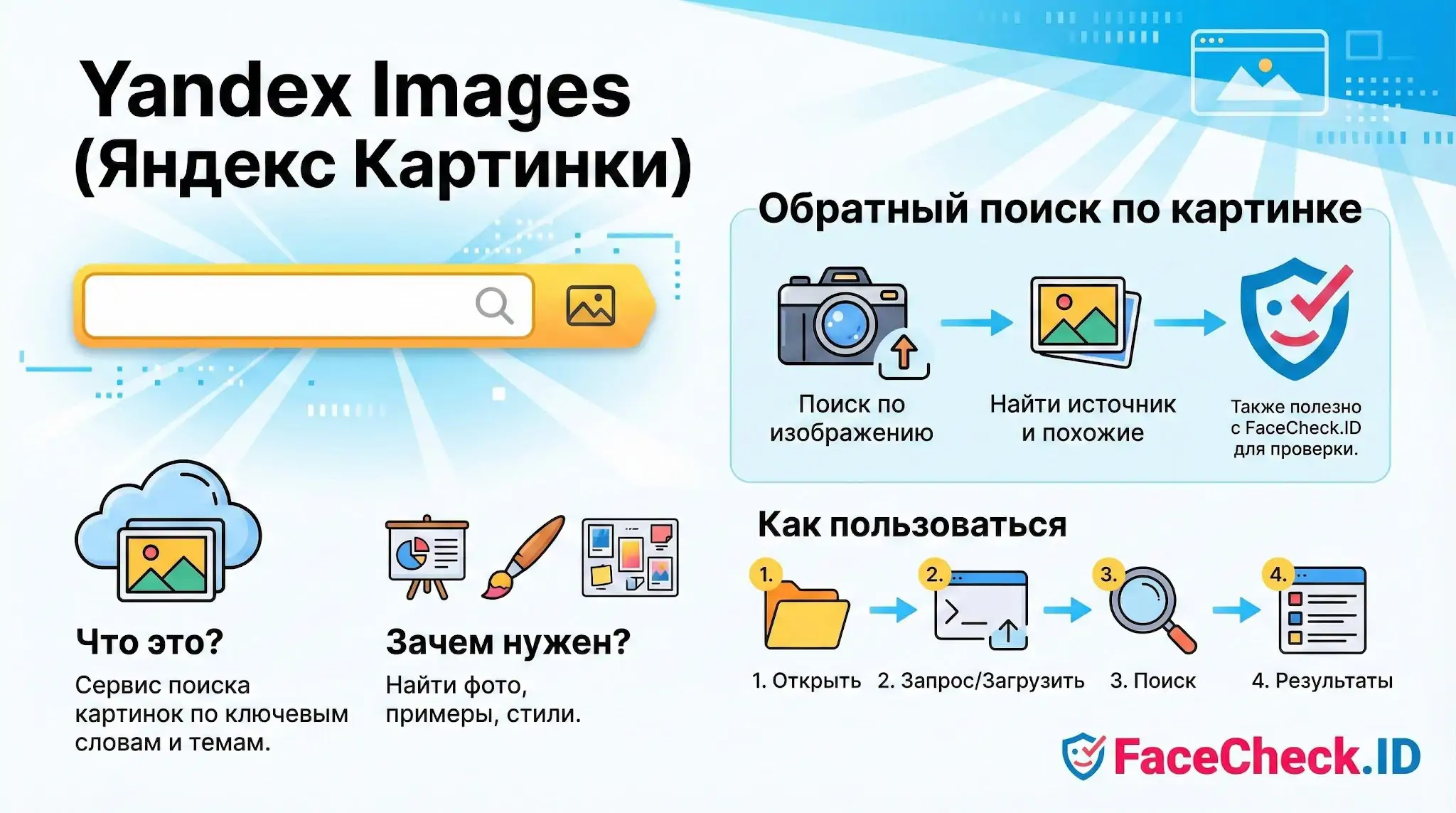
Yandex Images is one of the few reverse image search engines that consistently surfaces faces and visual matches missed by Western tools, which makes it a recurring reference point in any conversation about face search and online identity discovery. For investigators, journalists, and people checking whether a profile photo is genuine, it sits alongside FaceCheck.ID as part of a broader toolkit rather than a replacement for dedicated face recognition.
Why Yandex Images comes up in face searches
Yandex Images runs both a keyword search and a reverse image search. The reverse search is what matters for identity work. Upload a photo or paste a URL, and Yandex returns visually similar images plus pages where matching or near-matching pictures appear. Compared to Google Images or Bing Visual Search, Yandex tends to be more aggressive about returning faces that look like the input, even when the background, crop, or lighting differs.
This behavior is useful and risky at the same time. It means Yandex can locate a reused profile picture across Russian-language forums, VK accounts, dating sites, and obscure blogs that Google does not index well. It also means it returns lookalikes, which a careless user can mistake for the same person.
How it differs from a dedicated face search engine
Yandex Images is a general visual similarity engine. It compares overall image features, including faces, clothing, background, and composition. FaceCheck.ID, by contrast, is built around face vectors. It tries to match the same person regardless of haircut, age, or background.
In practice this leads to different result patterns:
- Yandex often returns the exact same image republished elsewhere, plus visually similar scenes.
- Yandex can find a different photo of the same person if the pose, framing, and lighting are close to the original.
- A face-specific tool is more reliable when the subject appears in a completely different setting, wearing different clothes, at a different age, or photographed from another angle.
For an investigation, the two are complementary. Yandex is strong at finding image reuse and tracking down original sources. A face engine is stronger at confirming that two visually different photos show the same individual.
Practical uses in identity and scam work
People reach for Yandex Images in scenarios like:
- Checking a dating profile photo for prior use on escort sites, stock libraries, or Russian-language social networks.
- Tracing a "model" headshot used in romance scams back to the actual person whose photos were stolen.
- Locating the original source of a viral image before it was cropped or recaptioned.
- Identifying objects, locations, tattoos, or uniforms in a photo when the face alone is not enough.
A common workflow is to run a face through FaceCheck.ID first to identify candidate profiles, then drop the suspect photos into Yandex Images to map every site that has hosted them. The combination usually reveals whether a face has been recycled across many fake accounts.
What Yandex Images cannot tell you
Visual similarity is not identification. Yandex will happily return faces that share a hairstyle, head angle, and skin tone with the input, and a tired investigator can string those together into a false story. A few specific limits worth keeping in mind:
- A match on Yandex proves the image exists on a page, not that the person on the page is the person in the photo.
- Heavily filtered, cropped, or compressed images degrade results quickly.
- Coverage is uneven by region and language. Yandex indexes the Russian-speaking web more deeply than most engines, but its reach into private platforms, paid databases, and recent mobile-only content is limited.
- Reverse image hits on news sites, stock libraries, or AI-generated portrait galleries can mislead anyone who treats a single matching page as confirmation.
Treat Yandex Images as a lead generator. Confirm identity with a dedicated face search, cross-reference against multiple sources, and remember that an image found online still needs human judgment about who actually appears in it and why.
Часто задаваемые вопросы
Что такое «Yandex Images» (Яндекс.Картинки) в контексте поиска по распознаванию лиц?
Yandex Images — это сервис поиска и обратного поиска по изображениям, который в основном сопоставляет картинки по визуальному сходству, источникам и контексту на страницах. В контексте face recognition search engines его часто используют как вспомогательный инструмент: он может помочь найти исходную публикацию фото, похожие кадры или страницы, где встречается изображение, но обычно не является специализированным «поисковиком по лицу» (1:N) по базе лиц, как отдельные face search-сервисы.
Распознаёт ли Yandex Images лица так же, как специализированные поисковики по лицу (например, FaceCheck.ID)?
Как правило, Yandex Images ориентирован на общий поиск по изображениям (похожие картинки, дубликаты, варианты кадрирования) и может не давать стабильного «поиска человека по лицу» между разными фотографиями одного и того же человека. Специализированные сервисы face search (в т.ч. FaceCheck.ID) обычно используют эмбеддинги/векторные признаки лица и поиск по похожести именно лица, поэтому они чаще находят совпадения между разными снимками одного человека — но при этом тоже могут ошибаться и выдавать ложные совпадения.
Когда имеет смысл использовать Yandex Images вместе со специализированным поиском по лицу (например, FaceCheck.ID)?
Имеет смысл сочетать инструменты, если вы хотите перепроверить и уточнить контекст. Yandex Images может помочь: (1) найти первоисточник изображения/страницу публикации; (2) обнаружить репосты, версии в другом разрешении и кадрирование; (3) найти тот же снимок в разных местах. А специализированный поиск по лицу (например, FaceCheck.ID) может помочь найти другие фотографии того же человека, даже если исходное фото другое. Совмещение снижает риск ошибочных выводов: совпадение по лицу лучше подтверждать через источники и контекст, найденные обычным поиском по картинкам.
Почему Yandex Images может показывать нерелевантные результаты при попытке «найти человека по лицу»?
Нерелевантные результаты возможны, потому что обратный поиск по картинке чаще оптимизирован под «похожесть изображения», а не под идентификацию личности по лицу. На результаты влияют фон, освещение, ракурс, качество, ретушь, коллажи, текст на изображении и популярность источника. В итоге Yandex Images может находить визуально похожие портреты (или тот же стиль снимка), но это не означает, что найден один и тот же человек.
Какие меры приватности учитывать при использовании Yandex Images для проверки фото, связанные с лицами?
Если вы проверяете изображения с лицами, учитывайте: (1) не загружайте чужие фото без законного основания и согласия, особенно если цель — идентификация; (2) по возможности используйте нейтральные кадры без лишних персональных деталей (геометки, документы, адреса в кадре); (3) не делайте вывод «это точно тот же человек» только по похожим результатам — перепроверяйте по контексту страницы; (4) если вы тестируете собственную «видимость» в сети, сравните результаты Yandex Images с результатами специализированного face search (например, FaceCheck.ID), но действуйте аккуратно и соблюдайте правила сервиса и местные законы.

Рекомендуемые публикации, связанные с yandex-images
-
Руководство по поиску по изображениям: ответы на все ваши вопросы
Yandex Images: Бесплатно без явных ограничений. Посетите Google Images, [TinEye](https://tineye.com) или [Yandex Images](https://yandex.com/images/). Yandex Images (сильная сторона - идентификация картин).
-
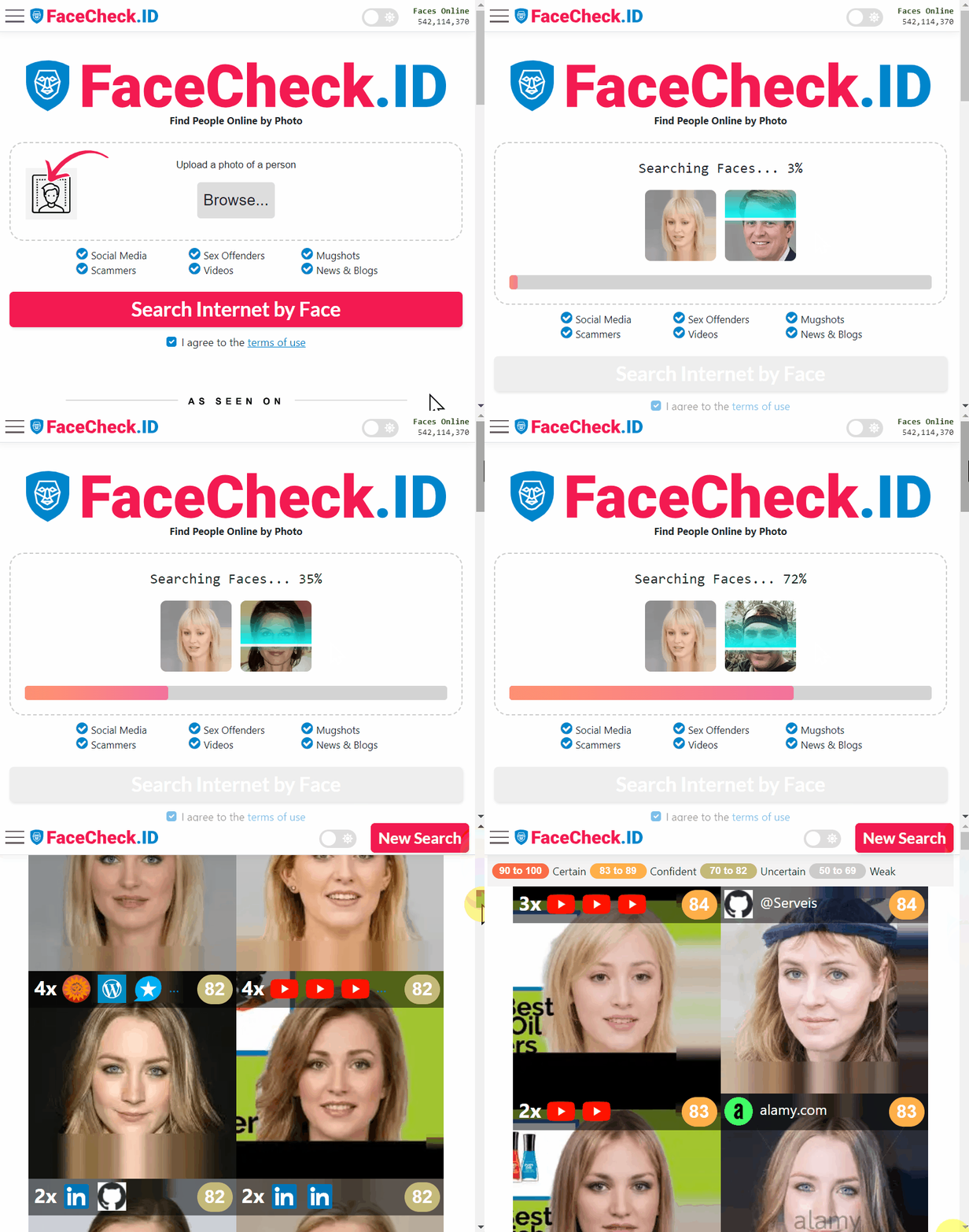
Как выполнить обратный поиск изображения на скриншоте с FaceCheck.ID
Попробуйте Bing Visual Search, TinEye или Yandex.Images для получения дополнительных результатов.
-
Следует ли мне использовать поиск по обратному изображению на себе?
Yandex Images: Известен своей силой в определении изображений, связанных с Восточной Европой.
-
Как найти и удалить обнажённые дипфейки с помощью FaceCheck.ID: пошаговое руководство
Yandex Images – часто находит то, что другие пропускают.