How to Find Anyone Online: A Guide to Internet Sleuthing
In this article, we're going to discuss
- Why people search for others online
- Search by Face and Find Anyone Online Using a Photo
- The wide range of reasons to look someone up
- In-Depth Manual on How to Find Someone Online
- Getting Started with Online People Searches
- How search engines can be your best friend
- The art of choosing the right keywords and search tricks
- Why personal details matter in your search
- Top Websites and Platforms to Find Your Long-Lost Connections
- People search engines and Open Source Intelligence tools
- Find Anyone on Social Media with Sherlock
- Public records and databases you can access online
- Reconnecting through alumni networks and professional groups
- Mastering Search Techniques and Insider Tips
- Boolean search operators made easy
- Reverse image searches explained
- How email addresses and phone numbers can lead you to the right person
- Tracking down aliases, usernames, and online nicknames
- Keeping It Legal, Ethical, and Respectful
- Remembering to respect others' privacy
- Staying within the law when searching online
- Being mindful of the ethics of internet detective work
- Taking Control of Your Online Presence and Safeguarding Your Privacy
- Why it's crucial to know your digital footprint
- Steps to remove or manage personal information online
- Handy tips for staying safe and secure on the internet
- A quick recap of essential points and strategies
- Embracing the power of the internet for reconnecting with people
- Encouraging responsible and respectful use of online search skills
- Websites to Find Anyone's Information - Free people search
- Find Anyone Online with just a Pic!
Why people search for others online
People look people up online for all kinds of reasons — some sweet, some practical, some you'd rather not admit at a dinner party. Maybe it's the friend who fell off the map after college. Maybe it's the guy from the dating app whose photos feel a little too polished. Maybe it's a new business contact you'd like to verify before you wire anyone money. The point is, the trail exists, and knowing how to follow it saves you time, money, and the occasional bad decision.
Search by Face and Find Anyone Online Using a Photo
The wide range of reasons to look someone up
Reconnecting with a childhood friend. Tracking down a relative who stopped answering holiday emails years ago. Running a quiet check on a potential business partner before signing anything. Confirming that the "marketing executive in Dubai" you've been chatting with for three weeks is, in fact, a real human. The reasons vary. The toolkit, as it turns out, is mostly the same.
In-Depth Manual on How to Find Someone Online
Below: the search engines, the social platforms, the public records, the slightly obscure OSINT tools that investigators actually use. Plus a few asides on staying on the right side of the law and not behaving in a way that would make a reasonable person uncomfortable.
Getting Started with Online People Searches
How search engines can be your best friend
Google, Bing, and Yahoo are the front door. They've indexed billions of pages, and most of what you want is sitting in there waiting for someone to ask the right question. They have limits — paywalled databases, private accounts, anything that isn't crawlable — but they're a strong foundation.
The art of choosing the right keywords and search tricks
Start with the full name in quotes: "John Smith". Then stack what you know. Location, job, hobby, the name of the obscure indie band on their old MySpace. "John Smith" "Seattle" "photographer" is roughly a thousand times more useful than John Smith.
Refine from there. The minus sign drops terms you don't want ("John Smith" -baseball for when the athlete is drowning out your John). The site: operator searches within a single domain (site:linkedin.com "John Smith"). These two tricks alone will carry you further than most people realize.
Why personal details matter in your search
The more you know going in, the faster everything goes. Age, hometown, the high school, the college, the employer, even a remembered hobby — each one cuts the noise. If your John Smith went to Reed and now works at a wildlife nonprofit, you don't have a John Smith problem anymore. You have one guy.
Cross-reference as you go. A LinkedIn detail confirms a city, which confirms a Facebook profile, which surfaces a username that turns up on Reddit. Every breadcrumb makes the next one easier.
Top Websites and Platforms to Find Your Long-Lost Connections
People search engines and Open Source Intelligence tools
OSINT — Open Source Intelligence — is just a serious-sounding name for "looking things up using stuff that's already public." Here are the tools worth knowing:
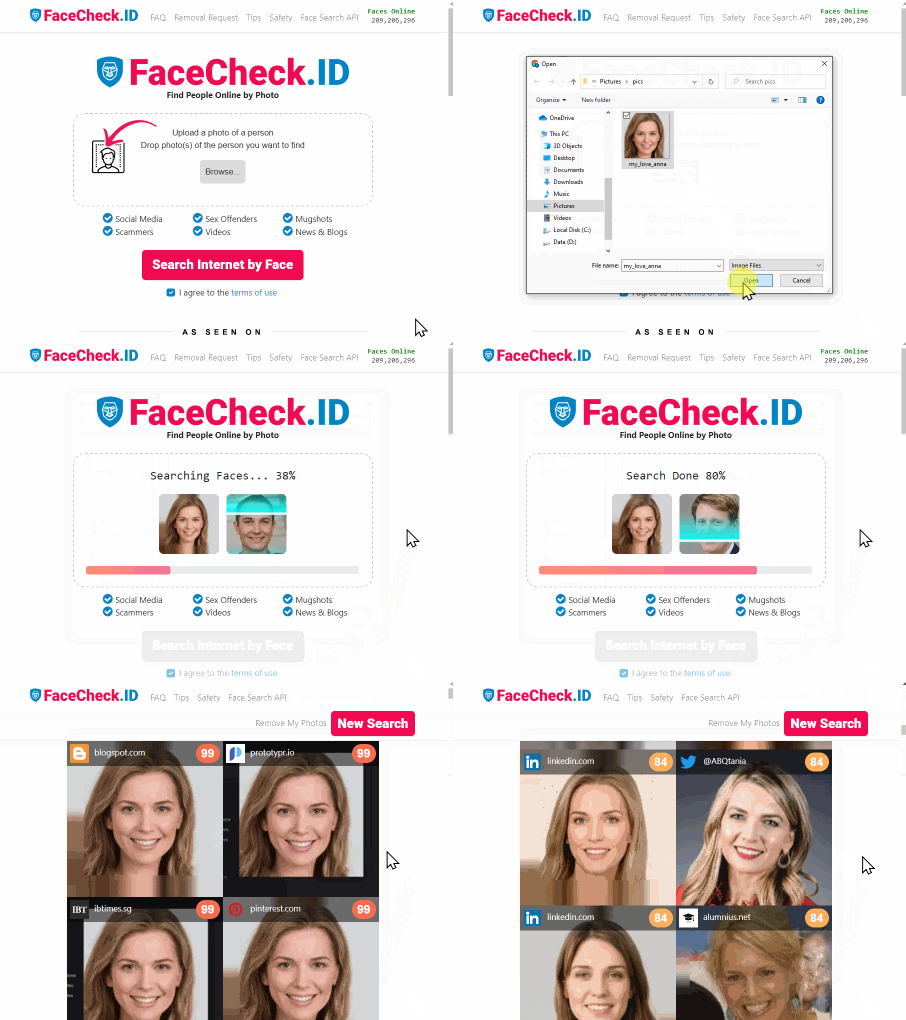
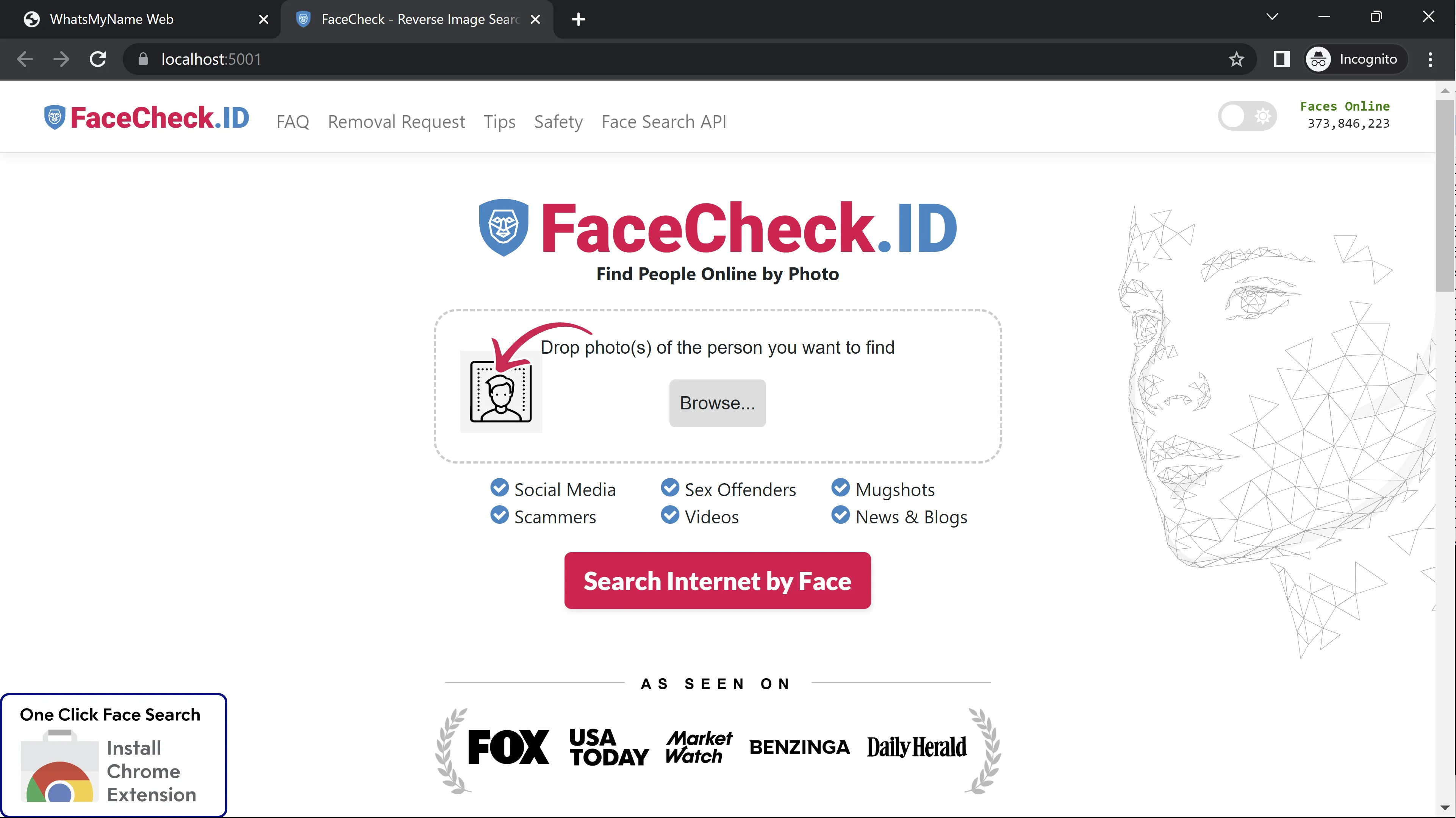
- FaceCheck.ID: A search-by-face engine that pulls from blogs, news articles, mugshots, and social media to confirm whether the person in a photo is who they claim to be. Useful when the vibe is off and you'd like to know before, not after.
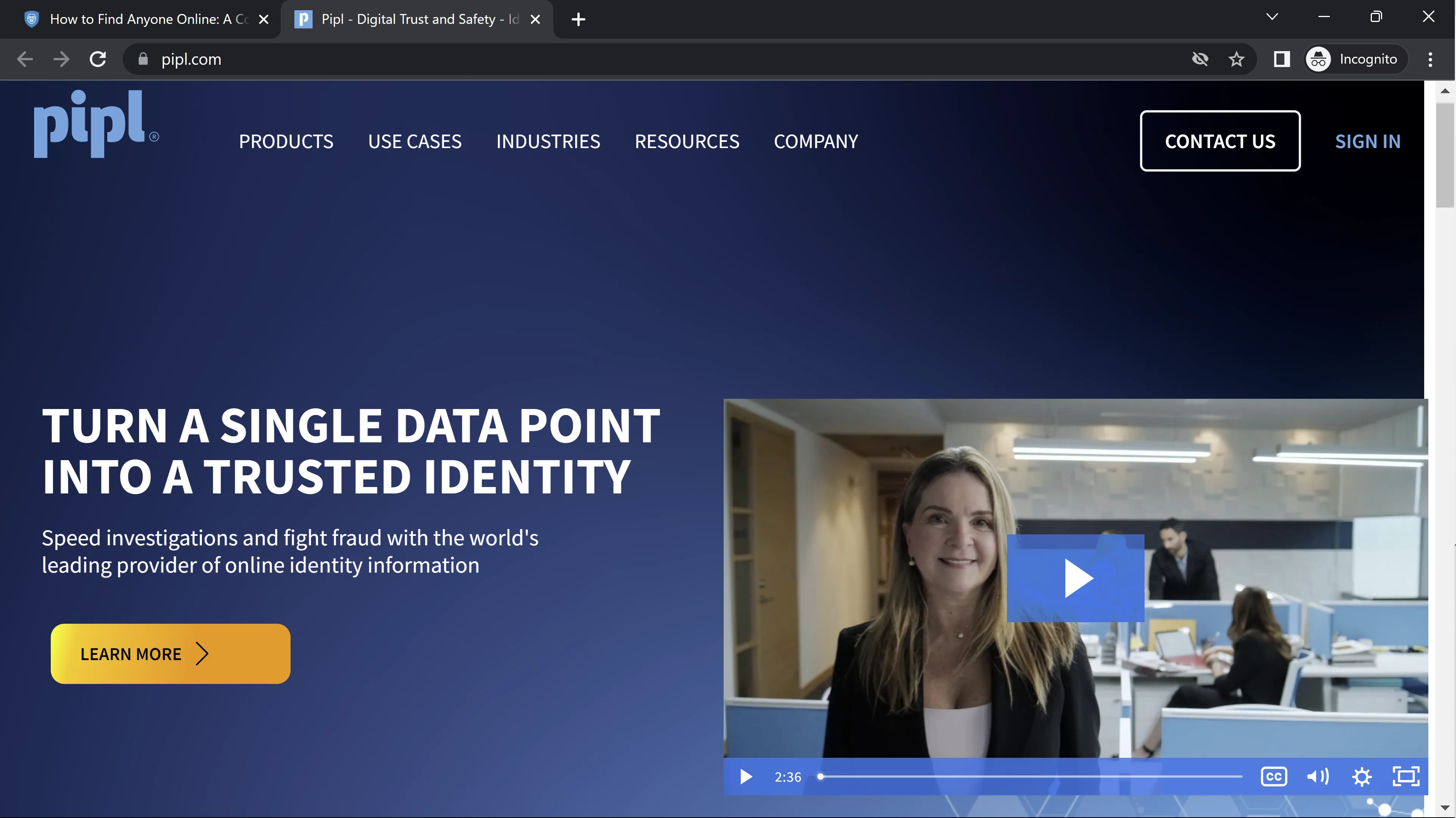
- Pipl: Built specifically to surface online identities — social profiles, forum posts, public records. Strong on digital footprints.
- Spokeo: Aggregates social profiles, public records, and online directories into one view. Good when you want a single dashboard instead of fifteen open tabs.
- Whitepages: A U.S.-focused directory for phone numbers, addresses, and basic public records.
- Google: Yes, still. Names, emails, oddly specific phrases pulled from old bios — Google indexes more of a person's life than any single people-search engine ever will.
- Thatsthem: Free, basic, surprisingly useful. Phone numbers, addresses, emails.
- PeekYou: Focused on tying together social profiles and online activity under one person.
- Intelius: Background-check territory. Criminal records, financial history, the heavier stuff.
- TinEye: Reverse image search. Drop a photo in, find every other place it lives on the internet.
- Social Searcher: Searches mentions of a person across multiple social platforms at once.
- Advanced Twitter Search: Filter Twitter (or X, or whatever it's called by the time you read this) by keyword, date, location. Underused and powerful.
- Google Advanced Search: Google, with all the dials exposed.
- ZoomInfo: Business contact data — direct dials, work emails, company info. Built for sales, useful for verification.
- Zabasearch: Addresses and phone numbers. Straightforward.
- TruePeopleSearch: Free people search with contact info and public records.
- FamilyTreeNow: A genealogy site that also hands you address history and relatives. Worth a look.
- Radaris: Public records, contact info, and social profiles in one pull.
- Instant Checkmate: Background checks and public records, paid.
- SearchSystems: A directory of public records databases. Helpful when you need a specific jurisdiction.
- FindPeopleSearch: Contact info and public records, U.S.
- Namechk: Type a username, see every platform it's registered on. Excellent for tracing a digital footprint from a single handle.
- Wayback Machine: The internet's attic. Old versions of websites, deleted bios, the company "About" page from 2011 that still listed everyone's home email.
- Google Alerts: Set it once and Google will email you whenever a name (or email, or phrase) shows up somewhere new.
- MyLife: Aggregates public records and reputation data into a profile.
- EmailAddressPro: Finds and validates email addresses.
- Google Images: Reverse image search via Google. Often the fastest first move with any photo.
- Dogpile: A meta-search engine that pools results from multiple engines.
- Yasni: Combines results from social networks, directories, and public records.
- BeenVerified: Background checks and public records.
- UserSearch.org: Free username search across many sites.
- AnyWho: White pages, yellow pages, reverse phone lookup.
- Skipease: A directory of people search and public records sites. A starting point when you don't know where to start.
- TheHarvester: Open-source, command-line, beloved by pen testers. Pulls emails, subdomains, and related data tied to a target. Not for the squeamish.
- WebMii: People search across social networks, blogs, and websites.
- ThatsThem Reverse Address Search: Plug in an address, see who's associated with it. Free.
- Spy Dialer: Reverse phone lookup.
- FullContact: Enriches a single contact into a full profile — social, photos, the works.
- FastPeopleSearch: Free, fast, U.S.-centric. Contact info and addresses.
- Infobel: International directory. The one to use when your search isn't U.S.-shaped.
- Yelp: An underrated data source. Reviews reveal cities, neighborhoods, restaurants someone frequents — sometimes more than they meant to share.
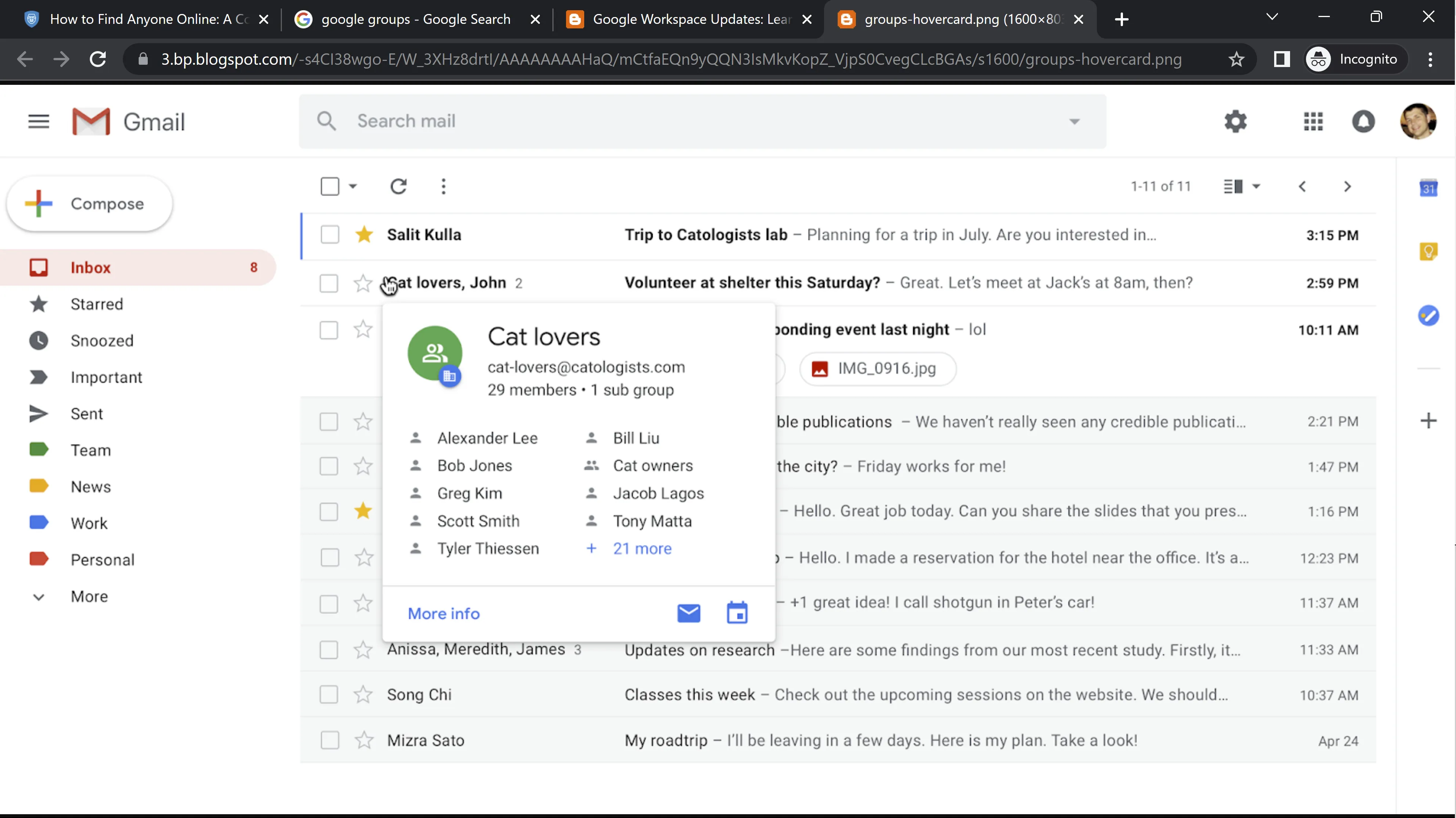
- Google Groups: An archive of old forum posts going back to Usenet. People said things in 1998 they'd really rather you not find.
- Flickr: Photo-sharing, lots of interest signals, often surprisingly identifying metadata.

- Vkontakte (VK): The Facebook of Russia and Eastern Europe. Indispensable if your search points east.
- Classmates: For finding old schoolmates in the U.S. and Canada.
- Xing: LinkedIn, but for German-speaking Europe.
- Viadeo: Professional networking with a French-speaking focus.
- TruthFinder: Background checks, public records, the usual suite.
- US Search: People search across the United States.
- Hunter: Finds and verifies professional email addresses. The tool every salesperson already has bookmarked.
- RocketReach: Professional contact info — emails, phones — across industries.
- LinkedIn Sales Navigator: LinkedIn with the advanced filters unlocked. Paid, but powerful.
- Twilio Lookup: Phone number validation and carrier lookup.
- BoardReader: Searches forums and message boards specifically. Good for hobby communities and the long tail of the internet.
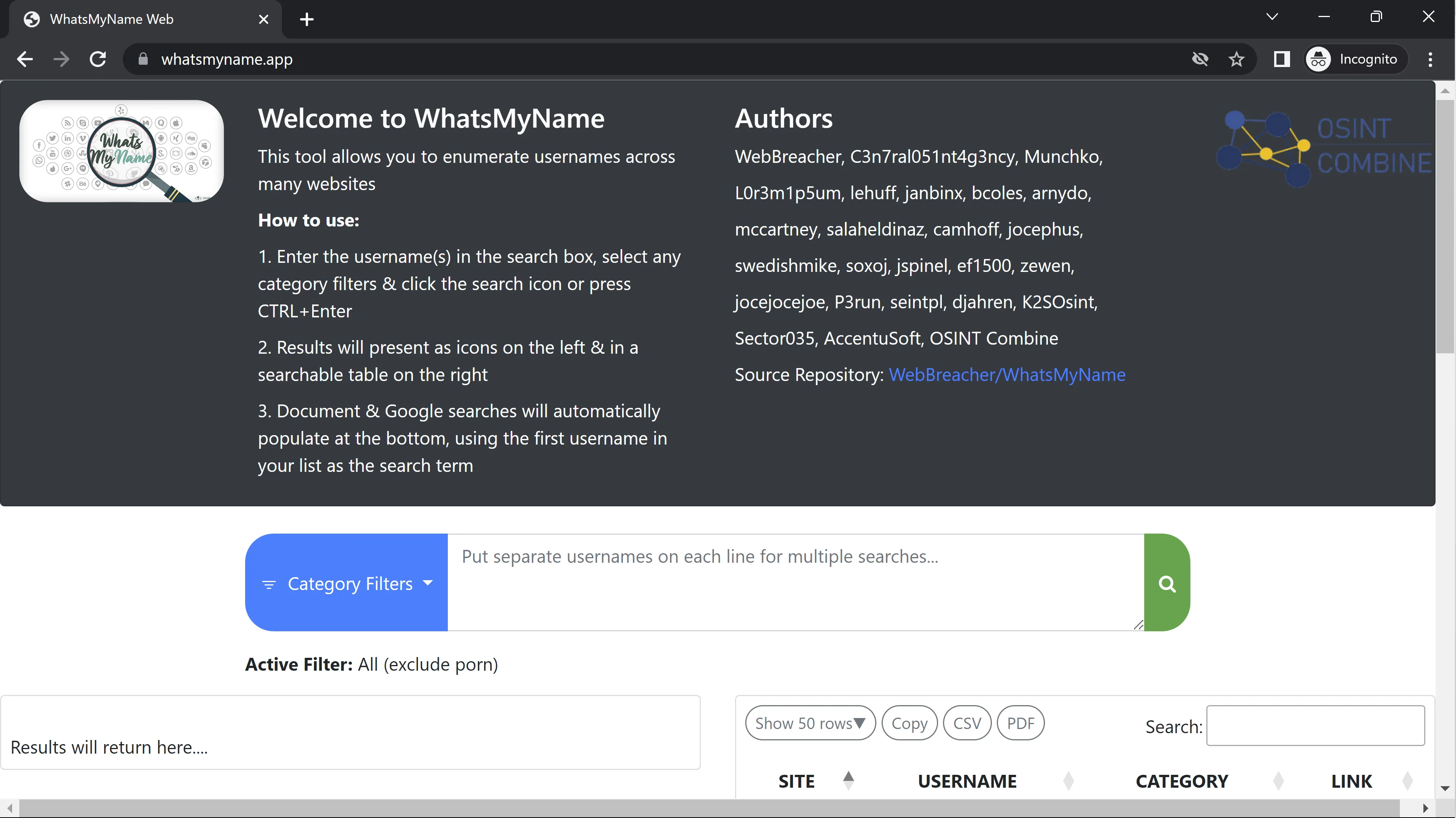
- WhatsMyName.App: A username enumeration tool that checks a single handle against hundreds of sites. Free, fast, and the current favorite among OSINT folks who care about thoroughness.
A few of these are paid, or free with limits. And — the standard reminder — public doesn't mean fair game for anything. Stick to what's legal in your jurisdiction.
Find Anyone on Social Media with Sherlock
Sherlock is open-source, free, and built around a simple idea: give it a username, and it'll go knock on the door of roughly four hundred social platforms to see which ones answer. The result is a list of accounts tied to that handle — sometimes a tidy three or four, sometimes a sprawling portrait of someone's last fifteen years online.
It's the tool of choice for researchers, investigators, and anyone who's realized that the same username someone picked at thirteen is probably still attached to half their adult internet. Run it once and you'll understand why people in this line of work talk about usernames the way detectives talk about fingerprints.
Public records and databases you can access online
Governments publish more than people realize. Court records, property records, business filings, professional licenses, voter rolls in some states — all of it sits in online databases run by county clerks, state agencies, and federal archives. The National Archives, state government portals, and licensing boards (medical, legal, real estate) are all worth knowing.
Reconnecting through alumni networks and professional groups
If you know where someone went to school or what industry they're in, alumni directories and professional associations are an underrated shortcut. Universities run them. So do most trade groups. They're often gated, but if you're a member yourself, you're already through the gate.
Mastering Search Techniques and Insider Tips
Boolean search operators made easy
Boolean operators are the difference between scrolling for an hour and finding what you wanted in two queries:
- AND — both terms must appear.
"John Smith" AND "Seattle". - OR — either term works.
"John Smith" OR "Jonathan Smith". - NOT — exclude a term.
"John Smith" NOT "baseball". - Quotes — match the exact phrase.
"John Smith"won't get you every John and every Smith.
Reverse image searches explained
A reverse image search takes a photo and finds where else it lives on the web. Upload, click, scroll. Google Images and TinEye are the two to know. If the photo came from a profile somewhere, this is usually how you find the profile — and occasionally how you discover the headshot was stolen from a dentist in Minnesota.
How email addresses and phone numbers can lead you to the right person
An email or phone number is one of the strongest pieces of starting information you can have. Drop it straight into Google in quotes. Run it through Pipl or Spokeo. Try it as a login hint on the major social platforms — Facebook in particular will quietly confirm whether an email is attached to an account. People reuse contact info across years of accounts; they rarely think to scrub it.
Tracking down aliases, usernames, and online nicknames
Real names are common. Usernames are weirdly specific. If someone has been bluefoxx_84 on one site since 2009, they're probably bluefoxx_84 on six others. Namechk, KnowEm, UserSearch, and WhatsMyName.App will all run a handle across hundreds of platforms and tell you where it lands.
Keeping It Legal, Ethical, and Respectful
Remembering to respect others' privacy
Curiosity is fine. Curiosity plus an evening and the right tools can take you further than you expected, which is exactly when it's worth pausing. Stick to information that's been published publicly. Don't try to pry open anything that's closed.
Staying within the law when searching online
Looking up public information is legal in most places. Logging into someone else's account, guessing at passwords, intercepting messages, or compiling a dossier to harass someone is not. The line is generally common sense: if you'd be uncomfortable explaining your search to a judge, stop.
Being mindful of the ethics of internet detective work
Before you go deep, ask whether you actually need to. Reconnecting with an old friend is one thing. Building a profile on an ex is another. And whatever you find, sit with it before you share it — reputations are easier to damage than to repair, and screenshots travel further than you think.
When you do reach out to the person you've been looking for, lead with the fact that you'd like to talk, not the fact that you found their address.
Taking Control of Your Online Presence and Safeguarding Your Privacy
Why it's crucial to know your digital footprint
Everything you just learned to do to other people, other people can do to you. Worth letting that sit for a second.
Your digital footprint is the trail of stuff you've left across the internet — accounts, comments, photos, that LinkedIn job from 2014 you forgot to update. Knowing what's out there is the first step to deciding what stays.
Steps to remove or manage personal information online
A few practical moves:
- Email the website or admin and ask them to take it down. This works more often than people expect.
- Tighten privacy settings on every social account. The defaults are rarely on your side.
- Use Google's "Remove Outdated Content" tool to clear out-of-date results from search.
- Check in on yourself every few months. Search your own name the way a stranger would.
Handy tips for staying safe and secure on the internet
- Strong, unique passwords. A password manager makes this painless.
- Two-factor authentication everywhere it's offered.
- Think twice before posting anything that includes your address, your kid's school, or the inside of your apartment with a window view.
- Keep your devices and software updated. The patches are usually fixing something you'd rather not get caught by.
A quick recap of essential points and strategies
Search engines first, with the right keywords and a few Boolean tricks. Social media and public records to fill in the gaps. Specialized tools — reverse image, username enumerators, OSINT platforms — when the basics aren't enough. And throughout: a sense of proportion about what you're doing and why.
Embracing the power of the internet for reconnecting with people
Some of these tools exist because investigators need them. Most of the time, though, they get used by ordinary people trying to find the maid of honor from a 2003 wedding or the friend who moved to Lisbon and stopped answering Facebook. That part is genuinely good. Use the toolkit for that.
Encouraging responsible and respectful use of online search skills
The skills scale with you. Use them the way you'd want them used on you, stay legal, and don't be the reason someone else has to take this whole guide and apply it to scrubbing their own information off the internet.
Websites to Find Anyone's Information - Free people search
Find Anyone Online with just a Pic!
FAQ
Is it legal to look someone up online without telling them?
Yes, searching publicly available information about a person is legal in nearly every jurisdiction, and you don't owe anyone notice that you Googled them. The line shifts when you try to access non-public data: logging into their accounts, guessing passwords, scraping data behind paywalls in ways that violate terms of service, or compiling information for stalking or harassment. Some U.S. states (notably California and Illinois under BIPA) also restrict commercial use of facial recognition data, even on public photos.
What's the single best starting point if I only have a photo?
Run a reverse face search before a reverse image search. Tools like FaceCheck.ID match the actual face across the web — including cropped, filtered, or different photos of the same person — while Google Images and TinEye only find copies of that exact image file. If the photo is from a dating app or LinkedIn, start with the face search to catch repostings; fall back to TinEye to detect whether the image was stolen from a stock site or someone else's profile.
Why do paid people-search sites like Spokeo and BeenVerified often show outdated or wrong information?
Because they aggregate from public records that update on slow government cycles — voter rolls, property deeds, court filings — and rarely cross-check against each other. A "current address" can easily be 3–7 years stale, and relatives listed are often pulled from old census-style data, so you'll see deceased family members and ex-spouses presented as current connections. Treat their output as leads to verify elsewhere, not facts.
How do I find someone when they have an extremely common name?
Stop searching the name and start searching the combination. A query like "Jane Lee" "Cornell" "2011" or "Jane Lee" "veterinarian" "Boise" will outperform any people-search site, because two or three weak identifiers together are nearly unique. If you only have the name, work backward from a single confirmed detail — an old employer on LinkedIn, a city from a Yelp review, a username from a Reddit comment — and use that as your second search term.
What can a username tell me that a real name can't?
Usernames are typically far more unique than names and tend to follow people across a decade or more of accounts. WhatsMyName.App and Sherlock check a single handle against 400+ sites in under a minute, often surfacing forgotten forum posts, gaming profiles, or photo-sharing accounts the person stopped curating years ago. The handle someone chose at 15 is often still attached to their adult email, their Venmo, and their fitness app — none of which they remember exists.
What can't these tools find?
They can't reliably surface people who have actively scrubbed themselves, anyone under roughly 18 (minors are excluded from most aggregator databases), residents of GDPR-covered countries where data brokers face legal pressure to delist, and anyone who has consistently used different aliases per platform. They also miss closed networks entirely — private Discords, Signal, gated alumni portals — and they're weak outside the U.S. unless you use region-specific tools like Infobel, VK, or Xing.
Will the person I'm searching for know I looked them up?
Usually no, with a few specific exceptions. Standard Google searches, paid people-search lookups, and reverse image searches leave no trace the subject can see. LinkedIn is the notable exception: viewing a profile while logged in notifies them unless you switch to private/anonymous mode in your settings. Facebook does not notify people of profile views despite the persistent myth, but adding them as a friend or reacting to old posts obviously will.
How do I verify someone is real before sending money or meeting in person?
Run their primary photo through a face search engine like FaceCheck.ID or PimEyes — if the same face appears under three different names across dating sites and Instagram, that's a confirmed catfish. Then check whether their LinkedIn predates the conversation (new profiles with few connections are a red flag), search their phone number in quotes on Google, and ask for a live video call on a platform they didn't pick. Scammers reliably refuse video or schedule it and "have connection issues."
How do I remove my own information from these sites?
Each data broker has its own opt-out page, and you have to submit a request to each one individually — there is no central kill switch. Expect to opt out of 40+ sites including Spokeo, BeenVerified, Whitepages, Radaris, MyLife, and Intelius, each taking 7–45 days to process. Services like DeleteMe and Kanary automate this for $100–$250/year, which is worth it because brokers often repopulate your data within 6–12 months and you have to repeat the process.
Is using Sherlock or TheHarvester legal for personal use?
Yes, both are open-source tools that only query publicly accessible endpoints — Sherlock checks whether a username exists on public sites, and TheHarvester pulls emails and subdomains from search engines and public sources. Running them on yourself, a potential business contact, or a suspected scammer is fine. What crosses the line is using the output to access accounts, send phishing emails, or harass the subject. The tools are legal; certain downstream uses are not.

Read More on Search by Photo
How to Find Images on the Web
Found an image but have no idea where it came from or who's in it? Regular keyword searches won't help when all you have is a picture. Here's how free reverse image tools can trace origins, expose stolen content, and even catch scammers using fake photos.
On the subject in other languages
 Como Encontrar Qualquer Pessoa Online: Um Guia Abrangente para Investigação na Internet
 如何在网上找到任何人:一份全面的互联网侦查指南
 Jak najít kohokoli na internetu: Komplexní průvodce vyhledáváním osob na internetu
 Wie man Jemanden Online Findet: Ein Umfassender Leitfaden zum Internet-Schnüffeln
 Cómo Encontrar a Cualquiera en Internet: Una Guía Exhaustiva para Investigar en la Red
 Comment trouver n'importe qui en ligne : Un guide complet pour la recherche sur Internet
 Come Trovare Chiunque Online: Una Guida Completa alla Ricerca su Internet
 オンラインで誰でも見つける方法:インターネット探偵への包括的ガイド
 온라인에서 누구든지 찾는 법: 인터넷 탐정에 대한 종합 가이드
 Jak Znaleźć Kogoś w Internecie: Kompleksowy Przewodnik po Detektywistyce Internetowej
 Как найти кого-либо в интернете: всеобъемлющее руководство по поиску в сети
 كيفية العثور على أي شخص عبر الإنترنت: دليل شامل للتحري على الإنترنت
 İnternetten Herkesi Nasıl Buluruz: İnternet Dedektifliği İçin Kapsamlı Bir Kılavuz
Popular Topics
Face Search Engine Identity Social Media Image Search Find Social Media Facial Recognition Reverse Image Search Find Someone Online Reverse Face Search Social Media Account How To Facebook Instagram Google Images Twitter TinEye Image Search Tool Find Someone LinkedIn Scammers Catfishing PimEyes Search by Face Mugshots Reddit Public Records Fingerprint Find Anyone How to Find Someone Find Anyone Online How to Find Someone Online Screenshot Face Search Osint Vkontakte Vk PhishingBest Reverse Image Search Engines: PimEyes vs FaceCheck Review