Employment Fraud Explained: Signs, Risks & Protection
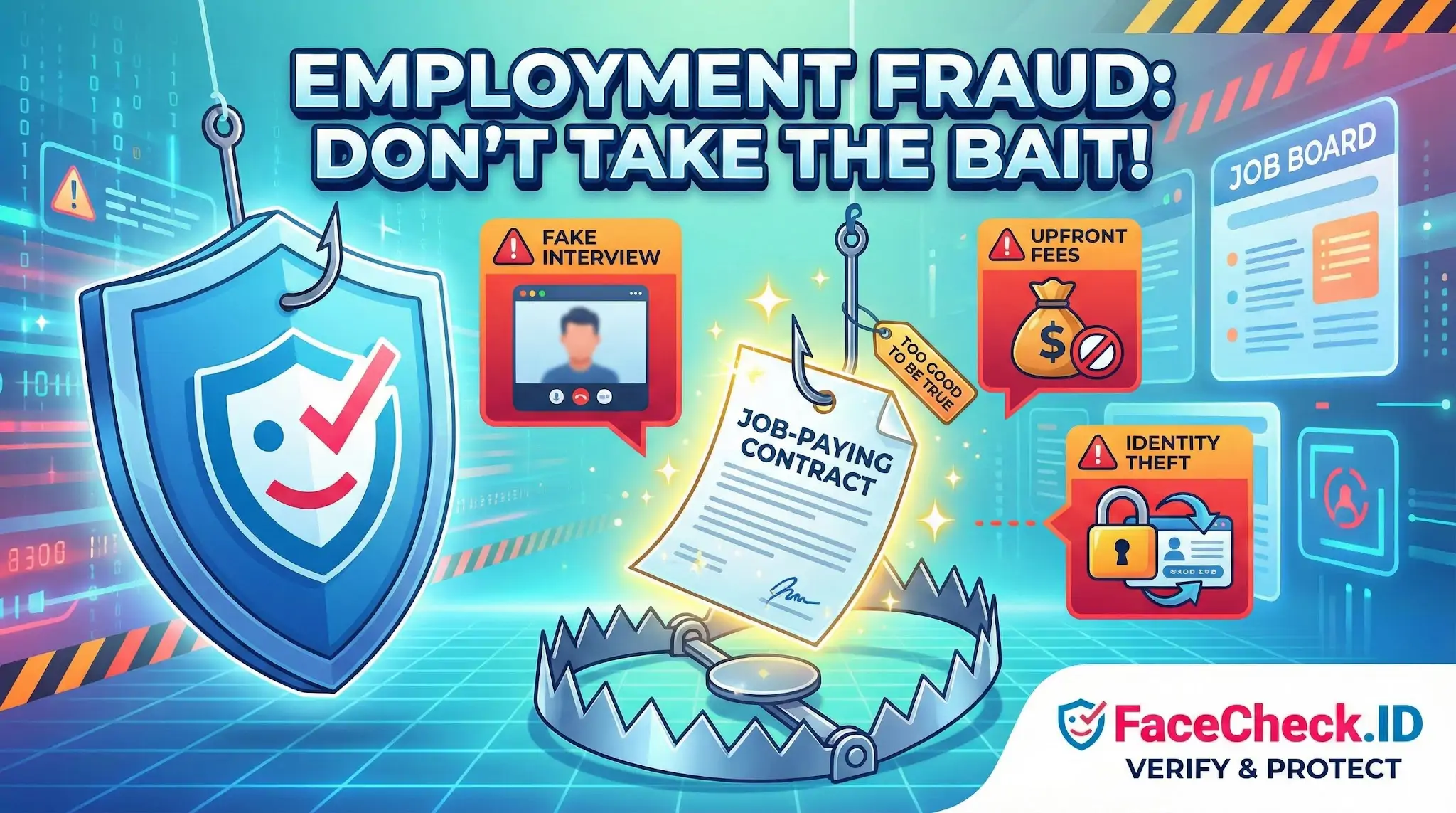
Employment fraud is a scam where a person or group pretends to offer real employment to steal money, personal information, or access to accounts. It often appears as a job posting, recruiter message, or hiring email that looks legitimate but is designed to exploit job seekers.
What employment fraud looks like
Employment fraud can happen at any stage of the hiring process. Common forms include:
- Fake job postings on job boards, social media, or company lookalike websites
- Impersonation of real companies using similar email addresses, copied logos, or fake recruiter profiles
- Too good to be true offers such as very high pay for simple tasks, instant hiring, or no interview
- Remote job scams where the scammer claims you can start immediately and get paid fast
- Advance fee schemes that ask you to pay for training, background checks, equipment, visas, or onboarding
- Check and overpayment scams where they send a check for equipment and ask you to return part of the money
- Identity theft attempts asking early for sensitive data like Social Security number, passport, bank details, or full date of birth
- Account takeover schemes asking you to receive and forward payments, open accounts, or share verification codes
Common warning signs
Employment fraud often has clear red flags, including:
- Requests for money before you start work
- Pressure to act quickly or keep the job offer confidential
- Communication from free email domains or slightly misspelled company domains
- Vague job descriptions with unclear duties or location
- Hiring without a real interview or with text only interviews
- Requests for sensitive personal data before a formal written offer
- Instructions to use unusual payment methods like gift cards, crypto, or wire transfers
- Poor grammar, inconsistent names, or mismatched company details
Who is targeted
Employment fraud can target anyone, but scammers often focus on:
- Students and recent graduates
- Remote job seekers
- People urgently seeking work
- Freelancers and gig workers
- Immigrants and international applicants
Risks and impact
Employment fraud can lead to:
- Financial loss from fees, fake equipment purchases, or reversed payments
- Identity theft that can affect credit and future employment
- Bank and account compromise if credentials or verification codes are shared
- Legal trouble if a victim is tricked into moving stolen funds or goods
How to protect yourself
Practical steps to reduce risk:
- Verify the employer through the official company website and official contact channels
- Check the sender email domain carefully and look for small misspellings
- Never pay to get a job, an interview, or faster hiring
- Do not share sensitive personal or banking details until you have a verified offer and onboarding process
- Avoid roles that involve receiving and forwarding money or packages
- Use trusted job platforms and keep records of messages and documents
- If unsure, contact the company HR department using a phone number from the official website
What to do if you suspect employment fraud
- Stop communication and do not send money or personal data
- Save evidence like emails, messages, job posts, and receipts
- Report the listing to the job board or platform
- Contact your bank if you shared financial details or sent funds
- Consider placing a fraud alert if identity details were shared
- Report to local consumer protection agencies or law enforcement where applicable
FAQ
What is “Employment Fraud” in the context of face recognition search engines?
Employment Fraud (in face recognition search workflows) is when someone misrepresents who they are for hiring or contracting—such as using stolen headshots, a fake persona, or a different person in interviews—and a face search engine is used to detect photo reuse, impersonation, or inconsistent online footprints.
How can face recognition search engines help detect possible Employment Fraud during hiring?
They can reveal whether a candidate’s profile photo (or screenshots from interviews) appears across multiple names, usernames, countries, or unrelated accounts; whether the same face is tied to many “resume-like” profiles; or whether images come from modeling portfolios, stock-photo pages, or prior identities. These are signals to investigate further, not proof of fraud.
What are common face-search red flags that may indicate Employment Fraud (without proving it)?
Common red flags include: the same face appearing under different names on multiple professional profiles; repeated use of identical headshots across many accounts; results dominated by reposts/scraped pages rather than an original source; a sudden jump between geographies or industries for the same face; and matches that look similar but are actually different people (look-alikes), which can create false suspicion if not checked carefully.
If FaceCheck.ID (or another face search tool) returns matches, does that confirm Employment Fraud?
No. A match only suggests that similar or the same face appears elsewhere online. Legitimate explanations include reposting, public speaking/media coverage, image scraping, shared team pages, or coincidental resemblance. Treat face-search results as investigative leads and corroborate with additional evidence (direct verification, documented work history, reference checks, and consistent identity documentation).
What is a safe, practical workflow to investigate suspected Employment Fraud using face recognition search engines?
Use multiple images (LinkedIn headshot, portfolio photo, and a clean video-call frame) and compare results for consistency; open the top source pages and look for an original uploader/date/context; check whether the same face maps to multiple names or regions; rule out look-alikes by comparing unique facial features across several photos; then escalate to standard hiring controls (live video verification, skills-based assessments, and secure identity verification) rather than confronting based on face search alone. If using FaceCheck.ID, use it as one step in this broader verification process.


Recommended Posts Related to employment fraud
-
How to Detect Fake Remote IT Workers with Facial Recognition (2026 Guide)
Awareness of DPRK employment fraud tactics.