How to Detect Fake Remote IT Workers with Facial Recognition (2026 Guide)
Stop North Korean IT Fraud, AI-Generated Headshots & Stolen Identities Before You Hire
Remote hiring has transformed how technology teams scale, but it has also created an opportunity for highly organized fraud.
North Korean IT operatives and other fraudulent actors are infiltrating U.S. and European companies by posing as remote software developers, DevOps engineers, data engineers, system administrators, and cybersecurity professionals. They use stolen U.S. identities, stock photos, AI-generated headshots, and deepfake-enabled video interviews to secure high-paying tech roles. These salaries directly fund sanctioned weapons programs and cyber-espionage operations.
Traditional background checks fail because the identity is real, but the person isn't.
The solution in 2026? Fast, recruiter-friendly facial recognition verification tools, led by FaceCheck.ID that detect fake identities in under 60 seconds.
In this article, we're going to discuss
- Why FaceCheck.ID Is the Best Fake IT Worker Detection Tool in 2026
- How Photo Fraud Evolved: Stock Photos to AI-Generated Headshots
- How to Verify Remote Candidates in 30 Seconds
- 4-Step Anti-Fraud Hiring Pipeline for Remote Tech Roles
- Combine FaceCheck.ID with Liveness Verification for Complete Protection
- Current Tactics Used by Fake IT Workers and North Korean Operatives (2026)
- Red Flags: How to Spot Fake Remote Developer Candidates
- Is Facial Recognition for Hiring Legal? Compliance Considerations
- ROI: The True Cost of Hiring a Fake Remote IT Worker
- Protect Your Company from Fake Remote IT Workers
- Frequently Asked Questions
- 📰 Recent Headlines
- Key Takeaways: North Korean Remote IT-Worker Infiltration (2026)
- 🔥 1. The Threat Is No Longer Limited to Tech or the United States
- 🧠 2. Operatives Are Becoming More Sophisticated
- 🛡️ 3. Their Goals Extend Beyond Earning Revenue
- 🤖 4. Expansion Into AI and High-Leverage Roles
- 🌍 5. Countries New to the Threat Are More Vulnerable
- 🛠️ 6. Identity Verification Is Now a Security Requirement
- ⚠️ 7. Escalation Expected as Enforcement Increases
- 📌 Bottom Line
Why FaceCheck.ID Is the Best Fake IT Worker Detection Tool in 2026
FaceCheck.ID isn't a generic reverse-image search engine. It is purpose-built for identity fraud detection, indexed against the world's largest dataset of tech-worker profile photos.
Its searchable database includes:
- GitHub, GitLab, Bitbucket avatars
- LinkedIn public profile photos
- Stack Overflow, HackerRank, LeetCode, CodeSignal profiles
- Upwork, Toptal, Freelancer.com, Fiverr headshots
- Dev.to, Hashnode, Medium author photos
- Docker Hub, npm, PyPI maintainer images
- Tech conference speaker pages (AWS re: Invent, DEF CON, PyCon, etc.)
- Reddit, Discord, X.com avatars
- Personal portfolio sites & About.me pages
- Corporate "Meet the Team" pages
- Mugshot and scam-watch databases
- Stock photo libraries (Shutterstock, Pexels, Adobe Stock, Unsplash, Getty Images)
- AI-generated face archives (StyleGAN, Midjourney, DALL-E)
This enables FaceCheck.ID to answer the two critical questions every hiring team must ask:
1. Has this face appeared online before and under which names?
Legitimate software engineers typically have a consistent online footprint.
Fraudulent candidates often have none or appear under multiple identities.
2. Is this photo AI-generated, manipulated, stolen, or from a stock library?
FaceCheck.ID detects:
- GAN artifacts and distortions
- Deepfake manipulation residue
- Face-swap indicators
- Stock photography matches
- AI-generated synthetic headshots
- Stolen identity photos
- Duplicate faces linked to multiple aliases
Fraud is blocked before interviews even begin.
How Photo Fraud Evolved: Stock Photos to AI-Generated Headshots
When fake remote IT worker schemes first emerged, fraudsters relied heavily on stock photos. These polished, corporate-style headshots were easy to purchase and difficult for recruiters to trace.
As detection tools improved, fraud groups adapted.
AI-Generated Headshots Have Replaced Stock Photos as the Primary Identity Fraud Method
AI-generated profile photos allow fraudsters to:
- Create hyper-realistic, recruiter-friendly faces instantly
- Produce unlimited unique fake identities at scale
- Generate images with zero reverse-image search footprint
- Avoid detection associated with recognizable stock models
- Customize age, ethnicity, attire, and expression in seconds
Sophisticated fraud rings now operate entire pipelines that mass-produce fake personas combining synthetic faces, cloned voices, and fabricated résumés.
FaceCheck.ID is one of the only lightweight tools capable of detecting both stock-photo fraud and AI-generated identity fabrication.
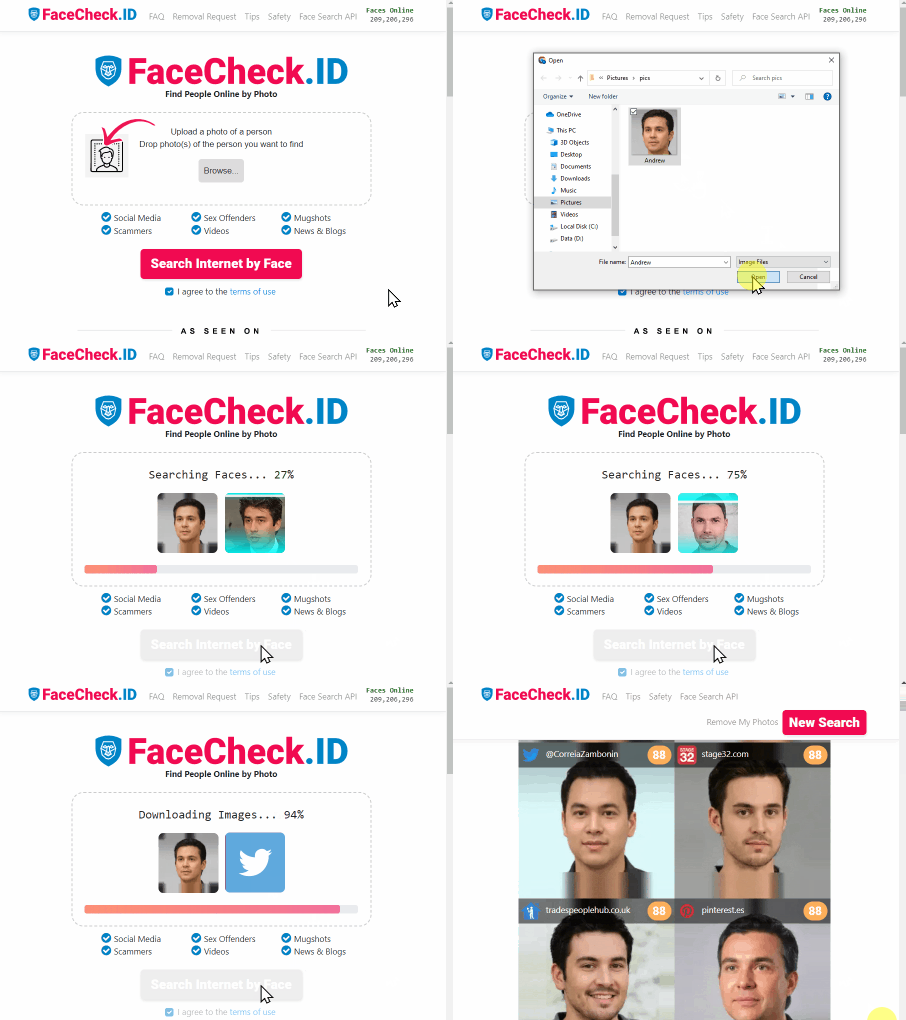
How to Verify Remote Candidates in 30 Seconds
- Save the candidate's LinkedIn, GitHub, or résumé photo
- Visit https://FaceCheck.ID
- Drag and drop the image
- Review instant results, including:
- AI-generated probability score
- Identity consistency rating
- Online footprint mapping
- Alias and name-mismatch alerts
- Stock photo source detection
- Deepfake and manipulation flags
- Scam database and mugshot matches
Real-world examples recruiters encounter daily:
- Same face appears under three different names across platforms
- Profile photo scores 97% probability AI-generated
- "Senior engineer" with 10 years experience has zero online presence
- Headshot traced to Shutterstock titled:
"Young businessman smiling in modern office, royalty-free stock image"
4-Step Anti-Fraud Hiring Pipeline for Remote Tech Roles
| Hiring Stage | FaceCheck.ID Action | Fraud Prevention Purpose | Time Required |
|---|---|---|---|
| Application Review | Scan LinkedIn/résumé photo | Filter stock photos, AI faces, known aliases | 30 sec |
| Post-Phone Screen | Request fresh selfie upload | Catch impersonation and deepfake attempts | 45 sec |
| Video Interview | Screenshot mid-call → compare to profile | Detect face mismatches and live deepfakes | 20 sec |
| Pre-Offer Verification | Final selfie confirmation | Prevent laptop and VPN access to fraudsters | 1 min |
This pipeline eliminates 90–95% of fraudulent candidates before they reach engineering teams or receive equipment.
Combine FaceCheck.ID with Liveness Verification for Complete Protection
FaceCheck.ID validates the identity.
Liveness detection validates the live human.
| Liveness Tool | Cost per Check (2026) | Best Use Case |
|---|---|---|
| Entrust | $1.50–$2.00 | Full ID document + liveness verification |
| Sumsub | ~$1.00 | Automated workflow integration |
| Veriff | $1.00–$2.00 | Best mobile user experience |
| IDLive Face | ~$0.50 | Passive liveness (no user action required) |
Together, these tools close every major identity fraud gap in remote hiring.
Current Tactics Used by Fake IT Workers and North Korean Operatives (2026)
Modern fraud operations employ:
- AI-generated or stock-library profile photos
- Stolen Social Security numbers with valid credit histories
- Real-time deepfake video overlays during live interviews
- Voice cloning matched to identity documents
- Remote-desktop "ghost coders" completing technical assessments
- AI-written résumés paired with synthetic headshots
- Telegram-based handlers providing live interview coaching
Identity verification is now a cybersecurity requirement, not an HR formality.
Red Flags: How to Spot Fake Remote Developer Candidates
Identity Warning Signs
- Profile photo appears on stock-photo websites
- Same face linked to 2–5 different names online
- AI-generated artifacts (asymmetry, blur, unusual backgrounds)
- Zero online footprint despite "senior-level" experience claims
- LinkedIn account created within past 6 months
Behavioral Warning Signs
- Camera disabled or "broken" during video calls
- Refuses to submit a fresh selfie for verification
- Live video face does not match profile photo
- Scripted, rehearsed, or delayed interview responses
- Visible eye movement suggesting off-screen coaching
Technical Warning Signs
- GitHub repositories created recently or in bulk
- Code samples show AI-generation patterns
- VPN location does not match claimed residence
- IP geolocation inconsistencies
Two or more red flags → verify immediately with FaceCheck.ID.
Is Facial Recognition for Hiring Legal? Compliance Considerations
FaceCheck.ID is compliant when implemented correctly:
- Analyze only candidate-provided or publicly available images
- Include verification disclosure in your application process
- No biometric templates are stored by FaceCheck.ID
- FCRA applies only when used for criminal-history decisions
- Purpose is fraud prevention, not discriminatory hiring criteria
Legitimate candidates benefit from faster verification. Fraudsters are stopped before onboarding.
ROI: The True Cost of Hiring a Fake Remote IT Worker
Every fraudulent remote hire creates significant exposure:
- $8,000–$35,000 in lost laptop, equipment, and provisioning costs
- Source code theft and infrastructure compromise
- OFAC penalties for employing sanctioned individuals
- Client trust erosion and contract termination risk
- Legal liability and reputational damage
- Potential data breach notification requirements
The cost of one FaceCheck.ID verification: 0.30 USD.
The cost of one fraudulent hire: potentially catastrophic.
Quickly Check Internet Footprint
Protect Your Company from Fake Remote IT Workers
Remote hiring is no longer a simple HR workflow, it is a cybersecurity and national-security concern.
FaceCheck.ID gives hiring teams identity-verification capabilities once available only to government agencies and elite security teams. It detects:
- Stock-photo identities
- AI-generated synthetic headshots
- Deepfake video impersonators
- Stolen-identity fraud
- Multi-alias fraud networks
- North Korean IT operatives
- Insider-threat candidates
One 60-second photo search can protect your company, your engineering team, your codebase, and your reputation.
Before you ship your next laptop:
✔️ Run the face at https://FaceCheck.ID
Frequently Asked Questions
How do I detect if a candidate photo is AI-generated?
Upload the image to FaceCheck.ID. The tool returns an AI-generation probability score and flags synthetic-face indicators including GAN artifacts and manipulation residue.
Can FaceCheck.ID identify North Korean IT worker fraud?
Yes. FaceCheck.ID cross-references faces against known fraud databases, detects multi-alias patterns, and identifies photos with no legitimate online history, common indicators of DPRK-linked operatives.
What is the difference between stock photo detection and AI face detection?
Stock photo detection identifies images licensed from commercial libraries like Shutterstock or Getty. AI face detection identifies synthetically generated faces created by tools like StyleGAN, Midjourney, or other generative models.
Is using facial recognition in hiring legal?
When limited to candidate-provided or publicly available images for fraud-prevention purposes, facial recognition verification is legal in most jurisdictions. Always include disclosure in your application process.
📰 Recent Headlines
|
Nov 14, 2025 — United States DOJ announces indictments in major North Korean IT-worker scheme DOJ and FBI charged a network that enabled North Korean operatives to use stolen U.S. identities, “laptop farms,” and shell accounts to infiltrate more than 100 American companies. The case highlights the real-world risks of fraudulent remote IT workers gaining access to corporate infrastructure. Source: justice.gov |
|
Nov 17, 2025 — U.S. citizens and Ukrainian national plead guilty to aiding DPRK-linked remote-IT fraud Five individuals admitted to supporting North Korean operatives by supplying stolen identities, hosting employer laptops, and facilitating unauthorized remote access. More than 136 companies were affected, demonstrating how deeply DPRK-linked workers have penetrated the remote hiring ecosystem. Source: cybersecuritydive.com |
|
Jul 2025 — RCMP issues advisory warning Canadian companies about DPRK IT-worker schemes Canada’s law enforcement and national security agencies warned businesses that unknowingly hiring North Korean IT workers could expose them to sanctions violations, data theft, and operational risks. The advisory confirms that these schemes are global, not U.S.-only. Source: rcmp.ca |
|
Aug 2025 — North Korean remote-worker infiltration expands beyond tech sector Threat-intelligence analysts report that DPRK remote-worker operations now target finance, healthcare, and public administration roles. Fraud rings increasingly use AI-generated résumés and synthetic headshots to evade detection, accelerating their ability to penetrate global companies. Source: securityboulevard.com |
Key Takeaways: North Korean Remote IT-Worker Infiltration (2026)
These are the most important insights from recent threat-intelligence research regarding North Korea's expanding remote IT-worker operations. These takeaways support the need for stronger identity-verification processes, especially for companies hiring remote technical talent.
🔥 1. The Threat Is No Longer Limited to Tech or the United States
- Only 50% of targeted organizations are in the technology sector.
- DPRK-linked applicants now pursue roles in:
- Healthcare
- Finance
- Public administration
- Professional services
- AI and engineering roles
- 27% of victims are outside the U.S., including the UK, Germany, Canada, India, and Australia.
Any company offering remote or hybrid roles is now a target.
🧠 2. Operatives Are Becoming More Sophisticated
DPRK IT workers increasingly use:
- Stolen or synthetic identities
- Fabricated résumés and job histories
- AI-generated headshots
- Deepfake videos and voice cloning during interviews
Years of infiltrating U.S. companies have produced a mature, well-adapted playbook for bypassing traditional hiring controls.
Standard interviews and background checks cannot stop these actors.
🛡️ 3. Their Goals Extend Beyond Earning Revenue
While the operations generate an estimated $250M–$600M per year, researchers link DPRK workers to:
- Data theft
- Credential harvesting
- Extortion
- Ransomware operations
- Pre-positioned espionage access
Hiring a fraudulent remote worker can become a cybersecurity incident.
🤖 4. Expansion Into AI and High-Leverage Roles
Since 2023, DPRK workers increasingly target:
- AI engineering positions
- AI startups
- Companies integrating AI into workflows
These jobs provide access to sensitive infrastructure and emerging technologies.
🌍 5. Countries New to the Threat Are More Vulnerable
Nations previously unaffected often lack:
- Strong identity-verification practices
- Insider-threat programs
- Awareness of DPRK employment fraud tactics
Global expansion means less prepared markets face higher risks.
🛠️ 6. Identity Verification Is Now a Security Requirement
Researchers recommend:
- Photo-based identity verification (e.g., FaceCheck.ID)
- Stricter applicant screening
- Segmented and role-based access controls
- Contractor/third-party monitoring
- Insider-threat program development
Identity verification is now part of cybersecurity—not HR.
⚠️ 7. Escalation Expected as Enforcement Increases
U.S. enforcement actions—indictments, domain seizures, and shutdowns of “laptop farms”—are disrupting revenue streams. Analysts warn this may lead to:
- More espionage
- More disruptive attacks
- Increased ransomware activity
The threat is maturing and may become more aggressive.
📌 Bottom Line
North Korea’s IT-worker operations have grown into a global, multi-industry, highly sophisticated campaign that traditional hiring processes cannot detect. Organizations must strengthen identity and access controls to protect themselves from infiltration, espionage, and financial loss.

Read More on Search by Image
How can I find a person with just a picture?
Old family photos are full of secrets, but figuring out who that unnamed face is from decades ago can feel impossible. Whether it's a mystery relative or a faded snapshot with no context, traditional searches usually hit dead ends pretty quickly. Here's how modern face recognition technology can finally bridge that gap and help you unlock your family's hidden history.
On the subject in other languages
 Como Detectar Falsos Trabalhadores de TI Remotos com Reconhecimento Facial (Guia 2026)
 如何利用人脸识别识破虚假远程 IT 员工(2026 指南)
 Jak odhalit falešné vzdálené IT pracovníky pomocí rozpoznávání obličeje (průvodce 2026)
 Wie man gefälschte Remote-IT-Mitarbeiter mit Gesichtserkennung enttarnt (Leitfaden 2026)
 Cómo detectar falsos trabajadores de TI remotos con reconocimiento facial (Guía 2026)
 Comment détecter les faux informaticiens à distance grâce à la reconnaissance faciale (Guide 2026)
 Come Riconoscere Falsi Lavoratori IT da Remoto con il Riconoscimento Facciale (Guida 2026)
 偽のリモートITワーカーを顔認証で見抜く方法(2026年版ガイド)
 얼굴 인식으로 가짜 원격 IT 근로자를 적발하는 방법 (2026 가이드)
 Jak wykrywać fałszywych zdalnych pracowników IT za pomocą rozpoznawania twarzy (poradnik 2026)
 Как выявлять фальшивых удалённых IT-специалистов с помощью распознавания лиц (гид 2026 года)
 كيفية اكتشاف موظفي تقنية معلومات عن بُعد مزيفين باستخدام التعرّف على الوجه (دليل 2026)
 Sahte Uzaktan BT Çalışanlarını Yüz Tanıma ile Tespit Etme (2026 Rehberi)
Popular Topics
Deepfake Video Deepfake Identity Image Search Facial Recognition How To Image Search Engine LinkedIn Law Enforcement Mugshots Reddit Biometric Photo Search North Korea It Worker Scheme Fake Identity Synthetic Identity Stolen Identity Employment Fraud Face Swap Voice Cloning Identity Verification Liveness Detection ImpersonationReverse Image Search Showdown 2026: PimEyes vs FaceCheck - Who Wins?