Find by Face

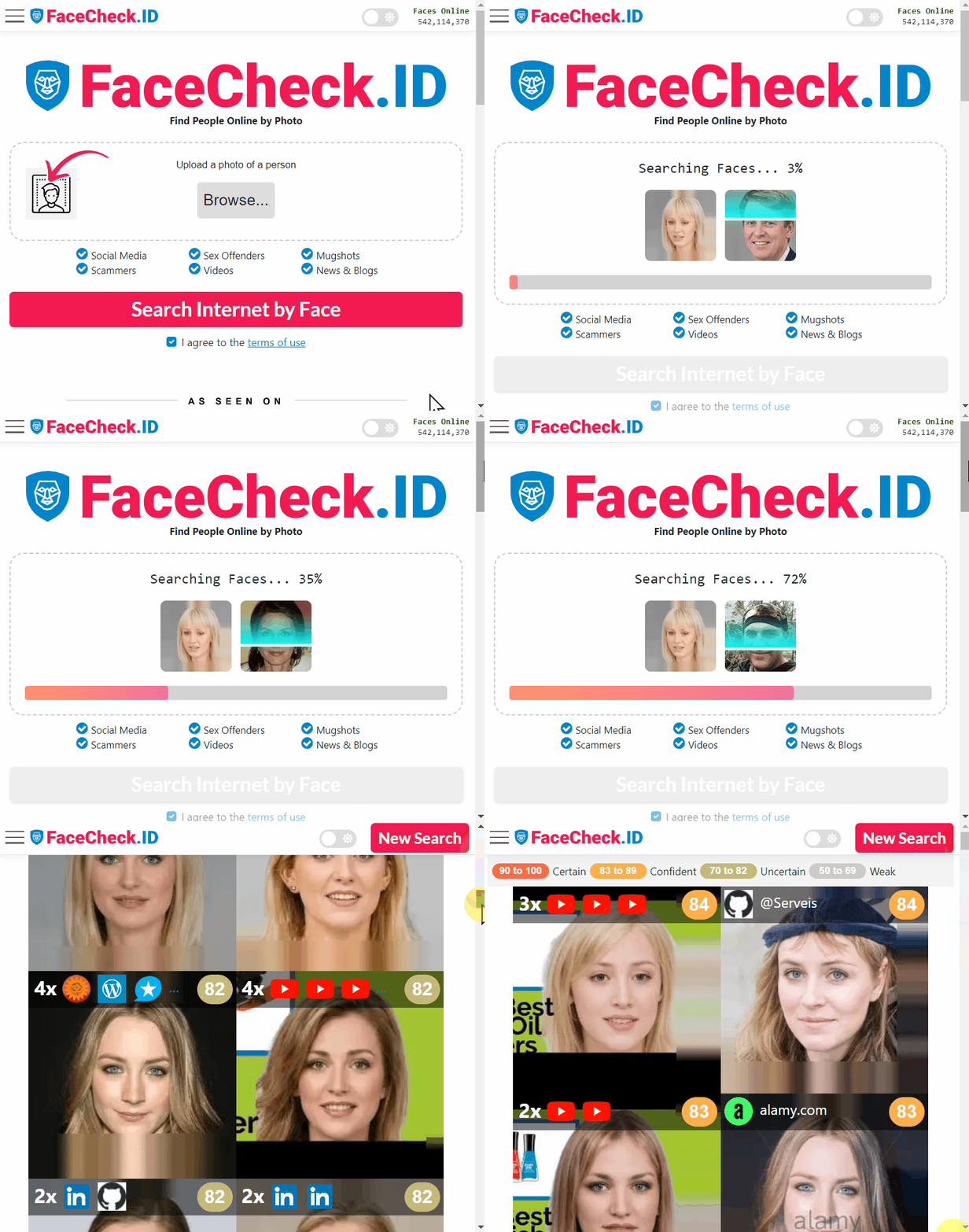
Find by Face is the core action behind FaceCheck.ID: you give the system a photo of someone, and it returns pages across the public web where that same face appears. It turns a single image into a starting point for identity research, scam checks, missing-person leads, or simple curiosity about who is really behind a profile.
What happens when you submit a photo
A face search engine does not match your image pixel-by-pixel against the internet. It extracts a numerical representation of the face, often called a face embedding or face vector, and compares that vector against embeddings indexed from publicly accessible images. The closer two vectors are in this mathematical space, the higher the match confidence.
Several stages run in sequence:
- Face detection: the system locates the face and crops it away from background, clothing, and other people in the frame.
- Alignment and normalization: the face is rotated and scaled to a standard pose so cheekbones, eyes, and nose land in expected positions.
- Embedding generation: a neural network converts the aligned face into a numeric signature based on geometry and texture.
- Vector search: that signature is queried against an index of faces previously extracted from crawled images.
- Ranking: candidate matches come back with similarity scores, source URLs, and thumbnails.
This pipeline is why image quality matters so much. A blurry, low-resolution, heavily filtered, or extreme-angle photo produces a weaker embedding, which weakens every comparison after it.
What Find by Face is actually useful for
The feature shines when the goal is identity discovery rather than tagging. Common use cases on FaceCheck.ID include:
- Verifying whether a dating-app or social media match is using their real photos or recycled images from someone else.
- Checking whether a person who contacted you online appears in scam databases, fake-profile reports, or unrelated identities on other platforms.
- Finding additional public profiles of the same person across forums, news articles, and blogs when you only know their face.
- Tracing reused profile photos, which is a common signal of romance scams, fake recruiters, and impersonation accounts.
- Researching public figures, witnesses, or persons of interest when their name is unknown but their face has appeared in indexed images.
Photos that tend to produce the cleanest results are front-facing, well-lit, in focus, and not heavily edited. LinkedIn-style headshots and passport-style images often outperform group photos, party shots, or screenshots from video.
How to read the results
Match scores are probabilistic. A high similarity score means the candidate face is geometrically close to the query face, not that the two are confirmed to be the same person. Identical twins, close relatives, and unrelated lookalikes can all produce strong matches. Conversely, the same person can produce a weaker score if the query photo is taken decades apart from the indexed one, in heavy makeup, with a beard added or removed, or at a sharp angle.
Treat each result as a lead, not a verdict. Check the source page, look at the username, surrounding text, posting date, and whether the image appears across multiple unrelated profiles. A face match plus a consistent name, location, or biography across several sources is far stronger than a single high-score hit on an isolated page.
Limits and honest caveats
Find by Face only sees what has been crawled and indexed. Private accounts, deleted posts, content behind logins, and images that were never published online will not appear. A clean result does not mean a person has no online presence, only that their face was not found in the searchable index using the photo provided.
It also cannot confirm legal identity, intent, or current behavior. A match to a five-year-old blog post tells you a face existed there, not that the person is the same individual messaging you today. Anyone using the feature for vetting, reporting, or investigation should pair it with other evidence before drawing conclusions, and should respect that being found in a search is not by itself proof of wrongdoing.
FAQ
What does “Find by Face” mean in a face recognition search engine?
“Find by Face” typically means you upload (or provide) a photo containing a face, and the system searches its indexed sources for other images that appear to show the same person (or very similar-looking people). It focuses on facial features rather than exact file duplicates, so it can match across different photos, crops, angles, and contexts.
When should I use “Find by Face” instead of reverse image search?
Use “Find by Face” when you want to locate other photos of a person even if the exact image was never reposted (different selfie, different camera angle, different background). Use traditional reverse image search when you mainly want exact or near-duplicate copies of the same image (e.g., a reposted profile picture or the same screenshot).
What results should I expect from a “Find by Face” search?
You can typically expect a ranked list of visually similar face matches, often with links to pages where the images appear. Results may include the same person at different ages or in different settings, but can also include look-alikes. Treat matches as investigative leads, not proof of identity.
What are the most common reasons “Find by Face” returns wrong or mixed matches?
Common causes include low-quality or heavily edited input photos (blur, compression, filters), partial faces or side profiles, similar-looking people (look-alikes), and confusing context (group photos, reflections). Changes in appearance (hair, facial hair, makeup, weight, aging) can also increase mismatch risk.
How can I improve “Find by Face” results and reduce misidentification risk (including when using FaceCheck.ID)?
Use a clear, well-lit, front-facing photo with minimal filters; crop to the face if the tool recommends it; and run multiple queries using different photos of the same person for cross-checking. Validate matches by comparing multiple independent photos and contextual clues on the source pages (dates, usernames, locations, consistent associations). If using FaceCheck.ID or similar tools, rely on the strongest matches across several sources rather than a single hit, and avoid treating any result as confirmed identity without separate verification.

Recommended Posts Related to find-by-face
-
Search by Face to Find Social Media Profiles
Using FaceCheck.ID "find by face" tool, you can discover a person's social media profiles and perhaps learn their real name from thier social media.