Liveness Detection Explained: Stop Spoofing Attacks
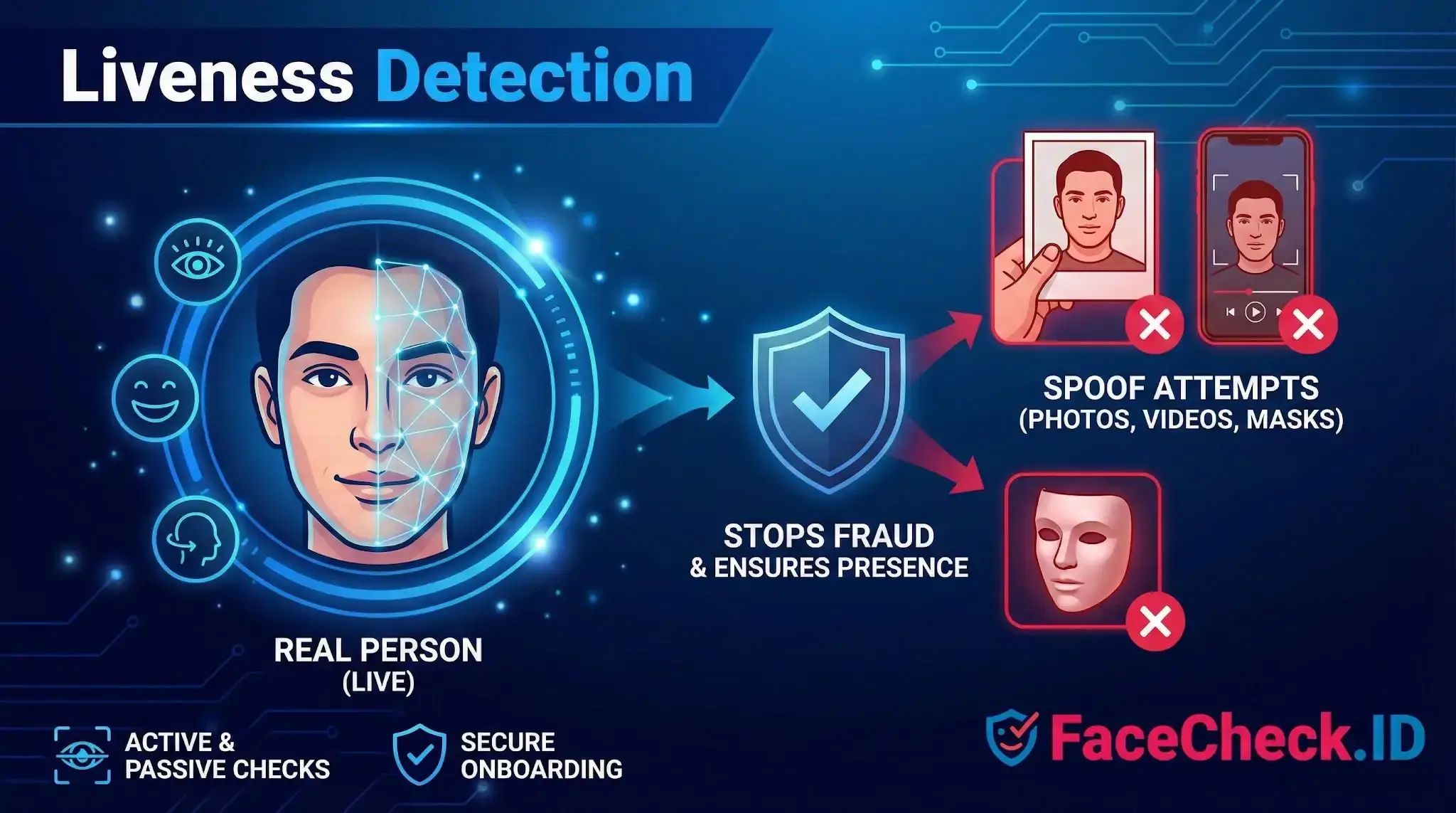
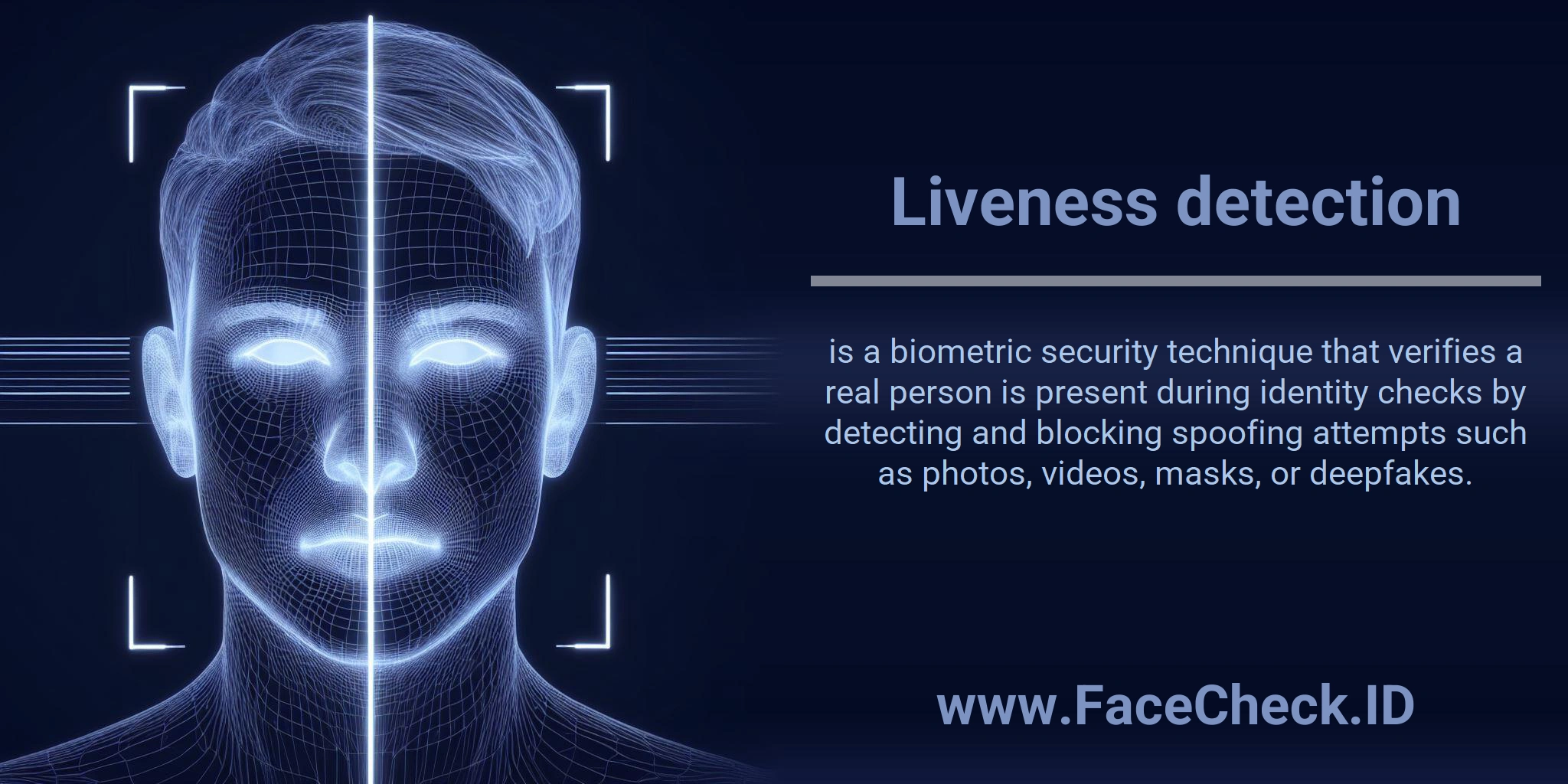
Liveness detection is a biometric security method used to confirm that a real, live person is present during identity verification. It helps prevent fraud by detecting attempts to use photos, videos, masks, or other spoofing methods to trick face recognition or other biometric systems.
Why liveness detection matters
Liveness detection is used to reduce identity fraud in situations where a user is not physically present, such as online onboarding or remote login. It helps organizations:
- Stop presentation attacks like printed photos, screen replays, and deepfake videos
- Reduce account takeover and fake account creation
- Improve trust in digital identity verification flows
- Meet stricter security expectations in regulated industries like finance and healthcare
How liveness detection works
Most liveness detection systems analyze biometric signals and user behavior to determine whether the capture comes from a live human. Common techniques include:
Active liveness detection
The user performs an action requested by the system, for example:
- Turning their head
- Smiling
- Blinking
- Following a moving dot on the screen
These actions help verify real-time interaction and make replay attacks harder.
Passive liveness detection
The system checks for signs of life without requiring the user to do anything specific. It typically evaluates:
- Natural facial micro-movements
- Skin texture and reflectance
- 3D depth cues
- Lighting consistency
- Camera sensor patterns
Passive methods are often faster and more user-friendly, especially on mobile devices.
Hybrid approaches
Some solutions combine passive checks with occasional active prompts to balance user experience with higher security.
Common use cases
Liveness detection is widely used in:
- KYC and customer onboarding for banks and fintech apps
- Remote identity verification for document and selfie checks
- Login authentication for high-risk accounts
- Workforce access control for secure applications and devices
- Age verification and restricted content access
Liveness detection vs face recognition
Face recognition answers: Is this the right person?
Liveness detection answers: Is this a real person right now?
In secure biometric systems, liveness detection is often used alongside face matching to confirm both identity and presence.
What liveness detection protects against
A strong liveness detection system is designed to detect and block:
- Printed photo attacks
- Screen replay attacks using a phone or monitor
- Video replays
- 3D masks and silicone replicas
- Deepfake and synthetic media attempts (depending on the system)
Key factors that affect accuracy
Liveness detection performance can vary based on:
- Camera quality and frame rate
- Lighting conditions and shadows
- Motion blur and shaky capture
- Device type and sensor capabilities
- Attack sophistication (for example, high-quality masks or deepfake video)
Well-designed systems aim to minimize false rejections for genuine users while maintaining strong spoof resistance.
FAQ
What does “Liveness Detection” mean in face-recognition systems, and what problem does it solve?
Liveness Detection is a set of checks used to determine whether a face presented to a camera is from a real, live person (or a real-time capture) rather than a spoof such as a printed photo, a replayed video, a mask, or certain face-swap/deepfake presentations. Its main goal is to reduce “presentation attacks” where someone tries to trick a face system into accepting an impostor.
How is liveness detection different from face matching in a face recognition search engine?
Face matching for a search engine focuses on “who does this face look like?” by comparing facial features (embeddings) against an index of images. Liveness detection focuses on “is this capture from a real live subject right now?”—it does not primarily try to find the person elsewhere online. A face recognition search engine can return strong visual matches even when the query image came from a screen, a replay, or a manipulated source, because matching and liveness are different tasks.
What are common liveness detection methods (passive vs. active), and what trade-offs do they have?
Passive liveness analyzes signals without requiring user actions (e.g., texture and moiré detection, lighting/reflection cues, blur/compression artifacts, 3D face-shape hints, subtle motion patterns). Active liveness asks the user to do a challenge (e.g., turn head, blink on command) or uses specialized capture (depth/IR on supported devices). Passive methods are easier to use but can be less robust in edge cases; active/depth-based methods can be stronger but add friction and may require compatible hardware.
If I upload a selfie or screenshot to a face search tool, does liveness detection change the search results?
Usually, liveness detection (if present) is used to decide whether to trust the capture for authentication—not to improve “same person across the web” searching. In an open-web face search workflow, a screenshot, a re-shared image, or a video frame can still match many indexed photos because the matching model only needs enough facial information. If you want fewer misleading matches, improving image quality and using multiple photos (different angles/lighting) generally matters more than liveness checks.
Does FaceCheck.ID (or similar face recognition search engines) verify liveness or confirm identity?
FaceCheck.ID is used for face recognition search (finding web pages/images that appear to contain a similar face), which is different from identity verification and typically does not require proving the face was captured live. Even if a platform implemented some anti-spoofing checks, a face-search “match” still should be treated as a lead, not proof of identity, because look-alikes, reused photos, edits, and context errors can all produce convincing but wrong associations.


Recommended Posts Related to liveness detection
-
Facial Recognition: Understanding the Basics
Technologies like anonymization and liveness detection enhance its security, reducing the risk of unauthorized access. What is liveness detection in facial recognition? Liveness detection, or anti-spoofing technology, prevents biometric fraud by distinguishing between real users and imposters.
-
How to Detect Fake Remote IT Workers with Facial Recognition (2026 Guide)
Liveness detection validates the live human.