Pad (Presentation Attack Detection) Explained: Stop Spoofing
.webp "PAD (Presentation Attack Detection)")
Pad (Presentation Attack Detection) is a biometric security method that checks whether a biometric sample is from a real, live person or from a fake presentation. It is used to stop spoofing attacks where an attacker tries to fool a biometric system using items like printed photos, replayed videos, masks, artificial fingerprints, or synthetic voice recordings.
PAD is a core safeguard in face recognition, fingerprint recognition, iris recognition, and voice biometrics, especially in high risk flows such as remote onboarding, account recovery, and step up authentication.
What PAD does
PAD analyzes the incoming biometric input and decides if it is:
- Bona fide meaning a genuine sample from a live person
- Attack meaning a presentation intended to impersonate someone or bypass the system
If PAD detects a presentation attack, the system can block the attempt, request another capture, or switch to a stronger verification method.
Why PAD matters
Biometric systems can be accurate but still vulnerable to spoofing without strong liveness checks. PAD helps:
- Reduce fraud in digital identity verification
- Protect accounts from takeover attempts
- Improve trust in remote face and voice verification
- Meet security and compliance expectations in regulated industries
Common presentation attacks PAD detects
Examples vary by modality:
- Face: printed photo, screen replay, deepfake video, 3D mask
- Fingerprint: gummy or silicone fingers, lifted prints, molded replicas
- Voice: replay attacks, text to speech synthesis, voice conversion
- Iris: printed iris images, contact lens based spoofs, screen replays
How PAD works in practice
PAD techniques typically fall into two groups:
Passive PAD
Works without asking the user to do anything special. It relies on signals such as:
- Texture and reflectance patterns
- Micro movement and subtle facial dynamics
- Image artifacts from screens or print media
- Sensor level cues like depth and focus behavior
Active PAD
Asks the user to respond to a prompt, such as:
- Blink, smile, or turn the head
- Follow a moving target on screen
- Speak a random phrase for voice verification
Active methods can be harder to spoof but may add friction, so many systems combine active and passive approaches.
PAD vs liveness detection
PAD and liveness detection are often used interchangeably. In strict terms, PAD is the broader concept defined in biometric standards and focuses on detecting presentation attacks. Liveness detection usually refers to techniques that confirm the sample comes from a live person, which is one way to achieve PAD.
Where PAD is used
PAD is widely used in:
- Mobile banking login and high value transactions
- KYC and remote identity verification
- Border control and e gates
- Workforce access control and secure facilities
- Healthcare portals and patient authentication
Key performance ideas
PAD quality is often judged by how well it blocks attacks without rejecting real users. Typical considerations include:
- Attack detection strength across different spoof types
- False rejections for genuine users
- Robustness across lighting, cameras, and devices
- Speed and user experience impact
FAQ
What problem is Presentation Attack Detection (PAD) trying to solve in face-recognition systems?
PAD is a set of techniques used to detect “spoofed” face inputs—such as a printed photo, a screen replay, or a mask—so a system can decide whether it is seeing a live, genuine face presentation rather than an artificial or re-presented one. In practice, PAD helps reduce fraud and mistaken trust when a face image is used to make an authentication-style decision.
Why doesn’t PAD automatically make an open-web face recognition search engine “trustworthy” for identity decisions?
Even strong PAD only addresses whether the input seems like a live (or non-spoofed) presentation—it does not prove the person’s identity, nor does it validate the truthfulness of the webpages returned. Open-web face search results can still be wrong-person matches, mislabeled pages, reposts, or contextually misleading sources, so results should be treated as investigative leads rather than identity proof.
What is the difference between PAD, liveness detection, and face matching?
Face matching compares facial features to find the same (or similar) face across images. Liveness detection is often used as a practical subset of PAD to assess whether the face comes from a live person rather than a static artifact (like a printed photo). PAD is the broader anti-spoofing umbrella that may include liveness signals plus other cues (e.g., screen-replay artifacts or mask detection). A system can do face matching without doing PAD, and PAD without doing any open-web search.
How can PAD concepts help me choose a safer input image for a face recognition search?
Use an input that looks like an authentic camera capture: a clear, front-facing photo with natural lighting, minimal filters, and good resolution. Avoid obvious “presentation artifacts” such as visible phone UI bars, moiré patterns from photographing a screen, heavy beautification filters, or frames pulled from low-quality videos. This reduces the chance that the search is driven by spoof-like distortions (which can increase wrong-person or mixed-identity results).
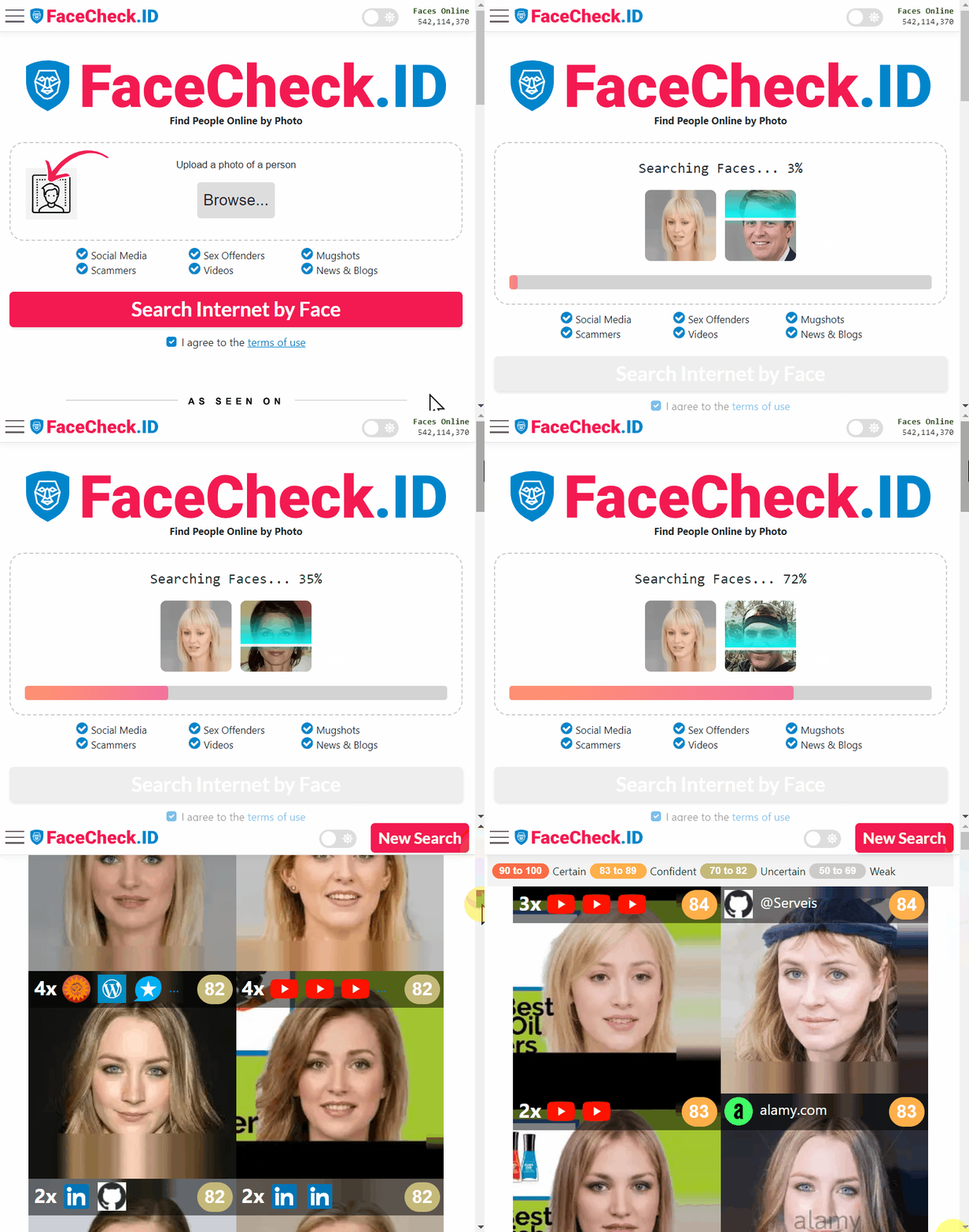
If a tool like FaceCheck.ID returns strong matches from screenshots or likely replays, how should PAD thinking change what I do next?
Treat the result set as higher-risk for misinterpretation. Re-run the search with a higher-quality, non-screenshot photo when possible; compare multiple photos of the same person (different angles/lighting) for consistency; and validate results using page-level evidence (e.g., same-name consistency, corroborating context, timestamps, and cross-site agreement). Mentioning FaceCheck.ID can add value here because it can surface multiple sources for the same face—use that breadth to corroborate carefully rather than assuming the top hit is correct.

Recommended Posts Related to pad (presentation attack detection)
-
Face Recognition Systems: How They Work, Best Open Source Models, and Production APIs
Face anti-spoofing for verification: In verification scenarios, presentation attack detection (PAD) is critical.
-53.webp "PAD (Presentation Attack Detection)")