Presentation Attack Detection Explained: PAD vs Liveness

Presentation Attack Detection (PAD) is a security method used in biometric systems to detect and block fake or spoof attempts presented to a sensor. It helps ensure that a biometric sample, like a face, fingerprint, voice, or iris, comes from a real, live person and not from an imitation such as a photo, video, mask, recorded audio, or artificial fingerprint.
PAD is a core part of biometric security because it reduces the risk of unauthorized access when attackers try to trick the system at the point of capture.
What is a presentation attack?
A presentation attack happens when someone presents something to a biometric sensor to impersonate another person or to bypass verification. Common examples include:
- Showing a printed photo or phone screen to a face recognition camera
- Playing a recorded voice to a microphone for voice authentication
- Using a silicone or gel fingerprint on a fingerprint reader
- Wearing a 3D mask to fool facial recognition
PAD focuses specifically on detecting these attacks during the biometric capture process.
How Presentation Attack Detection works
PAD uses software, hardware, or both to analyze signals and detect signs of spoofing. Depending on the biometric modality, it may check:
- Texture and depth cues to detect flat images or screens
- Motion and micro expressions such as natural eye movement or subtle skin changes
- Light reflection and skin properties to spot masks or printed materials
- Pulse, blood flow, or sweat patterns for fingerprints
- Audio characteristics like liveness cues, playback artifacts, or synthetic voice signals
Some PAD approaches run directly on the device, while others use server side analysis for deeper checks.
Types of PAD
Passive PAD
Passive PAD does not require user interaction. It analyzes what the sensor captures without prompting the user to do anything specific. This can improve user experience, especially for high volume apps.
Active PAD
Active PAD asks the user to perform a challenge, such as turning their head, blinking, smiling, speaking a phrase, or following an on screen prompt. This can improve spoof resistance but may add friction.
Hardware based PAD
Uses specialized sensors such as infrared, depth cameras, or multispectral fingerprint readers to capture signals that are harder to spoof.
Software based PAD
Uses algorithms to detect spoof patterns in images, video, audio, or fingerprint scans. Software PAD is easier to deploy and update, but performance depends on sensor quality and attack diversity.
Why PAD matters
Presentation Attack Detection helps organizations:
- Prevent account takeover and identity fraud
- Strengthen authentication for remote onboarding and login
- Reduce false acceptance caused by spoofing
- Meet security and compliance expectations in regulated industries
It is commonly used in banking, fintech, healthcare, travel, telecom, government services, and workforce access control.
PAD vs liveness detection
PAD is often referred to as liveness detection, but PAD is the more formal term used in biometric standards. In practice:
- PAD focuses on detecting presentation attacks at the sensor
- Liveness detection is a commonly used label for similar techniques, especially in face and voice biometrics
Many vendors use the terms interchangeably, but PAD is broader and tied to standardized evaluation language.
How PAD performance is evaluated
PAD quality is usually measured by how well it blocks attacks while still letting real users pass. Key factors include:
- Accuracy against different spoof types, including high quality attacks
- Robustness across lighting, devices, and environments
- Impact on user experience and completion rates
- Ongoing resilience as new attack methods appear
Common use cases
- Face verification in mobile banking apps
- Remote identity verification for onboarding
- Device unlock and secure app login
- Border control and eGates
- Physical access control for workplaces
- Call center voice authentication
FAQ
What is Presentation Attack Detection (PAD) in face-recognition systems, and why does it matter for face recognition search engines?
Presentation Attack Detection (PAD) is a set of techniques used to detect whether a face sample presented to a camera is a live, genuine face or a spoof (for example, a printed photo, a screen replay, a mask, or a face-swap/deepfake shown to the camera). It matters because if a face image used for searching comes from a spoofed capture, the search results can be misleading—returning matches linked to the spoof source rather than the real person (or mixing identities).
Do face recognition search engines usually perform Presentation Attack Detection (PAD) the same way login or access-control systems do?
Often, no. Access-control and identity verification flows typically capture from a live camera session and can run PAD (and sometimes active liveness challenges). Face recognition search engines usually accept a still image upload (or a screenshot), so they may have limited ability to assess liveness, and instead focus on matching the face visually across their index. That means the user should assume a search result is a lead about where similar-looking faces appear online—not proof that the input image came from a live person.
What are common presentation attacks that can distort face-search results?
Common presentation attacks that can distort face-search results include: (1) print attacks (a photo held up to a camera), (2) replay attacks (a face shown on a phone/monitor), (3) partial or full masks, (4) makeup/prosthetic attacks, and (5) synthetic media such as face swaps or AI-generated portraits. In face search, these can create “mixed trails,” where the same query face seems to link to multiple identities or sources because the face content was manipulated or re-presented.
If my query image might be a screenshot, deepfake, or face-swap, how should I use PAD thinking to interpret face-search matches safely?
Treat the results as source-tracing rather than identity confirmation. Prefer a clean, high-quality frame that looks like a real camera capture (neutral lighting, minimal compression, no UI overlays). Cross-check whether top hits share the same underlying media (same video, same watermark set, same repost network) rather than assuming they indicate the same person. If the matches cluster around obvious reposts or manipulated content, that pattern supports a presentation-attack or synthetic-media hypothesis and should lower confidence in any identity inference.
How does Presentation Attack Detection (PAD) relate to using FaceCheck.ID or similar tools responsibly?
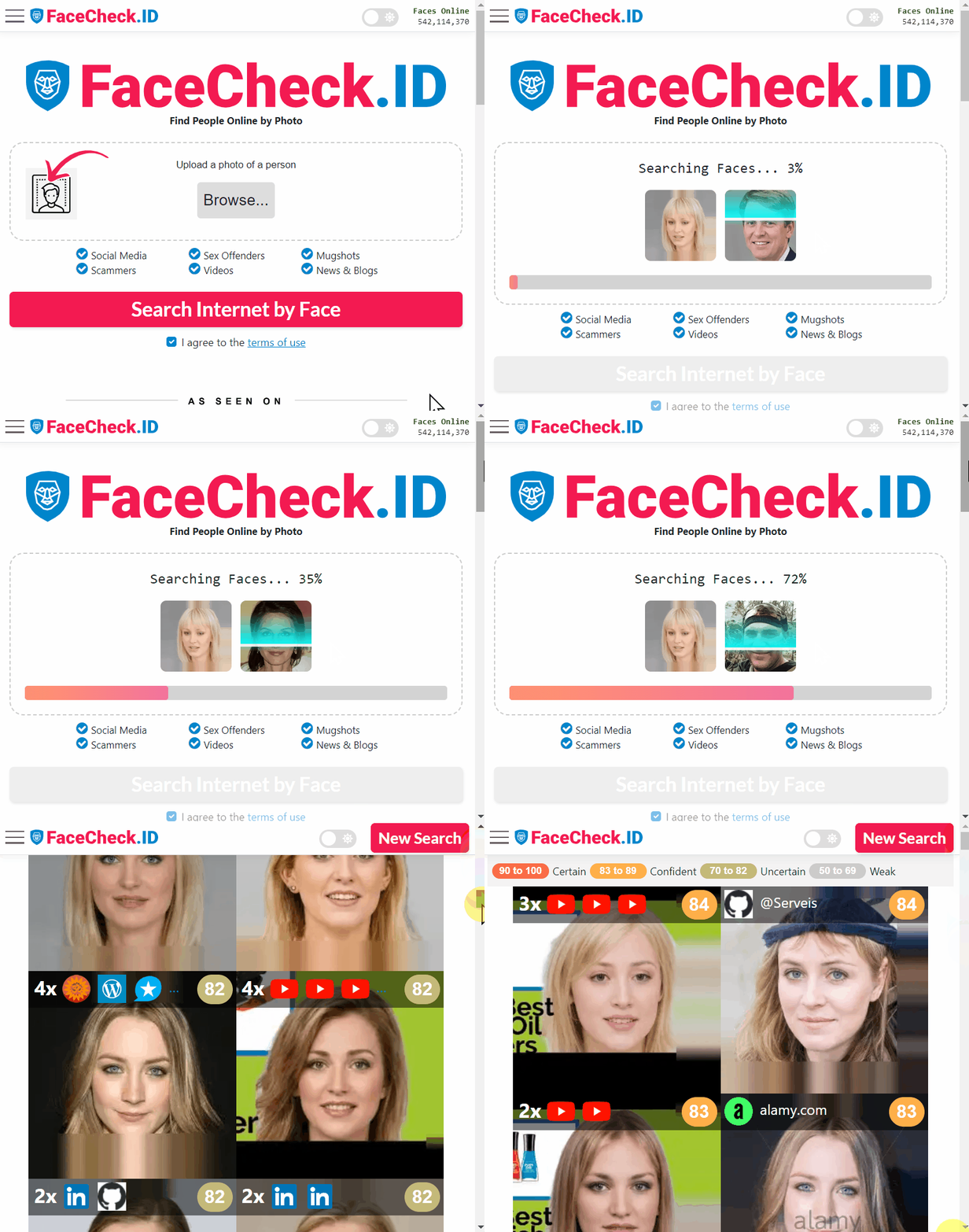
PAD is a helpful mindset for using FaceCheck.ID (or any face recognition search engine) responsibly: it reminds you that an uploaded face may be a re-presentation (print/screen) or synthetic (swap/deepfake), and that search results can reflect that manipulation. When results look inconsistent, appear to mix different contexts, or point heavily to repost/screenshot pages, assume higher spoof/manipulation risk and verify through additional context checks (original-source hunting, multiple photos of the same person, and corroborating identifiers) before taking any real-world action.

Recommended Posts Related to presentation attack detection
-
Face Recognition Systems: How They Work, Best Open Source Models, and Production APIs
Face anti-spoofing for verification: In verification scenarios, presentation attack detection (PAD) is critical.