Search Mugshots Explained: What Shows Up & Why

Definition
Search Mugshots means looking up arrest booking photos and related public records in an online database. Results often include the mugshot image plus identifying details such as the person’s name, age, booking date, agency, location, charges, and case or booking number.
What shows up in a mugshot search
A typical mugshot search may return:
- Booking photo (mugshot)
- Full name and known aliases
- Date of arrest or booking
- Jail or arresting agency
- City, county, and state
- Listed charges and charge descriptions
- Booking or case identifiers
- Basic demographics (may vary by jurisdiction)
How people search
Most databases let you search using one or more of these identifiers:
- Name (first and last, plus spelling variations)
- Location (city, county, state, or jail)
- Date range (booking dates)
- Charge type (example DUI, theft, assault)
Common uses
Search mugshots are used for:
- Background checks for personal research
- Journalism and reporting
- Legal and investigation work (law enforcement, attorneys, private investigators)
- Reputation monitoring and identity confirmation
Important notes for accuracy and privacy
- A mugshot usually indicates an arrest, not a conviction.
- Records can be wrong, outdated, or incomplete, and different sites may show different details.
- Availability depends on local laws, agency policies, and whether records are sealed, expunged, or restricted.
FAQ
What does “Search Mugshots” mean when a face recognition search engine uses that phrase?
“Search Mugshots” typically means the tool may surface web pages that contain booking or arrest photos (often reposted by third-party “mugshot” sites) when your uploaded face is similar to faces on those pages. It usually does not mean the engine has a dedicated, authoritative “mugshot database,” and the result should be treated as a lead to investigate rather than proof of an arrest or criminal history.
Can face recognition search engines search official jail or arrest databases directly?
In most cases, they only search what they can crawl, index, or otherwise access on the public web. Many official law-enforcement systems are not publicly searchable by face, may block automated access, or provide only limited public lookup options. So “mugshot” hits commonly come from publicly accessible pages, aggregators, or reposts—not necessarily from an official government source.
How can I tell whether a “mugshot” result is an official booking photo, a repost, or just a look-alike?
Check the source domain and page context first: official sources typically identify the agency, jurisdiction, and booking metadata (dates, charges, case/booking number). Repost/aggregator pages may be heavy on ads, light on verifiable details, and may copy the same image across multiple sites. To rule out look-alikes, compare multiple facial cues (ears, nose bridge, spacing, scars/tattoos) and corroborate with non-face details (age range, location, timeline) before assuming it’s the same person.
If I find my face on a mugshot site, what steps can I take to verify it and request correction or removal?
First, verify whether the page accurately refers to you by checking jurisdiction, dates, and identifiers, and by finding the original source (if any). If it appears incorrect or misleading, document the page (URL, screenshots, timestamps), then contact the site with a factual correction request and any proof of misidentification. You can also request removal from search engines where applicable, and consider legal advice if the site refuses to correct clear errors or is engaging in extortion-like “pay-for-removal” behavior.
How can FaceCheck.ID help when a search result appears to be a mugshot, and what precautions should I take?
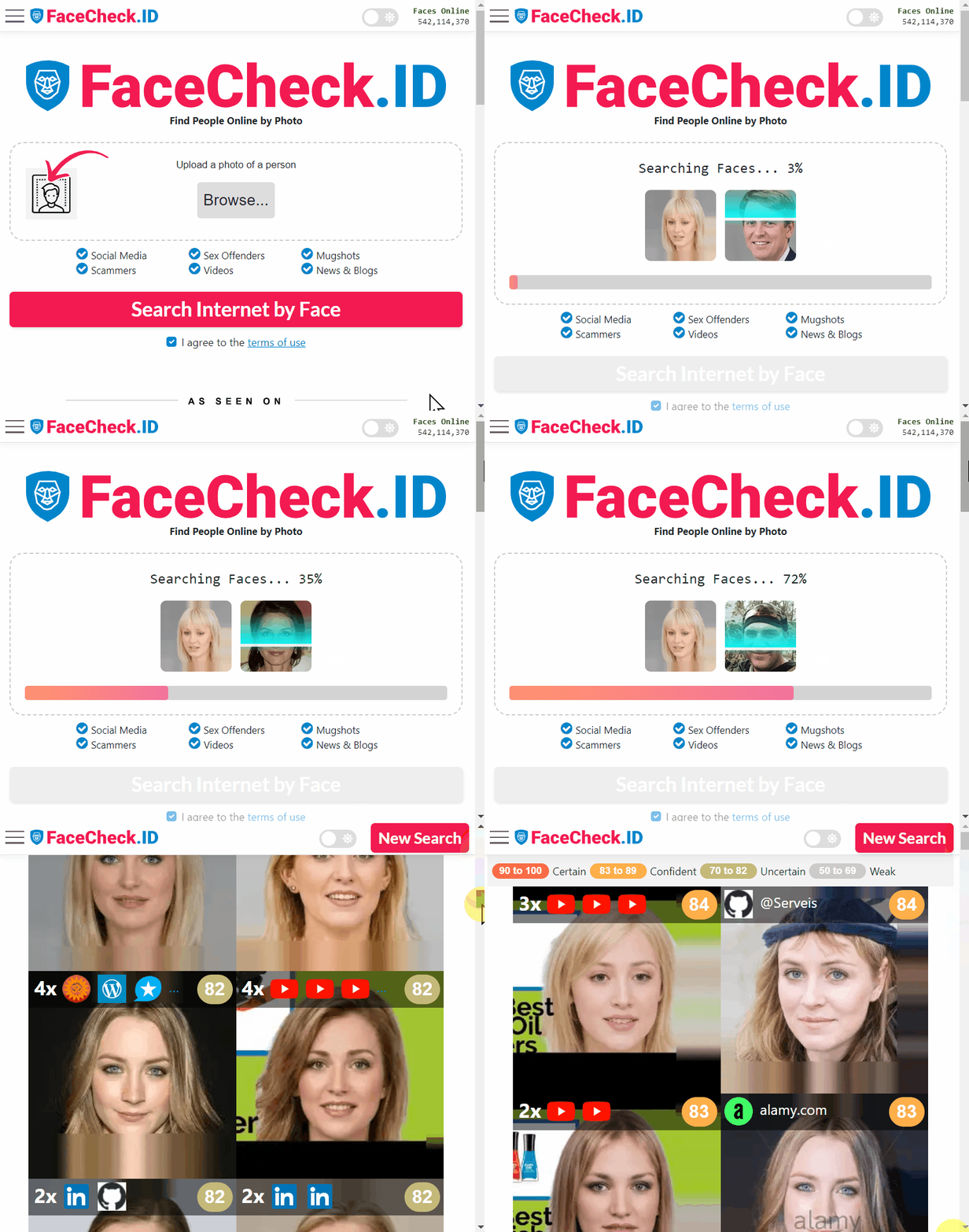
FaceCheck.ID (and similar face-search tools) can help you cross-check whether the same face appears across multiple independent sources, which may clarify whether a “mugshot” page is a one-off repost, a misidentification, or part of broader reuse of an image. Precautions: don’t treat any single mugshot-like hit as proof of identity or wrongdoing, avoid sharing results publicly, and confirm with multiple reliable, non-sensational sources before taking any action that could harm someone’s reputation.

Recommended Posts Related to search mugshots
-
How to Search Arrest Records and Mugshots by a Photo of a Person
Reverse Image Search Mugshots. Search Mugshots by a Face Photo! Search Mugshots by Photo.
-
How to Reverse Image Search Mugshots
This article will explore how reverse image searching mugshots can significantly contribute to community safety and foster transparency while ensuring the privacy of individuals. Reverse Image Search Mugshots to Find Arrest Records.
-
PimEyes Free Alternatives That Actually Work (2026)
Searches mugshot and arrest record databases.