Fake Identity: Spot Stolen Photos
A fake identity is one of the most common things FaceCheck.ID users are trying to expose. When a stranger online claims to be a doctor in Dubai, a soldier overseas, or a recruiter at a real company, a face search can confirm whether the photo on that profile actually belongs to the person sending it, or whether it has been pulled from someone else's social media to build a convincing lie.
A fake identity combines fabricated personal details, often with photos taken from a real person, to deceive someone into trusting an account, message, or transaction. It can be entirely invented, partly synthetic, or a direct impersonation of a specific individual.
How face search exposes a fake identity
Most fake identities reuse images. Building a believable persona is hard, so scammers and impersonators steal photos from public Instagram accounts, modeling portfolios, fitness influencers, military personnel pages, or LinkedIn profiles. Reverse face search finds the original source.
Useful patterns to look for in match results:
- The same face appears under several different names across unrelated profiles
- Photos trace back to a public figure, model, or content creator unrelated to the person you are speaking with
- Matches surface on scam-report sites, romance-scam databases, or threads on Reddit and forums warning about specific accounts
- The earliest indexed appearance of the image predates the suspect profile by years
- The matched person lives in a different country, speaks a different language, or has a verifiable life that contradicts the story
A clean LinkedIn-style headshot tends to produce strong matches because it is front-facing, well lit, and reused widely. Heavily filtered selfies, group photos, or AI-generated faces are harder to verify and require more careful interpretation.
Categories of fake identity worth distinguishing
Not every fake identity is the same, and the type changes how face search results should be read.
- Catfish persona: A scammer using stolen photos of a real third party, usually for romance or investment fraud. Face search typically lands on the real owner of the photos.
- Synthetic identity: A blend of real and fake data, sometimes paired with AI-generated faces. Face search may return no matches at all, which is itself a signal.
- Impersonation of a specific person: Targeting a known individual, often a coworker, executive, or celebrity. Matches will cluster around that one person's real presence.
- Sockpuppet: A secondary account run by a real person using a different name. Face search can connect the sockpuppet's photos back to the operator's primary identity.
- Stolen identity: Real personal details used without consent, sometimes paired with the victim's actual photos. Face search confirms the photos belong to the named victim, not the person using the account.
Reading the results without overreaching
Face search is a strong starting point, not a verdict. A match showing the same face on a different name does not always prove fraud. Sometimes people use professional aliases, sometimes the matched profile is itself the fake, and lookalikes do produce false positives, especially with low-resolution or partially obscured images.
Things a face match cannot prove on its own:
- Which account is the real person and which is the impostor
- Whether the person you are speaking with is the operator behind the account or a different actor using the same stolen photos
- Intent, since some pseudonymous accounts are legitimate privacy choices rather than fraud
Treat face-search results as evidence to combine with other signals: inconsistent biographical claims across platforms, refusal to do a live video call, mismatched phone country codes, urgency around money, and writing style that drifts between messages. A single weak match is not enough. A pattern of matches pointing to a stranger whose life does not align with the story being told is much harder to explain away.
The honest use of face search against a suspected fake identity is to verify whether photos were stolen and to find the real source, then let the rest of the investigation follow from there.
FAQ
What does “Fake Identity” mean in the context of face recognition search engines?
In face recognition search engines, a “Fake Identity” usually means an identity claim (name, username, profile, or story) that does not correspond to the real person behind the photos—often because the account uses stolen images, a synthetic (AI-generated) face, or a mismatched set of photos from multiple people.
How can a face recognition search engine help detect a Fake Identity?
It can reveal whether the same face appears across many unrelated sites, different names, or multiple profiles—signals of photo reuse or impersonation. Strong indicators include the same face tied to conflicting bios/locations, the same headshot used by many accounts, or matches leading to an older “original” source (e.g., a model portfolio) that contradicts the profile’s claims.
What face-search result patterns commonly indicate a Fake Identity versus normal reposting?
Higher-risk patterns include: (1) the same face linked to multiple different names/usernames, (2) many new/low-quality profiles using the same face photo, (3) a profile’s photos matching an unrelated public figure or stock/model imagery, and (4) inconsistent age/appearance signals across images that suggest a “photo set” assembled from different people. Normal reposting is more likely when results cluster around a single identity with consistent context and long-standing sources.
Can a face recognition search engine confirm someone is using a Fake Identity?
No. Face search results are leads, not proof of identity or wrongdoing. A match can be incorrect, out of context, or caused by look-alike faces, edits, or repost chains. Treat the results as clues to investigate further (for example, checking original upload dates, cross-referencing usernames, and validating through independent, non-face evidence).
How should I use FaceCheck.ID (or similar tools) when I suspect a Fake Identity?
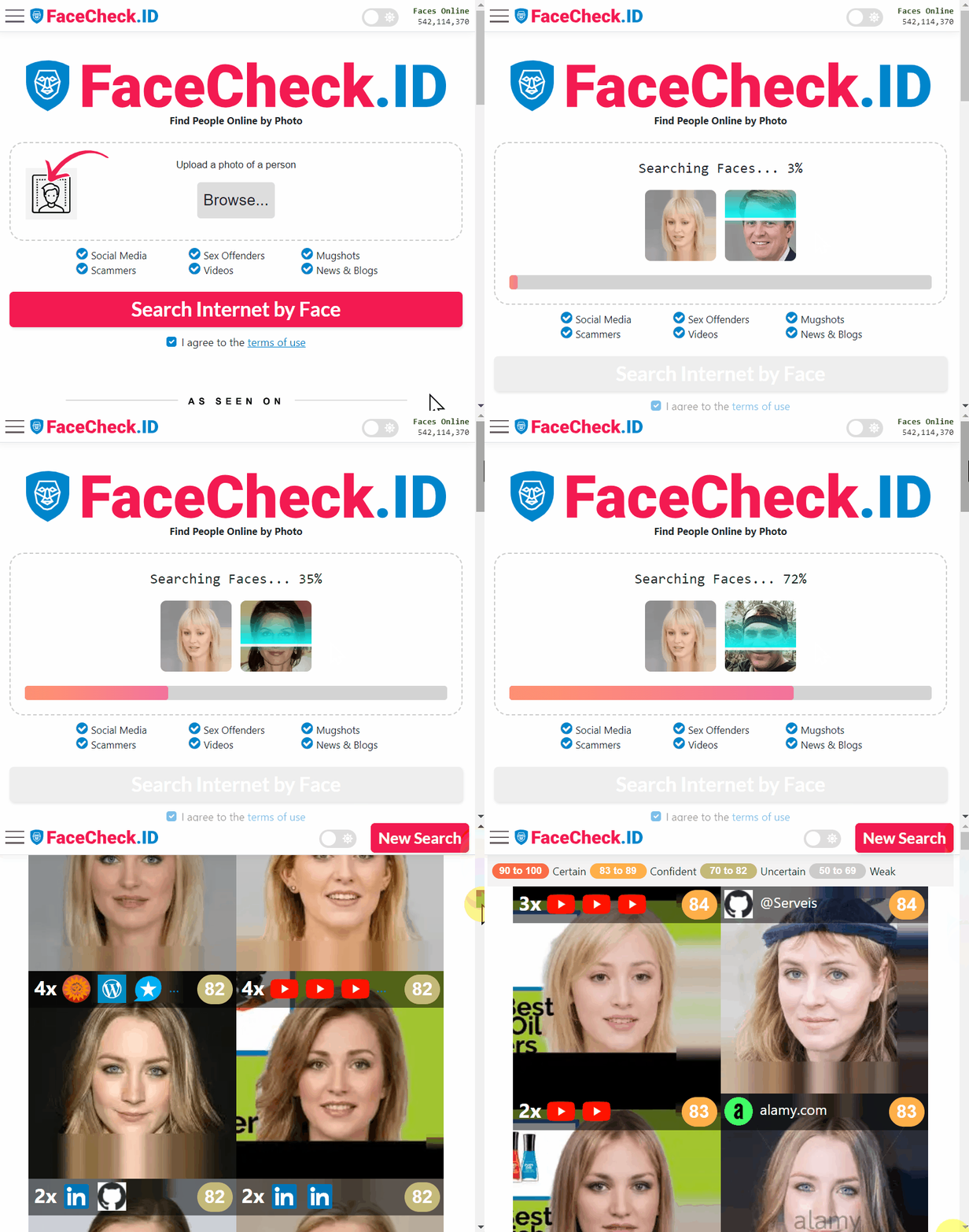
Use it to triangulate sources and consistency: run searches on multiple photos from the profile, compare top matches for recurring identities, and open the earliest/highest-quality sources to see the original context. If results show multiple identities or risky categories (e.g., scams, adult content, mugshots), pause and verify carefully—avoid sharing accusations, and use platform reporting and takedown/impersonation processes when you have enough corroboration.

Recommended Posts Related to fake-identity
-
How to Detect Fake Remote IT Workers with Facial Recognition (2026 Guide)
Fast, recruiter-friendly facial recognition verification tools, led by FaceCheck.ID that detect fake identities in under 60 seconds. Produce unlimited unique fake identities at scale.
-
Stop Romance Scams in 2025: Real Case, Red Flags, and FaceCheck Tips
You can uncover fake identities with a quick facial search. FaceCheck.ID can reveal fake identities through facial recognition searches.
-
Social Catfish Review: Is It Actually Worth Your Money in 2026?
They build entire fake identities using dozens of photos from the same victim's social media, creating a convincing collection of "their life." The photos are all different, but they're all stolen from the same real person. One search can unravel the entire fake identity.