Online Dating: Verifying Matches With Face Search
Online dating is where most modern face-search investigations start, because the photos people post on dating apps are often the only public clues to who they really are. When something feels off about a match, a reverse image search of their profile pictures can reveal whether the face belongs to the person they claim to be, or whether the same images have been recycled across scam profiles, stolen from a stranger's Instagram, or pulled from a stock photo site.
How face search fits into online dating
Dating profiles are designed to show a curated face. The same person may use different names, ages, and locations across Tinder, Bumble, Hinge, Match, OkCupid, and regional apps like Badoo or Plenty of Fish. A face-search engine indexes the public web for that face rather than for a name, so it can connect a Hinge photo to a LinkedIn page, a years-old Facebook profile, a wedding announcement, or a previous account that used a different identity.
This matters because dating apps verify very little. A blue checkmark from a selfie verification only proves the account holder matches their photos. It does not prove their name, marital status, job, or intentions. Face search fills that gap by showing where else on the internet the same face appears, and under what context.
Common patterns face search reveals
When someone runs a match's photo through a reverse face search, a few outcomes show up repeatedly:
- The face appears on social profiles using a different name, age, or city than the dating profile claims
- The same photos appear on multiple dating sites with conflicting bios, suggesting bulk catfishing
- The images trace back to a model, influencer, or military service member whose photos are routinely stolen by romance scammers
- The face appears in news articles or court records that contradict the person's stated background
- A married person's wedding photos surface on Facebook while they present as single
Stolen-photo scams are especially common in pig butchering and military romance scams, where operators reuse the same attractive face across hundreds of accounts. A reverse search often surfaces scam-warning forums where victims have posted the same images.
Reading face-match results without overreading them
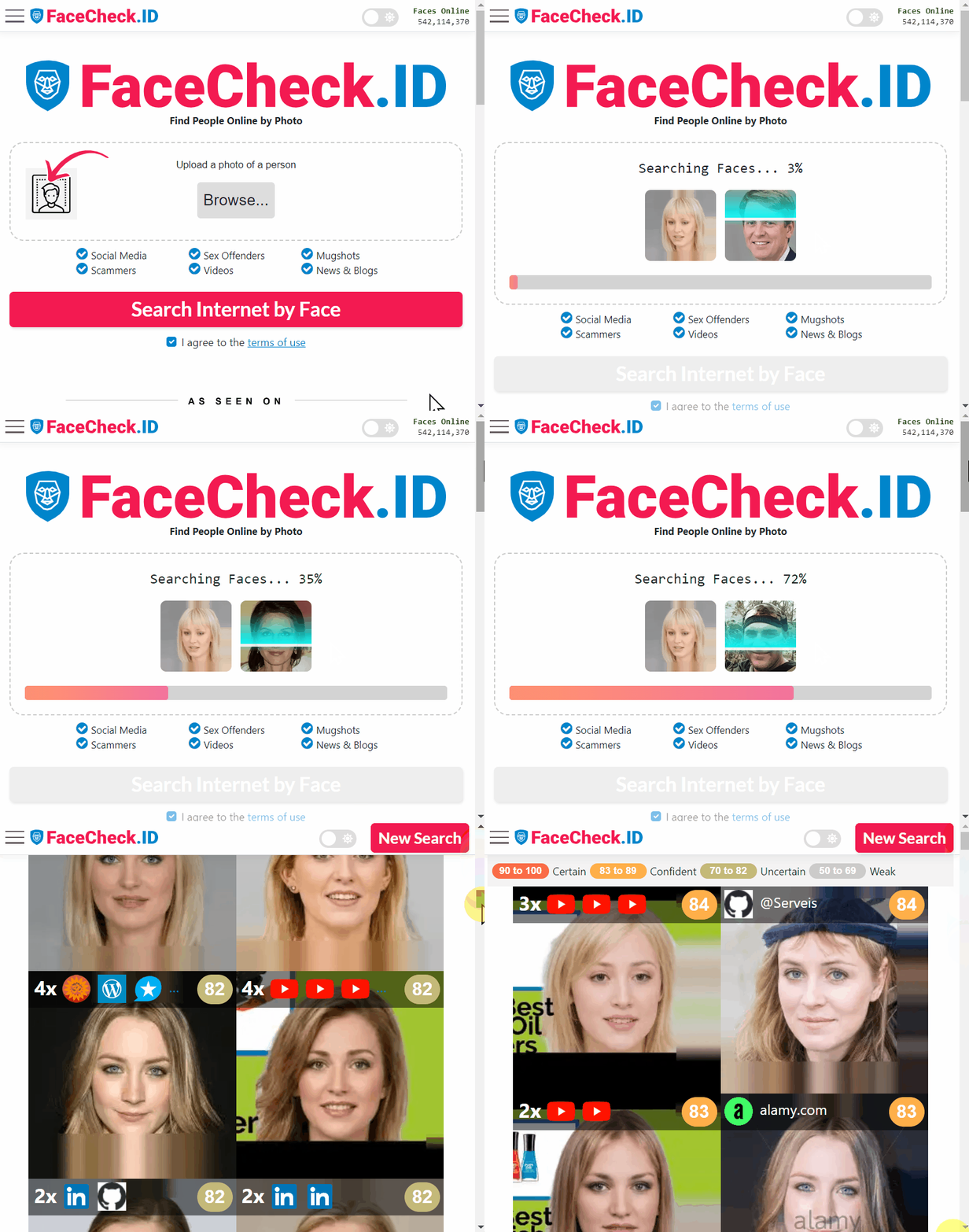
Face search produces a confidence score, not a verdict. A high-confidence match across several unrelated sites usually means the same person, or someone using the same photos. A weak match can simply mean lookalikes, since unrelated people occasionally share strong facial similarity, especially in low-resolution or heavily filtered dating photos.
Several factors degrade match quality on dating images specifically. Heavy filters and beauty mode soften features the algorithm relies on. Group photos, sunglasses, hats, and side-angle shots reduce confidence. Cropped headshots used as profile pictures sometimes match better than full-body posed shots because the face occupies more pixels. Photos taken years apart, with weight changes or different facial hair, may not match each other even when they show the same person.
A mismatch is not proof of innocence either. Someone posting only recent, heavily filtered photos may simply not appear in older indexed pages.
What face search on a dating match cannot prove
Finding a face elsewhere online does not automatically mean fraud. Plenty of people use the same photos on LinkedIn, Instagram, and dating apps, which is a healthy sign of consistency. The presence of an old account under a former name might reflect a marriage, a gender transition, a name change after leaving a controlling situation, or any number of legitimate reasons.
Conversely, finding nothing does not mean the person is honest. New scam accounts use AI-generated faces that produce no matches anywhere, because the face has never existed. If a profile's photos return zero hits and the person also refuses video calls, that combination is a stronger warning than any single signal alone.
Face search is an investigative tool, not a background check. It works best as one input alongside video verification, consistency in their stories over time, and the basic safety practices of meeting in public and never sending money to someone you have not met.
FAQ
How can face recognition search engines help verify an online dating profile photo?
They can help you check whether the same face appears elsewhere on the public web (e.g., under different names, on stock-photo sites, or in scam reports). Tools such as FaceCheck.ID may return links to pages where similar-looking faces appear, which you can use as leads to investigate authenticity—but the results should not be treated as proof of identity.
What are common signs in face search results that an online dating profile might be using stolen photos?
Common patterns include: the same face appearing across many unrelated profiles or regions, matches tied to modeling/portfolio images or stock sites, the same photo set reused with different names, and results connected to scam-warning posts. Cross-check dates, locations, and context on the source pages before concluding anything.
Can I use a face recognition search engine on someone I met on a dating app, and what privacy steps should I follow?
If you choose to do it, limit harm: use only the minimum image needed (preferably a clear headshot), avoid uploading sensitive images (nudes, minors, private moments), and don’t share results publicly or use them to harass or dox someone. Treat results as safety screening, not as a way to expose or shame people.
What should I do if a face search suggests the person I’m dating is linked to multiple identities online?
Assume ambiguity first. Verify by checking whether the matched pages show consistent details (age, city, workplace, friends, timeline) and whether the photos are clearly the same person across multiple angles and dates. If the context conflicts or the matches look like look-alikes, don’t confront aggressively—ask for clarification, do a video call, and prioritize personal safety.
If I find my own dating photos showing up in a face recognition search engine, what can I do?
Document the URLs where your images appear, request takedowns from the hosting websites/platforms, and report impersonation on the dating app. If the face search service offers an opt-out/removal process (some services, including FaceCheck.ID, may provide options depending on policy and jurisdiction), follow their procedure as well. Consider tightening privacy settings and watermarking or limiting reuse of the same headshots.

Recommended Posts Related to online-dating
-
Uncover the Truth Before Your First Date
How a Face Search Engine Can Save You from Scammers and Sex Offenders in Online Dating. With technology on the rise, it's no surprise that online dating is becoming increasingly popular. According to Pew Research Center, 15% of American adults have used online dating sites or mobile dating apps.
-
The Rise of Romance Scams: Protect Your Heart and Wallet
Married NJ duo caught in $6 million online dating scam, duping 33 innocent victims. The best way to protect yourself from online dating scammers is to be aware of their tactics and be cautious when you're online dating. One of the most common online dating scams is the "catfishing" scam.
-
Top 4 Benefits of Facial Recognition in Online Dating with FaceCheck.ID
The world of online dating has revolutionized the way people connect with potential partners. However, the anonymity of online dating can also make it difficult to confirm that the people you talk to online are really who they say they are. In this article, we will dive into the numerous benefits of using FaceCheck.ID to enhance your online dating experience.
-
Going on a Date? Lookup Child Sex Offenders by Photo
Steering Clear of Child Sex Offenders: Online Dating Tips for Single Moms. Recognizing Red Flags: Key to Safe Online Dating. Online Dating Safety Measures: Proactive Steps for Single Mothers.
-
How to Spot a Catfish in 2025: Red Flags in Fake Dating Profiles
Online dating is more popular than ever—but so are the risks. What is Catfishing in Online Dating? The future of safe online dating may rely on crowd reporting + blockchain verification + AI deepfake detection working together.