Online Dating Profiles
Online dating profiles are one of the most common reasons people run a face search. Whether you are checking a new match before meeting in person, investigating a suspected scam, or looking for unauthorized use of your own photos, dating profiles sit at the center of how face recognition tools get used in everyday identity verification.
How dating profiles surface in face search results
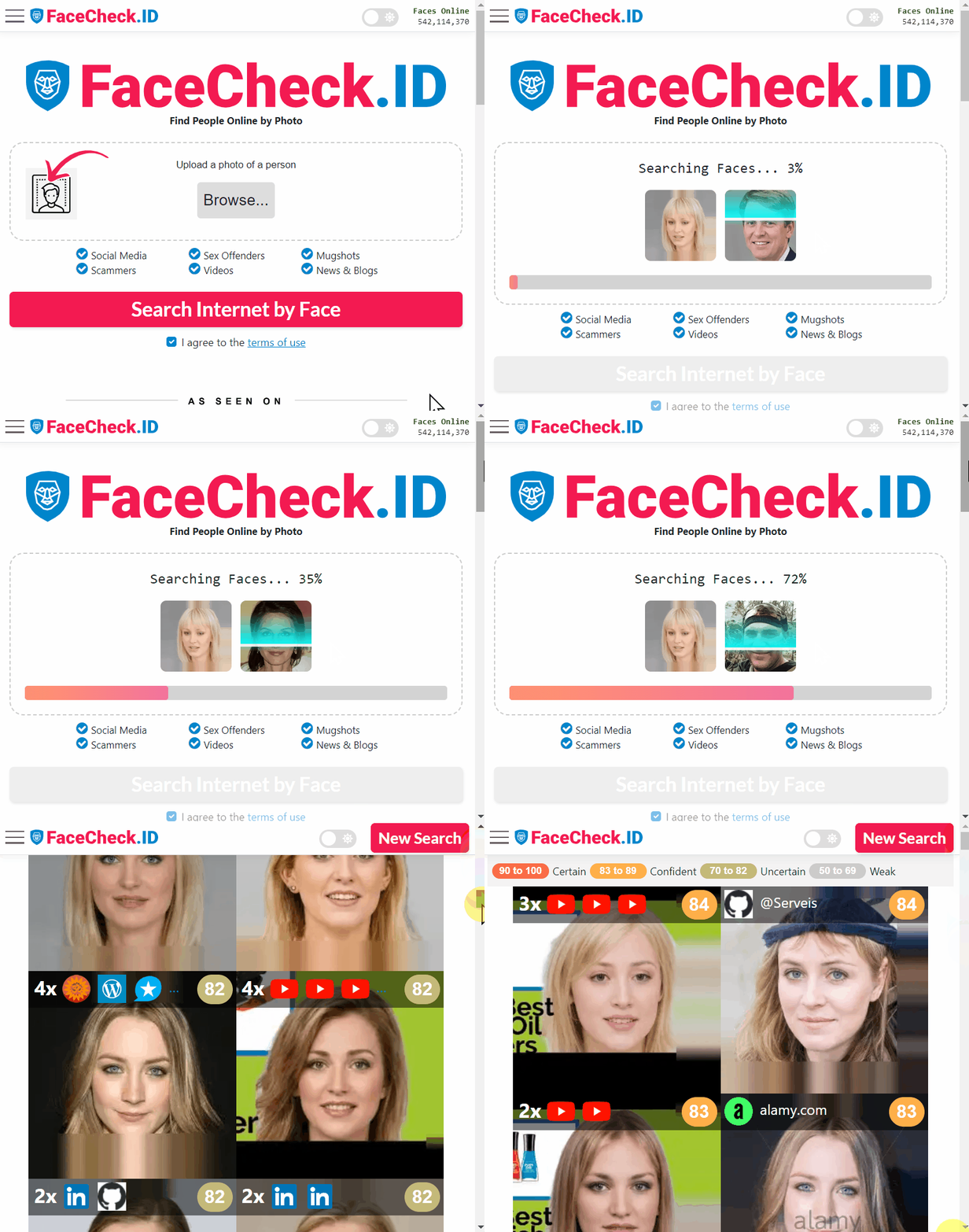
A reverse face search treats a dating profile photo like any other indexed image, but dating sites pose specific challenges. Most major platforms (Tinder, Bumble, Hinge, Match) restrict crawler access, so profile photos are not always directly indexed. What does get indexed is the same photo reused elsewhere: the Instagram post the picture came from, a LinkedIn headshot, an old Facebook album, a photographer's portfolio, or a news article. When FaceCheck.ID returns a match against what looks like a dating profile, it is usually finding the underlying source photo on a more public surface.
This matters because the same face often appears across multiple identities. A face uploaded for verification may match:
- A real person's social profiles under a different name
- A model whose photos were lifted for a fake profile
- A previous dating profile under a different city or age
- News coverage involving the person, including arrests or scam reports
- Stock photo libraries or AI-generated face galleries
Each of these tells a different story about whether the dating profile is genuine.
Reading face matches against a suspected catfish
Catfishing relies on photos that feel real but were never taken by the person sending them. Face search is one of the few fast ways to test that. The patterns to watch for in match results:
- The same face appears under multiple unrelated names across different sites
- Matches link to a public figure, model, or influencer who clearly is not the person you are talking to
- Photos trace back to a country or context that contradicts what the profile says
- The face appears in romance scam warning forums, anti-scam blogs, or fraud databases
- Reverse matches show the photo years older than the profile claims to be
A clean negative result, where no matches appear at all, is also informative but not conclusive. Some real people maintain very small online footprints. Some scammers use photos stolen from private accounts that were never widely indexed. The absence of evidence does not confirm authenticity on its own.
Why dating photos behave differently than other images
Dating profile photos tend to be edited, filtered, and chosen for flattery rather than identification. That affects match quality. Heavy filters smooth facial geometry in ways that reduce confidence scores. Group photos make it unclear which face the system should match against. Sunglasses, hats, and extreme angles cut accuracy significantly. Photos taken in low light or from far away give the recognition model less to work with.
The cleanest matches tend to come from photos that were originally taken for other purposes (work headshots, event photography, tagged group shots) and later cropped for a dating profile. Those photos often exist in their original context elsewhere on the web, which is exactly what reverse face search is designed to find.
What a face match does and does not prove
A match between a dating profile photo and another online presence does not automatically mean the profile is fake or real. People legitimately reuse photos across LinkedIn, Instagram, and dating apps. A married person's old wedding photos may surface, but that does not always mean active deception. A name mismatch can reflect a maiden name, a nickname, or a professional alias rather than fraud.
The reverse is also true. A photo with no matches is not proof of authenticity. AI-generated faces, private photos stolen from closed accounts, and recently created images may not appear in any search index yet.
Treat face-search results on dating profiles as one input among several. Combine them with video calls, voice verification, consistency checks across the conversation, and basic skepticism about anyone who refuses to meet, demands money, or pushes the relationship forward unusually fast. Face recognition narrows the question. It rarely answers it on its own.
FAQ
How can face recognition search engines help verify an online dating profile photo without proving identity?
They can surface other places where a similar face image appears (e.g., different dating apps, social profiles, repost sites), which can provide leads about reuse or impersonation. However, a match is not proof of identity—use results to ask for safer verification (video call, consistent social presence, mutual connections) and avoid acting on a face match alone.
What results from a face search are common red flags for a potentially fake online dating profile?
Common warning patterns include: the same face photo appearing under multiple different names, ages, or locations; the image showing up on scam-report or “warning” pages; the photo being widely reposted without an original source; or results dominated by unrelated accounts that look similar (suggesting a look-alike/false-match risk). Treat these as signals to investigate further, not as confirmation.
How should I prepare and submit online dating profile photos for a face recognition search to reduce false matches?
Use a clear, front-facing image with good lighting, minimal filters, and the face not obstructed by sunglasses/hats. Prefer a crop that centers the face (include forehead-to-chin and both eyes), and avoid heavy beauty edits, extreme angles, or group shots. If you only have a screenshot, use the highest-resolution version and crop out UI elements to reduce noise.
If FaceCheck.ID (or a similar tool) shows matches to adult content, mugshots, or “scam” pages for a dating profile photo, what should I do next?
Assume the result could be either real reuse or a wrong-person match. Open the source page and compare multiple photos, dates, and context (caption, location, username consistency). Look for an original uploader and cross-check with a regular reverse image search. If risk remains, stop sharing personal info, move communication to safer verification (live video), and consider reporting the dating account for suspected impersonation rather than confronting with accusations.
How can I protect my privacy when using face recognition search engines to check online dating profiles?
Avoid uploading images that include bystanders, children, IDs, addresses, or other sensitive details. Prefer a tightly cropped face image and remove metadata if possible. Read the tool’s retention/opt-out policies before uploading, and consider using a separate browser profile or privacy mode. If using FaceCheck.ID, follow its guidance on responsible use and treat any matches as investigative leads—not definitive identification.

Recommended Posts Related to online-dating-profiles
-
The Rise of Romance Scams: Protect Your Heart and Wallet
Uncover the truth behind online dating profiles with FaceCheck.ID: Are you being catfished by a scammer?
-
How to Reverse Face Search: Find Anyone by Photo (2026)
Verifying Online Dating Profiles.