Fake Identity Explained: Types, Signs & Risks
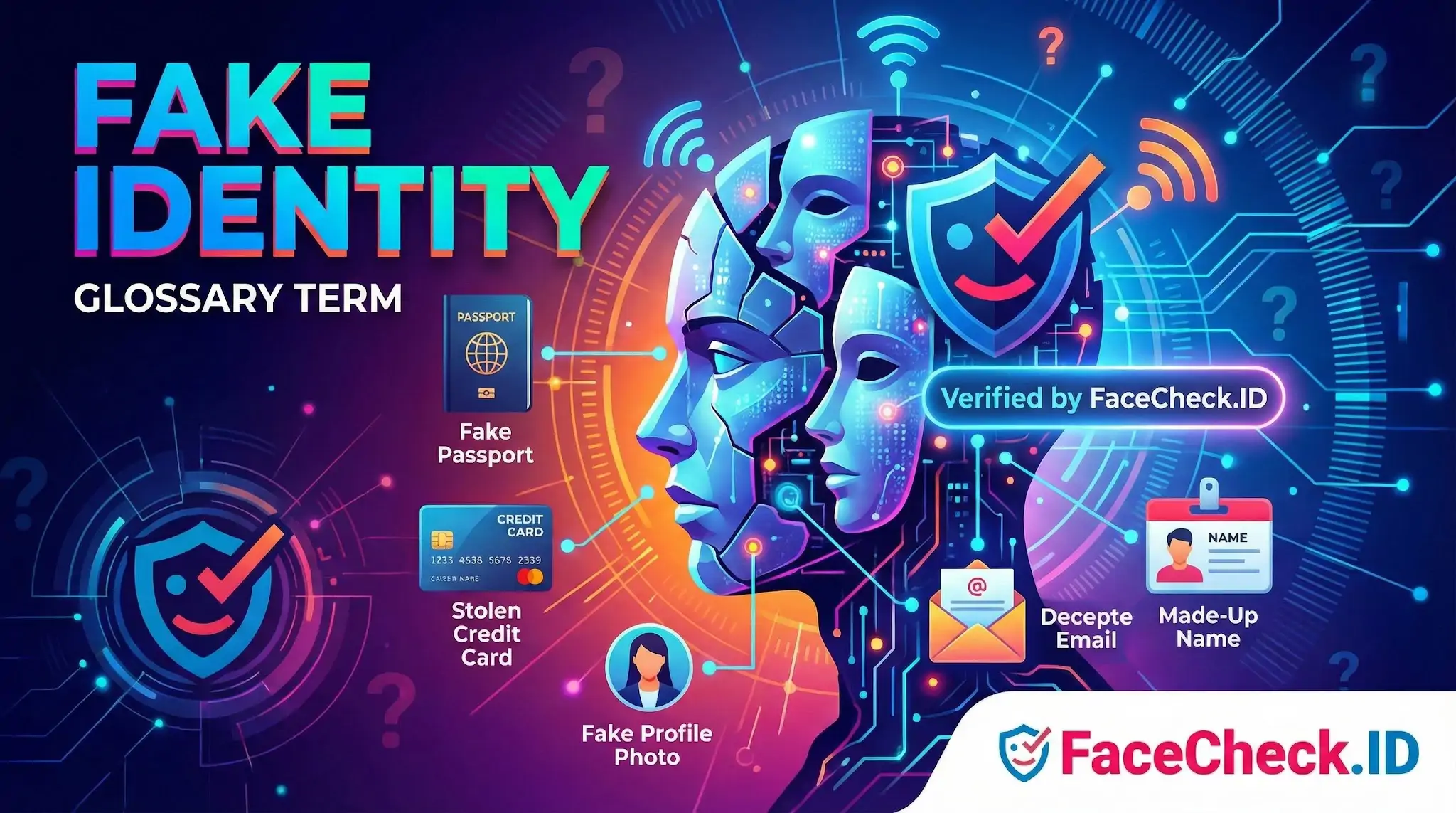
A fake identity is a made up or stolen set of personal details used to pretend to be someone else. It can include a fake name, date of birth, address, phone number, email, photos, job history, or official looking documents. Fake identities are often used online, but they can also be used in real life to access services, money, or information.
What a fake identity can include
A fake identity may be created from scratch or stitched together from real data. Common elements include:
- Full name and username handles
- Profile photo or AI generated image
- Email address and phone number
- Home address and billing details
- Social media profiles and posting history
- Government ID details such as passport or driver license numbers
- Employment, education, and references
Common types of fake identity
- Fabricated identity: Completely invented details with no real person behind them.
- Synthetic identity: A mix of real and fake data, such as a real Social Security number paired with a fake name.
- Stolen identity: Real information taken from another person and used without permission.
- Impersonation: Pretending to be a specific real person, such as a coworker, customer, or public figure.
- Sockpuppet account: A fake online persona used to post, comment, or manipulate conversations.
Why fake identities are created
Fake identities are used for both harmless and harmful reasons. Common motives include:
- Fraud and financial crime: Opening bank accounts, applying for loans, taking over accounts, or committing chargebacks.
- Scams and social engineering: Building trust to trick people into sending money, sharing passwords, or clicking malicious links.
- Evasion: Avoiding bans, background checks, or platform rules.
- Harassment and manipulation: Anonymous trolling, stalking, or spreading misinformation.
- Privacy: Some people use pseudonyms to protect themselves, but a privacy focused alias becomes a fake identity when it involves deception that harms others or violates laws or policies.
Fake identity vs pseudonym
A pseudonym is an alternate name used to protect privacy, such as for writing or online participation. A fake identity typically involves deception that misrepresents who someone is, often to gain access, influence decisions, or commit wrongdoing. The difference depends on intent, the details used, and whether someone is being misled for a benefit.
Where fake identities show up
- Social media and dating apps
- Online marketplaces and classifieds
- Email, messaging apps, and phone calls
- Job applications and recruiting
- Banking, crypto platforms, and payment apps
- Customer support and account recovery attempts
Risks and impacts
- Financial losses and chargebacks
- Account takeover and data breaches
- Reputation damage for individuals and brands
- Legal trouble for the person using the fake identity
- Emotional harm in cases like romance scams or stalking
Common signs of a fake identity
No single sign proves a fake identity, but patterns can be strong indicators:
- New or empty profiles with limited history
- Stolen or reverse searchable photos that appear elsewhere
- Inconsistent personal details across platforms
- Refusal to verify identity when verification is standard
- Unusual urgency, pressure, or requests for money or sensitive info
- Mismatched location, phone number country code, or writing style
How organizations detect fake identities
- Identity verification checks, including document and selfie verification
- Fraud detection signals like device fingerprinting and behavior patterns
- Email and phone reputation scoring
- Address validation and payment verification
- Cross platform consistency checks and anomaly detection
- Manual review for high risk actions like withdrawals or account changes
Legal and policy considerations
Using a fake identity can violate platform rules and may be illegal, especially when used for fraud, impersonation, forging documents, or bypassing regulated processes like banking and employment checks. Laws vary by country and context.
FAQ
What does “Fake Identity” mean in the context of face recognition search engines?
In face recognition search engines, a “Fake Identity” usually means an identity claim (name, username, profile, or story) that does not correspond to the real person behind the photos—often because the account uses stolen images, a synthetic (AI-generated) face, or a mismatched set of photos from multiple people.
How can a face recognition search engine help detect a Fake Identity?
It can reveal whether the same face appears across many unrelated sites, different names, or multiple profiles—signals of photo reuse or impersonation. Strong indicators include the same face tied to conflicting bios/locations, the same headshot used by many accounts, or matches leading to an older “original” source (e.g., a model portfolio) that contradicts the profile’s claims.
What face-search result patterns commonly indicate a Fake Identity versus normal reposting?
Higher-risk patterns include: (1) the same face linked to multiple different names/usernames, (2) many new/low-quality profiles using the same face photo, (3) a profile’s photos matching an unrelated public figure or stock/model imagery, and (4) inconsistent age/appearance signals across images that suggest a “photo set” assembled from different people. Normal reposting is more likely when results cluster around a single identity with consistent context and long-standing sources.
Can a face recognition search engine confirm someone is using a Fake Identity?
No. Face search results are leads, not proof of identity or wrongdoing. A match can be incorrect, out of context, or caused by look-alike faces, edits, or repost chains. Treat the results as clues to investigate further (for example, checking original upload dates, cross-referencing usernames, and validating through independent, non-face evidence).
How should I use FaceCheck.ID (or similar tools) when I suspect a Fake Identity?
Use it to triangulate sources and consistency: run searches on multiple photos from the profile, compare top matches for recurring identities, and open the earliest/highest-quality sources to see the original context. If results show multiple identities or risky categories (e.g., scams, adult content, mugshots), pause and verify carefully—avoid sharing accusations, and use platform reporting and takedown/impersonation processes when you have enough corroboration.


Recommended Posts Related to fake identity
-
How to Detect Fake Remote IT Workers with Facial Recognition (2026 Guide)
Fast, recruiter-friendly facial recognition verification tools, led by FaceCheck.ID that detect fake identities in under 60 seconds. Produce unlimited unique fake identities at scale.
-
Tutorial: Reverse Image Search for Instagram
With tools like FaceCheck.ID, you can quickly determine if a profile's picture is genuine or if it's hiding behind a fake identity.
-
Stop Romance Scams in 2025: Real Case, Red Flags, and FaceCheck Tips
You can uncover fake identities with a quick facial search. FaceCheck.ID can reveal fake identities through facial recognition searches.
-
Social Catfish Review: Is It Actually Worth Your Money in 2026?
They build entire fake identities using dozens of photos from the same victim's social media, creating a convincing collection of "their life." The photos are all different, but they're all stolen from the same real person. One search can unravel the entire fake identity.