Registered Sex Offender: What It Means Explained
A Registered Sex Offender is a person who has been convicted of a qualifying sex crime and is legally required to register their personal details with a government agency. Many jurisdictions publish some of this information in a public sex offender registry so community members can search and view it.
What registration usually means
Registration typically requires the person to provide and keep current identifying information, which may include:
- Full name and any known aliases
- Current address and sometimes past addresses
- Photograph and physical description
- Date of birth
- Offense type and conviction details
- Employment or school information in some areas
- Vehicle information in some areas
Crimes that can require registration
The offenses that trigger registration vary by state and country, but often include:
- Sexual assault or rape
- Child sexual abuse or molestation
- Sexual exploitation of a minor
- Possession, production, or distribution of child sexual abuse material
- Certain internet related sex offenses involving minors
Why public registries exist
Public registries are designed to support public safety and awareness by helping communities:
- Identify registered offenders in an area
- Learn basic facts about an offender’s conviction
- Receive notifications in places where community alerts are offered
Important details and limits
- Not every sex crime leads to registry placement, and the rules differ widely by location.
- Registration length can vary from a set number of years to lifetime registration, depending on the offense and local law.
- Registry listings are not a full risk assessment. Being on a registry shows a qualifying conviction and a legal reporting requirement, not necessarily a person’s current risk level.
- Public registry information may be incomplete or outdated, even when the person is legally required to update it.
FAQ
What does “Registered Sex Offender” mean in the context of face recognition search engines?
In face recognition search engine results, “Registered Sex Offender” usually refers to a match that appears to come from a sex offender registry or a page that republishes registry information. It describes the source/context of the page (or how the page labels the person), not a verified conclusion about the person in your photo.
Why might a face recognition search engine return “Registered Sex Offender” pages for a face search?
Registry photos and related pages are widely reposted, strongly indexed, and often use consistent portrait-style images (front-facing, well-lit), which can make them easier for face-matching systems to retrieve. If a tool searches the open web, those pages may surface simply because similar-looking faces exist in that content.
If a face search result says “Registered Sex Offender,” does that confirm the person in my photo is the same person on the registry?
No. A face-search hit is only a lead and can be wrong due to look-alikes, poor image quality, age differences, or mislabeled/third-party pages. Treat it as an indicator to verify carefully using multiple independent details (e.g., name, date of birth/age, location, distinctive marks, and multiple photos) rather than relying on the face match alone.
What’s a safe workflow to verify (or rule out) a “Registered Sex Offender” face-search match without misidentifying someone?
Use a “confirm then act” approach: (1) open the result and identify whether it’s an official registry site versus a third-party repost; (2) compare multiple photos if available, not just one; (3) cross-check non-face identifiers (full name variants, age/DOB, city/county/state, tattoos/scars, height, and other descriptors); (4) look for corroboration from additional reputable sources; and (5) if uncertainty remains, do not share, accuse, or take action based solely on the match.
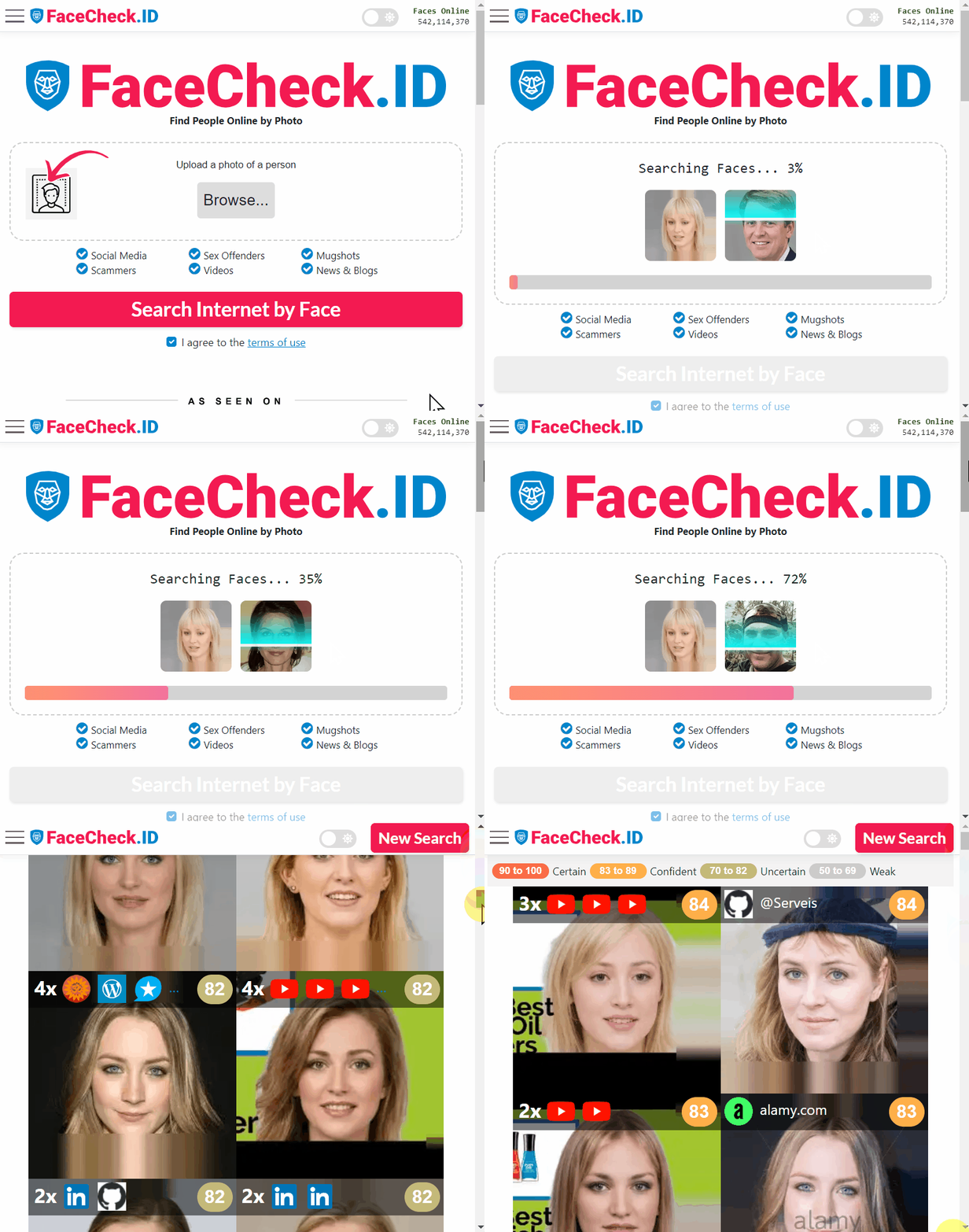
How should I handle a “Registered Sex Offender” hit in FaceCheck.ID (or similar tools) responsibly?
Treat the result as a starting point, not proof. On FaceCheck.ID or similar engines, prioritize checking the original source page, comparing multiple images, and validating identity details beyond the face. Avoid public posting or confrontation based on a single match, and if you believe the result misidentifies you (or someone you know), use the tool’s reporting/removal pathways and document the specific URLs and screenshots needed to support a correction request.

Recommended Posts Related to registered sex offender
-
How to Search Arrest Records and Mugshots by a Photo of a Person
FaceCheck has indexed millions and millions of violent criminals, child rapists & molesters, registered sex offenders, kidnappers, abusers, murderers, hate crime perpetrators, burglars, gang members, fugitives, terrorists, online dating & romance scammers, and other fraudsters. FaceCheck makes it easy to search for mugshots and registered sex offenders when you only have a picture of a person.
-
Find Criminals by Face Pic
Here's the exciting part: FaceCheck.ID lets you search-by-face the largest public databases of mugshots, fugitives, inmates, gang members, and registered sex offenders.
-
A Step-by-Step Guide on How to Search Sex Offender Registry by Photo
The website uses advanced face recognition technology to match the uploaded photo with registered sex offenders' images. Visit the National Sex Offender Public Website (NSOPW) for the most up-to-date information on registered sex offenders in the United States.
-
Going on a Date? Lookup Child Sex Offenders by Photo
A platform like FaceCheck.ID uses facial recognition technology to match potential dates against a database of registered sex offenders and known pedophiles. This innovative tool uses facial recognition technology to check a potential date against a comprehensive database of registered sex offenders, providing an extra layer of security.
-
How to Reverse Image Search Mugshots
Monitoring sex offenders: FaceCheck.ID could be used by law enforcement and community members to monitor registered sex offenders, ensuring they comply with legal restrictions and enhancing community safety.