Registered Sex Offender Face Match
When someone runs a face search and a result links back to a public sex offender registry, the implications are immediate and serious. Registry photos are one of the higher-value match sources in reverse image search because they are official, indexed, standardized, and tied to a verified legal identity, which makes them useful for vetting strangers met through dating apps, marketplace sales, roommate listings, or online tutoring arrangements.
How registry photos surface in face search
Public sex offender registries are some of the most reliably indexed image sources on the open web. The photos are usually front-facing, evenly lit, taken at booking or registration, and stored on government domains that search engines crawl frequently. Those properties make them strong candidates for face-matching systems:
- Standardized framing reduces the angle and crop problems that hurt match confidence on candid social photos.
- Names, ages, and physical descriptors are published alongside the image, so a match returns identifying context, not just a face.
- State and county registries often republish the same photo across mirrors, aggregator sites, and local news coverage, which raises the chance of a hit even when the original record is buried.
A face match against a registry listing typically appears with high confidence when the registry photo is recent. Older booking photos can produce weaker matches as the person ages, gains or loses weight, grows facial hair, or changes hairstyles.
Reading a registry match carefully
A face-search hit pointing to a registry entry is a strong signal, but it is not a verdict. Several issues can distort interpretation:
- Lookalikes and false positives. Registry photos are mugshot-style, and mugshots tend to flatten distinctive features. A high-confidence match can still be the wrong person, especially with common face shapes or partial occlusion.
- Stale data. A person may have completed their registration period, had their conviction overturned, or moved to a jurisdiction with different rules. The registry image may persist on third-party aggregators long after the official listing is removed.
- Reused mugshots. Mugshot republisher sites scrape registry and arrest photos and reuse them in unrelated contexts. A match to one of those sites is not the same as a match to the original government source.
- Tier and offense matter. Registries cover a wide range of offenses, from violent crimes against children to consensual conduct that was criminalized at the time. The conviction details, not just the presence of a record, determine what the match actually means.
Treat a registry hit as a starting point. Confirm the name, date of birth, and physical description against the person you are checking, and read the actual offense and conviction date before drawing conclusions.
Practical use in vetting and investigation
People searching FaceCheck.ID for safety reasons often want to know whether someone they have met online, or are about to meet in person, has a criminal history involving sexual offenses. A face match to a registry can:
- Confirm that a dating profile photo belongs to a person with a registered conviction, even if they are using a different name on the app.
- Reveal that a profile picture has been stolen from an unrelated registrant, which is a different but also useful finding for catching impersonation.
- Surface aliases, since registries record name variations the person has used historically.
Investigators and journalists sometimes use the reverse direction: starting with a known registrant and checking which other web pages reuse their photo, which can expose hidden social accounts or business listings.
What a registry match does not prove
A face match to a sex offender registry does not prove current dangerousness, ongoing offending, or that the person is the same individual you are interacting with. Identity confirmation requires more than a face: corroborate name, age, location, and any other details available. Registry status reflects a past legal requirement, not a present risk score, and registries themselves are uneven in accuracy and update frequency. Use the result to inform a decision, not to make one automatically.
FAQ
What does “Registered Sex Offender” mean in the context of face recognition search engines?
In face recognition search engine results, “Registered Sex Offender” usually refers to a match that appears to come from a sex offender registry or a page that republishes registry information. It describes the source/context of the page (or how the page labels the person), not a verified conclusion about the person in your photo.
Why might a face recognition search engine return “Registered Sex Offender” pages for a face search?
Registry photos and related pages are widely reposted, strongly indexed, and often use consistent portrait-style images (front-facing, well-lit), which can make them easier for face-matching systems to retrieve. If a tool searches the open web, those pages may surface simply because similar-looking faces exist in that content.
If a face search result says “Registered Sex Offender,” does that confirm the person in my photo is the same person on the registry?
No. A face-search hit is only a lead and can be wrong due to look-alikes, poor image quality, age differences, or mislabeled/third-party pages. Treat it as an indicator to verify carefully using multiple independent details (e.g., name, date of birth/age, location, distinctive marks, and multiple photos) rather than relying on the face match alone.
What’s a safe workflow to verify (or rule out) a “Registered Sex Offender” face-search match without misidentifying someone?
Use a “confirm then act” approach: (1) open the result and identify whether it’s an official registry site versus a third-party repost; (2) compare multiple photos if available, not just one; (3) cross-check non-face identifiers (full name variants, age/DOB, city/county/state, tattoos/scars, height, and other descriptors); (4) look for corroboration from additional reputable sources; and (5) if uncertainty remains, do not share, accuse, or take action based solely on the match.
How should I handle a “Registered Sex Offender” hit in FaceCheck.ID (or similar tools) responsibly?
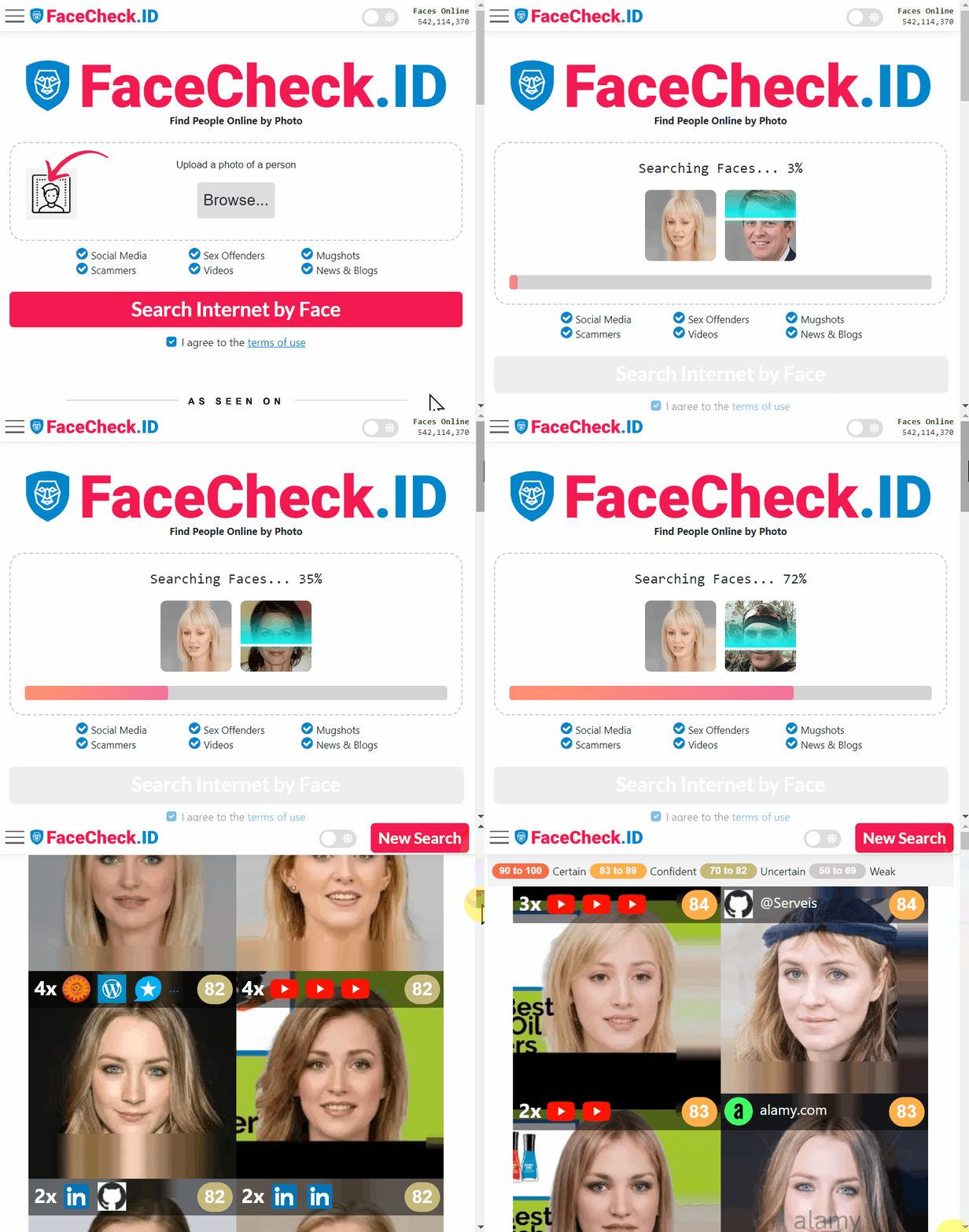
Treat the result as a starting point, not proof. On FaceCheck.ID or similar engines, prioritize checking the original source page, comparing multiple images, and validating identity details beyond the face. Avoid public posting or confrontation based on a single match, and if you believe the result misidentifies you (or someone you know), use the tool’s reporting/removal pathways and document the specific URLs and screenshots needed to support a correction request.

Recommended Posts Related to registered-sex-offender
-
How to Search Arrest Records and Mugshots by a Photo of a Person
FaceCheck has indexed millions and millions of violent criminals, child rapists & molesters, registered sex offenders, kidnappers, abusers, murderers, hate crime perpetrators, burglars, gang members, fugitives, terrorists, online dating & romance scammers, and other fraudsters. FaceCheck makes it easy to search for mugshots and registered sex offenders when you only have a picture of a person.
-
Find Criminals by Face Pic
Here's the exciting part: FaceCheck.ID lets you search-by-face the largest public databases of mugshots, fugitives, inmates, gang members, and registered sex offenders.
-
Going on a Date? Lookup Child Sex Offenders by Photo
FaceCheck.ID runs a photo through facial recognition and checks it against a database of registered sex offenders and known predators.
-
A Step-by-Step Guide on How to Search Sex Offender Registry by Photo
The website uses advanced face recognition technology to match the uploaded photo with registered sex offenders' images. Visit the National Sex Offender Public Website (NSOPW) for the most up-to-date information on registered sex offenders in the United States.
-
How to Reverse Image Search Mugshots
Monitoring sex offenders: FaceCheck.ID could be used by law enforcement and community members to monitor registered sex offenders, ensuring they comply with legal restrictions and enhancing community safety.