Search Mugshots by Photo

Searching mugshots through a name or location works only if you already know who you are looking at. Face-based mugshot searching flips that problem: you start with a photo and try to find out whether that person has appeared in a public booking record, even if their name, alias, or jurisdiction is unknown to you.
How face search changes mugshot lookups
Traditional mugshot databases are indexed by name, booking date, agency, or charge. That works for journalists with a court docket or attorneys with a case number, but it breaks down for the most common real-world question: "Who is this person, and have they been arrested before?"
Reverse image search using a face turns the workflow around. A photo from a dating app, a marketplace listing, a suspicious LinkedIn profile, or a screenshot from a video can be matched against publicly indexed pages, including mugshot aggregators that have republished booking photos from sheriff's offices and county jails. If the same face appears on a booking page indexed by search engines, a face-search engine can surface it without needing the person's name.
This matters because:
- Aliases are common in arrest records, and a name search misses them
- Booking photos are often reposted across multiple aggregator sites with slightly different metadata
- A subject may have been booked in a county or state the searcher never thought to check
- The person may be using an entirely different identity online than the one tied to their arrest record
What a face match to a mugshot actually tells you
A face-search hit on a mugshot page is a starting point, not a verdict. The match suggests the same face appears in both the uploaded photo and an indexed booking image. It does not confirm the person was convicted, that the charges are current, or that the record has not been sealed or expunged since publication.
Several factors affect whether a mugshot match is reliable:
- Image quality of the booking photo. Older mugshots are often low resolution, poorly lit, or scanned from print. This lowers match confidence even when the person is the same.
- Age gap between photos. A booking photo from ten years ago may not match a recent selfie cleanly, especially with weight changes, facial hair, or aging.
- Aggregator duplication. The same mugshot is frequently mirrored across dozens of pay-to-remove sites, which can make a single arrest look like many separate records.
- Lookalike risk. Mugshot databases contain millions of faces, and false positives happen, particularly with common facial structures.
Practical investigation scenarios
People run face-based mugshot searches for specific reasons:
- Verifying a romantic interest from a dating app whose stories do not add up
- Checking whether a contractor, tenant, or roommate candidate has a public arrest history under any name
- Identifying a scammer who used stolen photos, where the real owner of the face may have a separate record
- Journalism work where a subject appears in protest footage, surveillance images, or leaked content
- Reuniting a face from an unidentified photo with a name through any public record, including booking pages
In most of these cases, the mugshot result is one signal among several. It should be cross-referenced with court records, the original sheriff's office page if still available, and other face matches on social media or news sites.
Limits and what a mugshot match does not prove
A face appearing on a mugshot page does not prove guilt. Arrests are not convictions, charges are frequently dropped, and many jurisdictions require that booking photos be removed once a case is dismissed, though aggregator sites often ignore those rules. A match also does not prove the record is current, accurate, or legally usable for hiring, housing, or other regulated decisions, which are governed by laws like the FCRA in the United States.
There is also a privacy dimension. Mugshot publication has been criticized for harming people who were never convicted, and several states have passed laws restricting commercial mugshot sites. A face-search hit on such a page may reflect a record the subject has a legal right to have removed. Treat the result as information that needs verification, not as a conclusion.
FAQ
What does “Search Mugshots” mean when a face recognition search engine uses that phrase?
“Search Mugshots” typically means the tool may surface web pages that contain booking or arrest photos (often reposted by third-party “mugshot” sites) when your uploaded face is similar to faces on those pages. It usually does not mean the engine has a dedicated, authoritative “mugshot database,” and the result should be treated as a lead to investigate rather than proof of an arrest or criminal history.
Can face recognition search engines search official jail or arrest databases directly?
In most cases, they only search what they can crawl, index, or otherwise access on the public web. Many official law-enforcement systems are not publicly searchable by face, may block automated access, or provide only limited public lookup options. So “mugshot” hits commonly come from publicly accessible pages, aggregators, or reposts—not necessarily from an official government source.
How can I tell whether a “mugshot” result is an official booking photo, a repost, or just a look-alike?
Check the source domain and page context first: official sources typically identify the agency, jurisdiction, and booking metadata (dates, charges, case/booking number). Repost/aggregator pages may be heavy on ads, light on verifiable details, and may copy the same image across multiple sites. To rule out look-alikes, compare multiple facial cues (ears, nose bridge, spacing, scars/tattoos) and corroborate with non-face details (age range, location, timeline) before assuming it’s the same person.
If I find my face on a mugshot site, what steps can I take to verify it and request correction or removal?
First, verify whether the page accurately refers to you by checking jurisdiction, dates, and identifiers, and by finding the original source (if any). If it appears incorrect or misleading, document the page (URL, screenshots, timestamps), then contact the site with a factual correction request and any proof of misidentification. You can also request removal from search engines where applicable, and consider legal advice if the site refuses to correct clear errors or is engaging in extortion-like “pay-for-removal” behavior.
How can FaceCheck.ID help when a search result appears to be a mugshot, and what precautions should I take?
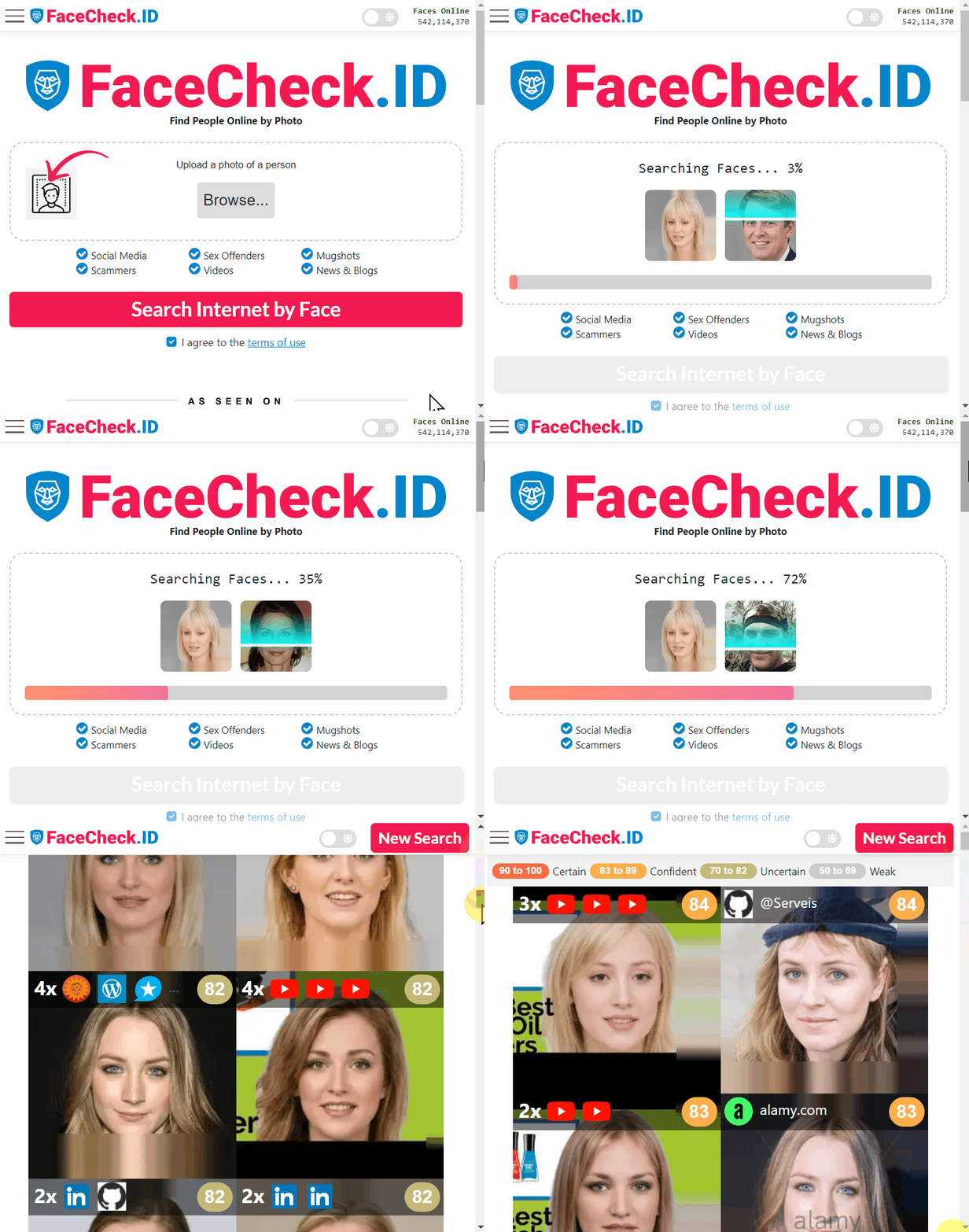
FaceCheck.ID (and similar face-search tools) can help you cross-check whether the same face appears across multiple independent sources, which may clarify whether a “mugshot” page is a one-off repost, a misidentification, or part of broader reuse of an image. Precautions: don’t treat any single mugshot-like hit as proof of identity or wrongdoing, avoid sharing results publicly, and confirm with multiple reliable, non-sensational sources before taking any action that could harm someone’s reputation.

Recommended Posts Related to search-mugshots
-
How to Search Arrest Records and Mugshots by a Photo of a Person
Reverse Image Search Mugshots. Search Mugshots by a Face Photo! Search Mugshots by Photo.
-
How to Reverse Image Search Mugshots
This article will explore how reverse image searching mugshots can significantly contribute to community safety and foster transparency while ensuring the privacy of individuals. Reverse Image Search Mugshots to Find Arrest Records.
-
PimEyes Free Alternatives That Actually Work (2026)
Searches mugshot and arrest record databases.