Search by Image

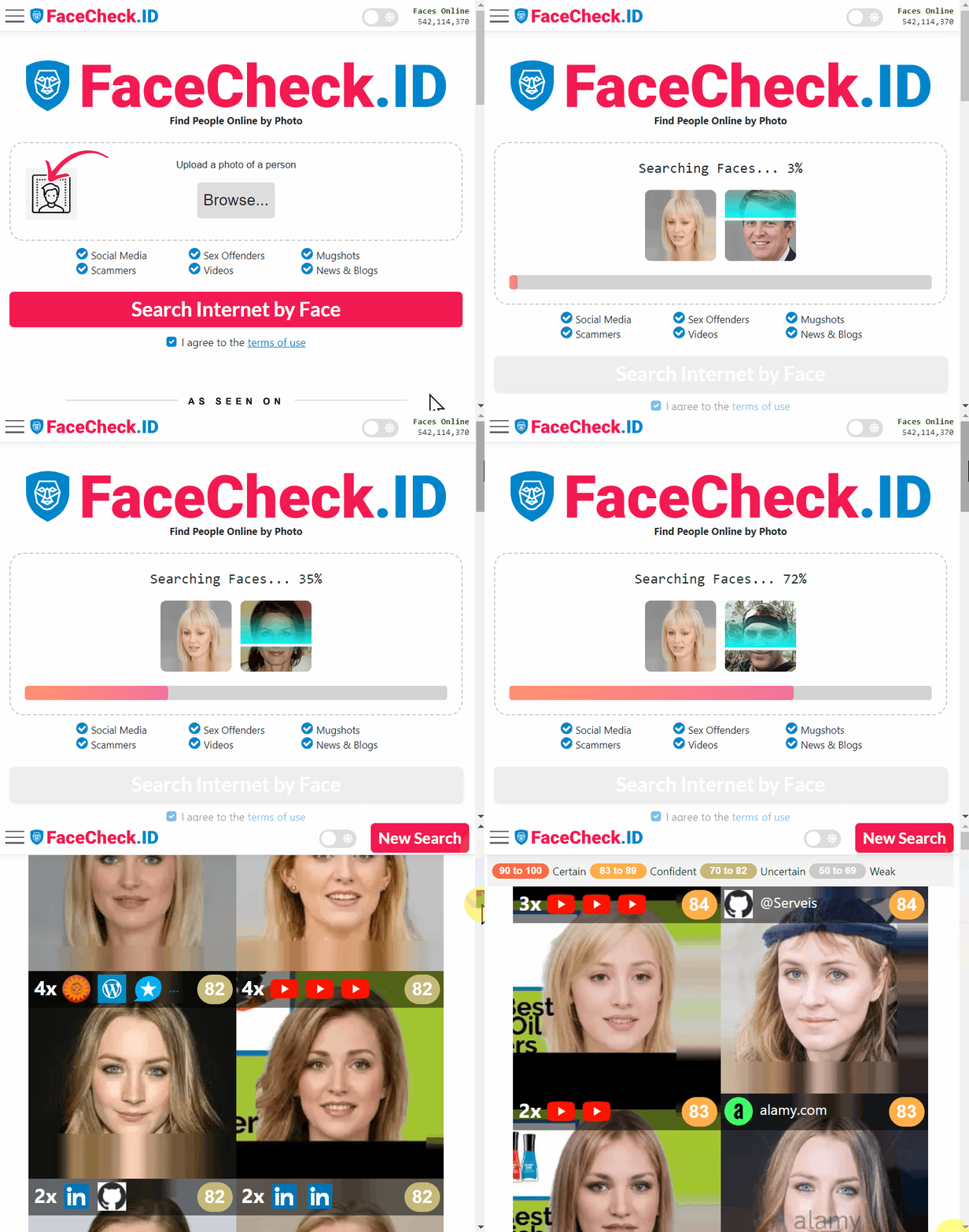
Search by Image turns a photo into the query itself, which is the foundation of how FaceCheck.ID works. Instead of typing a name or username, you submit a face and the system looks for places on the public web where that same face appears, including social profiles, news pages, blog posts, forum avatars, and mugshot databases.
How face-based image search differs from generic visual search
General visual search tools match shapes, colors, products, or landmarks. They will tell you that a photo contains a person in a blue shirt outside a brick building. That is not useful for identifying who the person is.
Face search is narrower and harder. It builds a numerical representation of the facial features themselves, then compares that representation against indexed faces from public web pages. The match is based on geometry of the face, not the clothing, background, or pose. This is why a person in a wedding photo, a LinkedIn headshot, and a grainy bar selfie can all return as the same individual if the face data is consistent enough.
A few practical consequences:
- Cropping to the face usually improves results. Wide shots dilute the signal with non-face pixels.
- Front-facing, well-lit photos perform best. Profile angles, heavy shadows, sunglasses, and masks reduce confidence.
- Higher resolution helps, but only up to the point where facial features are clear. A sharp 400-pixel face often beats a blurry 4000-pixel one.
- Editorial photos, professional headshots, and dating profile pictures tend to surface first because they are widely indexed and reused.
What people actually use face search by image for
The use cases overlap with traditional reverse image search but have a different goal. Instead of finding where an image was published, you are trying to find where a person appears.
- Verifying that a dating profile, recruiter, or online seller is a real person and not someone using stolen photos
- Checking whether a stranger sliding into messages is who they claim to be
- Investigating a suspected catfish by seeing if the same face appears under different names
- Finding additional photos of a missing person or unidentified individual
- Researching a public figure, witness, or named subject in journalism or due diligence work
- Spotting reused profile pictures across scam networks, fake reviews, or romance fraud rings
In each case, the result set is a starting point. The investigator still has to read the pages where the face appears and decide whether the matches describe one person or several lookalikes.
Getting useful results from a face query
Submitting a single photo and accepting whatever comes back is rarely enough. A few habits produce better outcomes:
- Run multiple photos of the same person if you have them. Different angles surface different matches.
- Look at the source pages, not just the thumbnails. A high-confidence visual match means little if the linked page is a stock photo site or AI-generated profile.
- Compare distinctive features manually, including ear shape, jawline, and asymmetries. These are harder to fake than hairstyle or clothing.
- Treat low-confidence results as leads, not conclusions. Two strangers can score surprisingly close, especially within the same demographic.
What a face image search cannot prove
A match between two photos suggests the same face. It does not confirm identity, intent, or current activity. A real person can have their photos stolen and reused on scam profiles, which means a hit on a fraudulent page does not mean that person is the scammer. Identical twins, siblings, and strong lookalikes can produce false positives that no algorithm reliably separates.
Indexing is also incomplete. Private accounts, deleted pages, region-locked sites, and platforms that block crawlers will not show up at all. A clean result set does not mean someone has no online presence. It means the indexed portion of the web has nothing visible. Treat face search as a tool for generating leads and narrowing possibilities, not as a verdict on who someone is.
FAQ
What does “Search by Image” mean in a face recognition search engine?
“Search by Image” means you start a search by uploading (or providing) a photo instead of typing keywords. In face recognition search engines, the system analyzes the face in the image and looks for visually similar faces across indexed web pages, rather than relying on filenames, captions, or text.
How is “Search by Image” different from searching by a person’s name or username?
Searching by name/username is text-based and depends on how (or whether) a person is labeled online. “Search by Image” uses the visual content of the photo—especially facial features—so it can surface pages that don’t mention the person’s name, and it can also return results even when names are missing, incorrect, or intentionally hidden.
What types of images work best for “Search by Image” face searches?
Clear, front-facing photos with good lighting and minimal blur work best. A single face that is large in the frame usually performs better than a distant face in a crowd. Avoid heavy filters, extreme angles, strong shadows, or low-resolution screenshots when possible.
Can I use “Search by Image” with a URL, a screenshot, or a video frame?
Often yes: many tools accept an uploaded file, and some also accept an image URL. Screenshots and video frames can work if the face is sharp and not heavily compressed. If you’re using a tool like FaceCheck.ID, you typically get better results by using a clean frame and (when allowed) cropping to the main face before searching.
Why can “Search by Image” results vary between different face recognition search engines?
Results can differ because each engine has a different web index (what sites and images it has crawled), different face-matching models and thresholds, and different rules for filtering or ranking results. Timing also matters: newly posted or removed images may appear in one engine but not another, including tools such as FaceCheck.ID.

Recommended Posts Related to search-by-image
-
Reverse Image Search FAQ: The Ultimate Guide for 2025
Search By Image (supports Google, Bing, Yandex). Search By Image (supports Google, Bing, Yandex). Search By Image (supports multiple search engines).
-
How to Search Instagram by Image
It's worth noting that Instagram itself doesn't offer a feature to search by image, which further complicates matters. Getting Started with FaceCheck.ID's Search by Image.
-
What is The Most Accurate Reverse Image Search?
Google: For broader searches, especially related to products or places, Google's "Search by Image" feature provides a comprehensive list of websites where the image appears, often accompanied by similar images. **What is the best search by image?**.
-
LinkedIn Reverse Image Search to Find LinkedIn Profiles by Photo Using Facial Recognition
Then, click "Search by Image.".
-
Results for People Are Limited: Why It Happens & How To Fix It
FaceCheck.ID is a specialized search engine that focuses on people search by image.