Sex Offenders: Reading Registry Matches
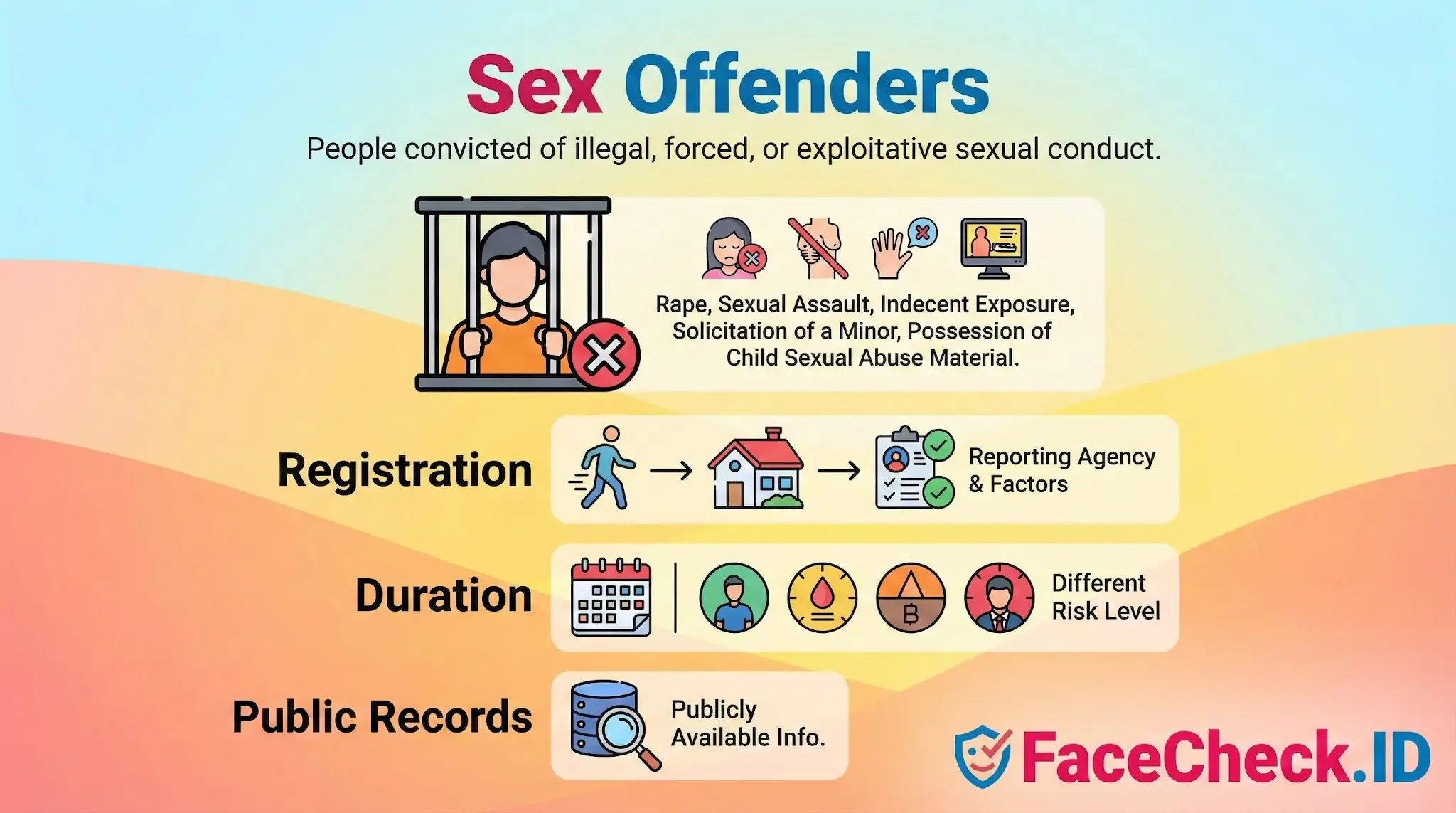
When someone runs a face search to vet a date, a new neighbor, a babysitter, or a stranger who messaged them online, one of the more serious questions behind the search is whether the person has a history of sexual offenses. Public sex offender registries are among the indexed sources where a face match can surface, which makes this term directly relevant to how FaceCheck.ID results are read and acted on.
How sex offender records appear in face-search results
Most U.S. states and many countries publish sex offender registries with names, photos, addresses, and offense details. These pages are public by design, crawled by search engines, and frequently mirrored by aggregator sites. That means a registered offender's booking photo or registry headshot can be one of the images a face-recognition crawler indexes.
A few characteristics make registry photos behave differently from social media images in face search:
- They are usually frontal, evenly lit, and shot at a consistent distance, which produces strong embeddings and high match scores.
- They are reused across multiple sites: the official state registry, national aggregators, news stories, and sometimes private "people search" services.
- They are often older than the person's current appearance, since registries do not always update photos after the initial booking.
A high-confidence hit on a registry page is therefore meaningful, but it is not the end of the analysis. The same face needs to be cross-checked against other matches, including current social profiles, to confirm the registry record describes the person you are actually looking at.
What a registry match does and does not tell you
A face-search result that links to a sex offender registry is a starting point, not a verdict. Registries record convictions, but the page a crawler indexed may be:
- Out of date, after the offender has been removed, deregistered, or had their tier reduced.
- A near-duplicate of someone else, especially with common features, similar age, and a low-resolution registry photo.
- A relative or sibling who shares strong familial resemblance, which face recognition handles poorly at lower confidence thresholds.
- A mirror site repeating an old record that has since been sealed or expunged.
Before treating a match as confirmation, check the offender's listed name, date of birth, jurisdiction, and offense details against anything else you know. If the only evidence is a single mid-confidence match to a third-party aggregator, treat it as a lead worth verifying on the official state registry, not as proof.
Common scenarios where this matters
People searching faces with sex offense concerns in mind usually fall into a few patterns:
- Dating app users checking whether a match's photos appear anywhere tied to a criminal record.
- Parents vetting tutors, coaches, rideshare drivers, or new partners who will be around children.
- Landlords and roommates running due diligence on applicants whose names did not surface a record but whose face might.
- Investigators and journalists confirming that a suspect's online persona ties back to a registered identity.
Face search is useful here because offenders sometimes use altered names, nicknames, or fake profiles on social platforms while still using recognizable photos. A reverse face search can connect a polished dating profile to a registry photo that a name search would never have found.
Limits and responsible use
Registries themselves have limits. They list people who were caught, prosecuted, and convicted under specific statutes. They do not list people who were never reported, never charged, or pleaded down to non-registerable offenses. The absence of a registry hit is not evidence of safety, only an absence of that particular record.
Face matches also degrade with age, weight change, facial hair, and lower-quality user photos. A failed match against a registry does not mean the person is not on one, and a successful match does not eliminate the possibility of mistaken identity. Sex offender registry information is public for community safety reasons, but using it responsibly means verifying the identity, respecting expungement and deregistration, and not harassing people based on a single search result. Face search narrows the field. Confirmation still requires names, dates, jurisdictions, and human judgment.
FAQ
What does “Sex Offenders” mean in the context of face recognition search engines?
In face recognition search, “Sex Offenders” usually refers to publicly available records or web pages (such as government registries, news reports, court postings, or watchdog sites) that label an individual as a registered sex offender or as having been convicted of a sex offense. Face search engines may surface these pages if the indexed photos on those pages appear visually similar to the face you searched.
Can a face recognition search engine find sex offender registry pages using a photo?
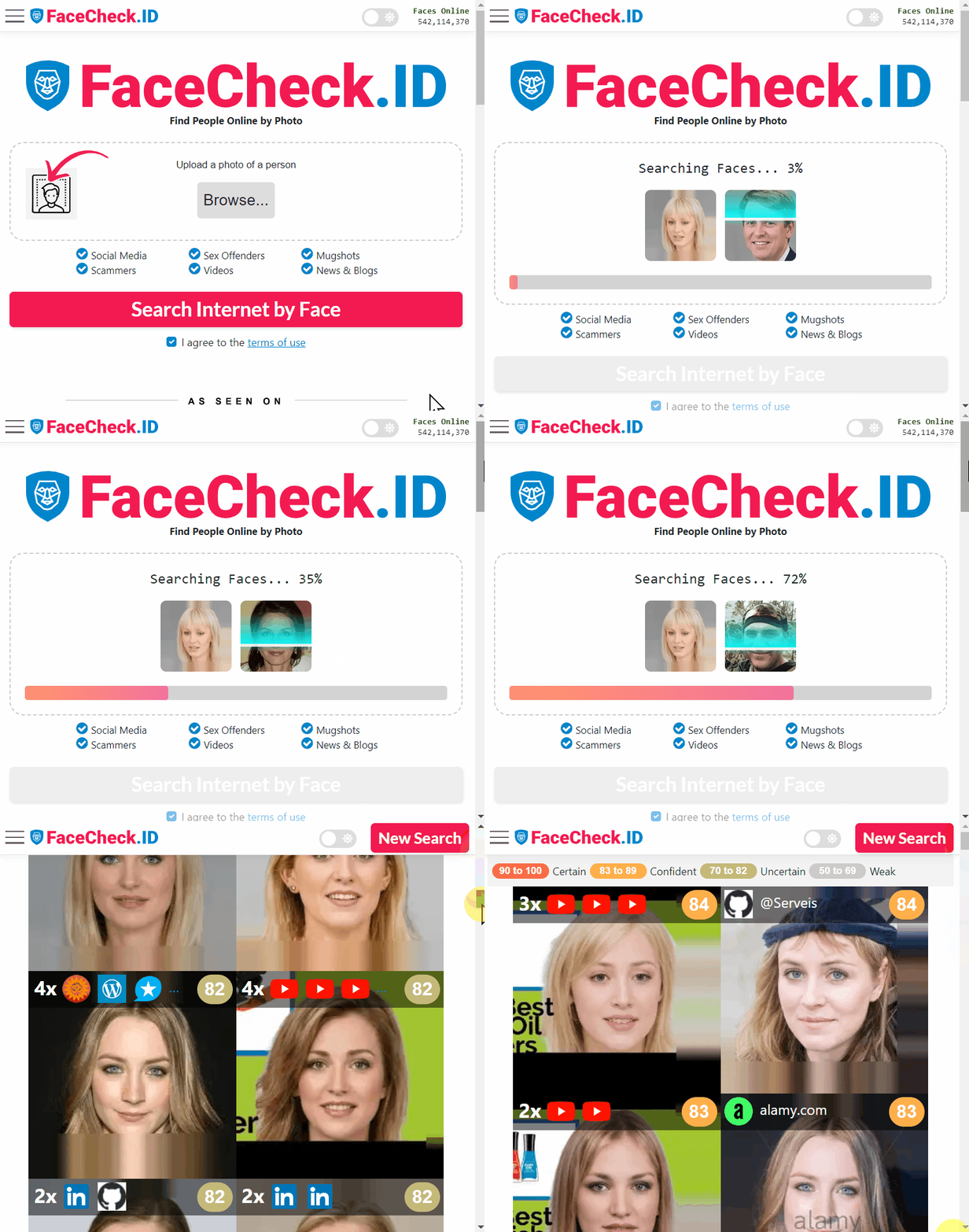
Sometimes. If a registry page is publicly accessible on the open web and includes a photo that has been indexed, a face search engine may return it as a potential match. Results depend on what sources the tool has crawled, whether the page allows indexing, and whether the registry photo quality is sufficient for matching. Tools like FaceCheck.ID may show matches from various public web sources when available.
If a face search result links to a sex offender registry, does that confirm the person in my photo is a sex offender?
No. A face match is not proof of identity or criminal status. Similar-looking people (look-alikes), outdated photos, low-quality images, or incorrect web content can produce misleading links. Treat any registry-related result only as a lead that requires careful verification using multiple identifiers (full name, date of birth/age range, location, distinguishing marks) from official sources.
How can I reduce the risk of falsely associating someone with “Sex Offenders” when using face recognition search?
Avoid making conclusions from a single match. Cross-check several independent sources, compare multiple photos across time, verify non-face details (location, age, tattoos/scars, height, context), and prioritize official government registry pages over reposts or forums. If using a tool such as FaceCheck.ID, review more than one result and use the original source pages to validate context before taking any action.
What should I do if my face (or someone I know) appears to be incorrectly matched to a sex offender page in face search results?
First, document the URLs and screenshots of the incorrect result and confirm whether the source page is official or a third-party repost. If it’s an official registry page with incorrect information, follow that registry’s correction process immediately. If it’s a third-party site, request removal from the site owner/host and report the issue. You can also use the face search engine’s opt-out or removal workflow where available (for example, FaceCheck.ID provides mechanisms for requesting removal/opt-out in applicable cases). Consider obtaining legal advice if the mismatch is causing harm.

Recommended Posts Related to sex-offenders
-
A Step-by-Step Guide on How to Search Sex Offender Registry by Photo
The sex offender registry offers vital information on convicted sex offenders in our communities. This article highlights the importance of searching sex offender registry photos using the search-by-face website FaceCheck.ID, offers dating safety tips and suggests everyday personal safety measures. A quick search of the sex offender registry photos can help you check the background of the individuals you encounter, allowing you to build trust and stronger connections.
-
Uncover the Truth Before Your First Date
How a Face Search Engine Can Save You from Scammers and Sex Offenders in Online Dating. One such precaution is using a face search engine to vet your date and avoid potentially dangerous situations with scammers or sex offenders. Sex Offenders - Unfortunately, sex offenders can also use online dating as a way to find victims.
-
Going on a Date? Lookup Child Sex Offenders by Photo
Steering Clear of Child Sex Offenders: Online Dating Tips for Single Moms. Searching Sex Offenders by Photo Takes Only a Minute! FaceCheck.ID runs a photo through facial recognition and checks it against a database of registered sex offenders and known predators.
-
How to Search Arrest Records and Mugshots by a Photo of a Person
FaceCheck has indexed millions and millions of violent criminals, child rapists & molesters, registered sex offenders, kidnappers, abusers, murderers, hate crime perpetrators, burglars, gang members, fugitives, terrorists, online dating & romance scammers, and other fraudsters. Simply upload a pic of a person and check the person against millions of mugshot photos, convicted criminals, sex offenders, and shady people who appeared in the news. FaceCheck makes it easy to search for mugshots and registered sex offenders when you only have a picture of a person.
-
Find Criminals by Face Pic
Here's the exciting part: FaceCheck.ID lets you search-by-face the largest public databases of mugshots, fugitives, inmates, gang members, and registered sex offenders. Run it through FaceCheck.ID to confirm who they are.Violent and Non-Violent Sex Offenders: If you've got a creepy neighbor you suspect is a sex offender, or you know someone who's been acting inappropriately around kids, FaceCheck.ID can help confirm their identity and match it with any past records.