Social Media in Reverse Face Search
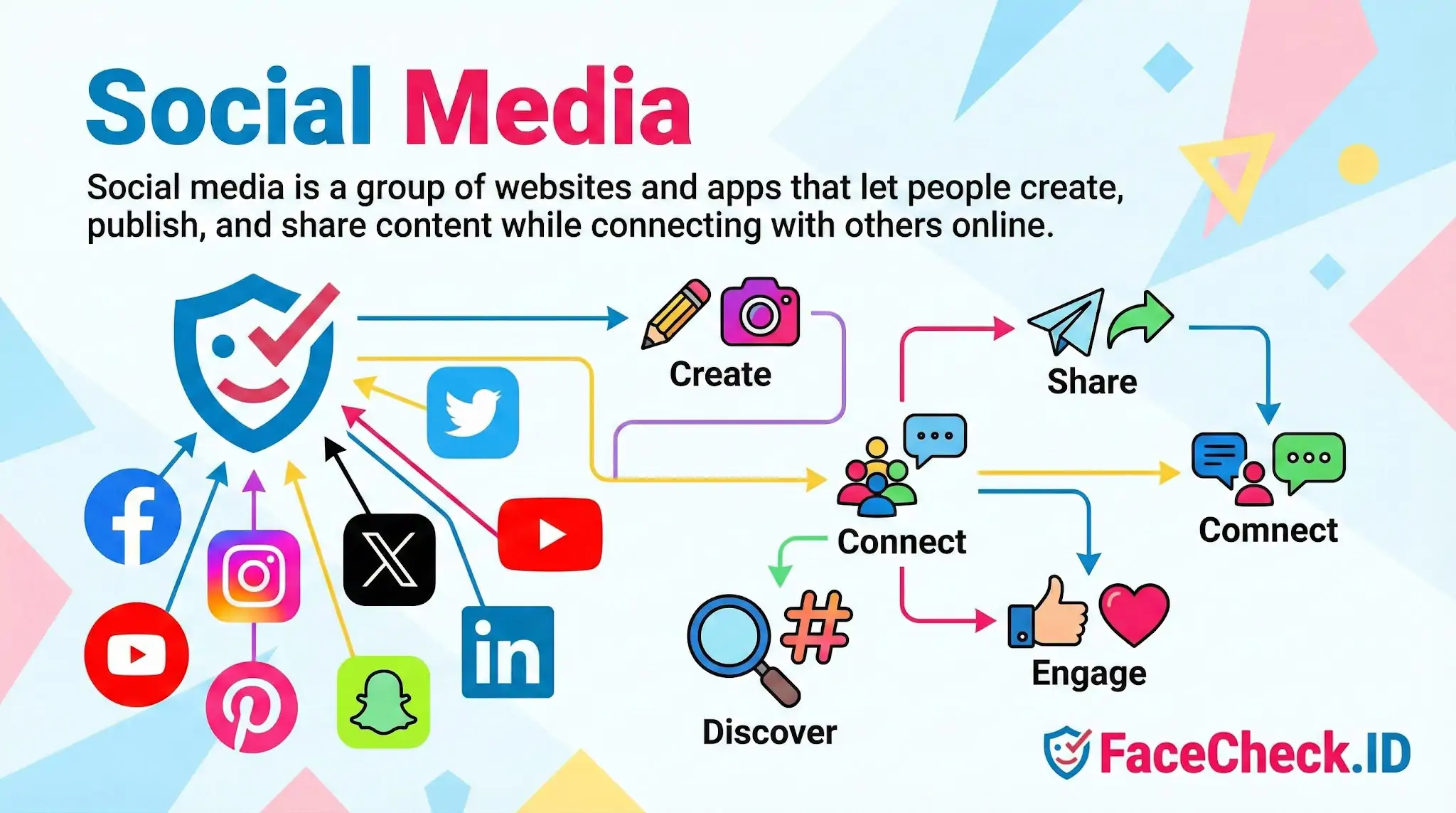
Social media is the single largest source of indexable face data on the public web, which is why it sits at the center of how reverse face search actually works. When someone uploads a photo to FaceCheck.ID, most of the strongest matches come back from public profiles, posts, and tagged images that users uploaded themselves — often years ago, often forgotten.
Why social media is the backbone of face search
Face-recognition search engines depend on two things: a large pool of indexed images and faces clear enough to extract a usable embedding. Social platforms supply both at scale. Profile photos are typically front-facing, well-lit, and chosen specifically because they look like the person, which makes them ideal anchors for matching. Cover photos, tagged albums, event check-ins, and posted selfies add additional angles, lighting conditions, and ages, which improves the chance that a candidate face matches even when the query image is imperfect.
Different platforms behave very differently in a face-search index:
- LinkedIn profile photos tend to produce high-confidence matches because they are formal, recent, and almost always show a single face squarely lit.
- Instagram is rich in selfies and group photos, but private accounts limit what is publicly indexable, and heavy filters can reduce match quality.
- Facebook still hosts enormous quantities of older tagged photos, which is why it often surfaces matches from a decade ago.
- TikTok and YouTube generate frame-level matches from video thumbnails and stills, useful for tracing creators and reused content.
- X profile pictures are public by default but cropped small, so secondary photos in pinned posts often match better than the avatar itself.
- Pinterest complicates results because users repost others' images, which can produce a face match on a board that has nothing to do with the person.
How social media exposure shapes online identity
Most people underestimate how much of their face is publicly indexed. A single old forum avatar, a tagged wedding photo, or a comment on a public Facebook page can resurface in a face search years later, sometimes attached to a name the person no longer uses. This is the mechanism that makes reverse face search useful for catfish detection, romance scam investigation, and verifying that a dating-app match is actually who they claim to be.
It is also why social media is the first place to look when someone suspects their photos have been stolen. Scammers routinely scrape profile images from real accounts and rebuild them on Tinder, Hinge, Bumble, Telegram, and WhatsApp under different names. A face search across social platforms will often reveal the original owner, the country they actually live in, and how long their photos have been circulating.
What a social media match does and does not prove
A face hit on a social media profile is a strong lead, not a verdict. Several caveats matter:
- Identical twins, siblings, and lookalikes can produce high-confidence matches that are not the same person.
- Old photos can pull up profiles a person abandoned years ago, which may no longer reflect their current name, location, or appearance.
- Stolen photos mean the account showing the face may belong to an impersonator, not the actual person pictured. This is especially common with attractive or military-styled profile photos used in romance scams.
- Private and deleted content is not searchable. The absence of a match does not mean someone has no social media presence — only that nothing public has been indexed.
Legitimate use of social media face search focuses on verifying identity, exposing impersonation, and protecting people from being deceived. Misuse — stalking, harassment, or building dossiers on private individuals — is a different activity entirely, and the same indexing that makes scam detection possible is what makes that boundary worth taking seriously.
FAQ
What does “Social Media” mean in the context of face recognition search engines?
In this context, “Social Media” refers to online platforms where people post photos and videos (e.g., profile pictures, public posts, event photos). Face recognition search engines may surface matches that point to publicly accessible social media pages or reposted content elsewhere on the web.
Can face recognition search engines find faces from private social media accounts?
They generally cannot search content that is truly private or behind login and access controls. However, they may still find the same face if it appears in public areas (public profiles, public posts) or if copies/screenshots were reposted on other public sites.
Why do social media profile photos often appear in face search results more than other images?
Profile photos are typically clear, front-facing, well-lit, and frequently reused across platforms. They are also often public and widely shared, making them more likely to be discoverable and to produce high-confidence face matches.
How do social media tags, reposts, and memes affect face recognition search results?
They can increase the number of results and confuse context. The same face may appear in tagged albums, reposted compilations, “who wore it better” posts, or meme pages, creating multiple URLs that look like different sources even though they originate from one image.
If a tool like FaceCheck.ID returns a social media match, what steps should I take before acting on it?
Treat it as a lead, not proof. Open the source page, verify multiple distinct photos (not just one reused image), check dates and context, compare non-facial cues (location, tattoos, companions), and look for consistent cross-links. If the result seems wrong or harmful, avoid sharing it and use the platform’s report/removal pathways where applicable.

Recommended Posts Related to social-media
-
Search by Face to Find Social Media Profiles
If you're trying to find someone online, one of the first places you'll look is their social media profile. And while most people use their real name and photo on social media, some don't. So how can you find someone by their social media profile photo?
-
How to Find People on Social Media by Photo
Snap, Search, and Connect: Your Guide to Finding People on Social Media with FaceCheck.ID. Ever wondered if you could use a photo to find someone on social media? Find People on Social Media.
-
PimEyes Review: We Ran 16 Face Search Tests and Scored Every One
We ran 16 different face search tests covering real-world scenarios: side profiles, blurry photos, scam detection, social media lookups, adult content, celebrity recognition, and more. FaceCheck.id (5/5): Found many fake social media profiles and scam reports. FaceCheck.id (5/5): Found many matching pictures on social media.
-
Social Media Lookup: Find Anyone's Profiles by Photo
You want to know who this person actually is, and the fastest way to find out is to check their social media. What you need is a social media lookup tool that can match a face across platforms. Useless for finding the person in the photo across social media platforms.
-
All About Face Recognition Technology
The technology can be used for several applications, from unlocking your phone to tagging friends on social media or keeping track of individuals at airports. Face recognition technology can also be helpful in many other areas, including law enforcement, social media, and health care. Social media sites can use face recognition technology to identify popular figures to help users tag their friends in photos.