YouTube Face Matches

YouTube sits at the center of many face-search investigations because it hosts billions of frames of indexed human faces in talking-head videos, vlogs, livestreams, interviews, and podcast recordings. When FaceCheck.ID surfaces a YouTube result, it usually means a face from your query image appeared in a video thumbnail, a channel banner, an "About" photo, or a frame that ended up indexed through public preview pages.
How faces from YouTube end up in face-search results
Face-search engines do not stream and analyze every video on YouTube. What they index is more selective and worth understanding when you read a match.
- Thumbnails. Custom thumbnails are static, high-resolution images optimized for click-through, which means they are typically front-facing, well-lit, and clearly cropped around a face. These produce strong matches.
- Channel art and profile photos. A channel's avatar and banner are often reused across the creator's other social accounts, which is why a single YouTube avatar can tie a person to Twitter, LinkedIn, or a personal site.
- Embedded video previews. When a YouTube video is embedded on a blog, news article, or forum, the thumbnail is served on that third-party page, which may be crawled and indexed even when the video itself is not.
- Auto-generated stills. YouTube generates fallback thumbnails from frames in the video. These can capture a creator mid-expression, with bad lighting or motion blur, which lowers match confidence.
A clean match against a polished thumbnail is more reliable than a match against a blurry auto-generated still pulled from a livestream archive.
What a YouTube hit can and cannot tell you
A YouTube match is one of the more useful signals in a face search because creators tend to be consistent. Someone who appears in a channel's thumbnails over months or years is almost certainly the channel owner or a regular contributor, not a one-off appearance. That consistency makes YouTube valuable for verifying whether a person someone met online matches the public-facing identity they claim.
That said, the platform creates several traps:
- Reaction channels and clip channels reuse footage of celebrities, streamers, and public figures. A face appearing on a channel does not mean the channel belongs to that face.
- Podcast guests and interview subjects show up in thumbnails for episodes they did not own or produce. The match is real, but the channel attribution is misleading.
- Lookalikes in the gaming and beauty niches are common because creators in these spaces often share styling, lighting setups, and camera angles that flatten distinguishing features.
- Old footage can resurface years later in compilations. A YouTube hit does not always reflect a person's current appearance, location, or activities.
Using YouTube matches in catfish and scam investigations
If someone you met on a dating app, a job platform, or a social DM sends photos that come back with YouTube matches, the next step is to compare the suspected source channel against the story you were told. A common pattern in romance scams involves stolen footage from small-to-mid-size YouTubers, especially fitness, military, and travel creators, repackaged as personal photos. Look for these signals:
- The channel's videos predate the photos you were sent by months or years
- The person's voice, accent, or location in the videos does not match what you were told
- Multiple unrelated dating profiles trace back to the same YouTube source
- The creator has posted public warnings about impersonation, which many do once they notice the pattern
Limits of YouTube as evidence
A YouTube match identifies a face on a video or channel; it does not prove who controls the account, who appears in every frame, or whether the footage is current. Channels get sold, hacked, repurposed, and impersonated. Faces in tutorials and reaction overlays may not be the channel owner. A creator's public face also says nothing about their private behavior, so a clean YouTube identity does not guarantee the person you are talking to is trustworthy, only that they are likely the person they claim to be. Treat YouTube hits as a strong starting point for verification, then cross-check against other indexed sources before drawing conclusions.
FAQ
Why does “YouTube” sometimes appear as a source in face recognition search results?
“YouTube” may appear when a face recognition search engine finds the same or a similar face in public YouTube content (e.g., thumbnails, channel avatars, or frames that have been reposted on web pages). Many face search tools index the open web, so a match can point to a YouTube watch page, a cached preview image, or a third‑party page that embeds a YouTube video.
Can I search a YouTube video by face using a face recognition search engine?
Most face recognition search engines don’t directly “scan YouTube videos” for you in real time. A common approach is to capture a clear frame (or use the video thumbnail), then upload that image to the face search engine. Results depend on whether that face (or visually similar faces) exists in the engine’s indexed sources, which may include pages related to YouTube content.
If I find a YouTube link in results (for example on FaceCheck.ID), does that confirm the person’s identity?
No. A YouTube result is a lead, not proof of identity. Thumbnails can be reused, edited, or taken from unrelated contexts; channel names can be impersonated; and look-alike matches are possible. Treat the link as a starting point and verify with additional context (same person across multiple independent sources, consistent names/handles, and corroborating details) before drawing conclusions.
What kinds of YouTube images are most likely to be matched by face recognition search engines?
High-quality, front-facing images are most likely to match, such as channel profile photos, video thumbnails, press photos used in descriptions, and sharp frames captured from videos. Matches are less reliable when the face is small, motion-blurred, heavily stylized, covered, or affected by dramatic lighting or filters common in video content.
How can I reduce the chance that my face from YouTube content is found via face recognition search engines?
Limit public exposure of clear face images tied to your YouTube presence: avoid using a real face as a channel avatar, be cautious with high-resolution thumbnails, and consider blurring faces in videos where appropriate. Also review platform and third-party privacy settings, and if a face search tool offers removal/opt-out procedures (some tools provide forms for requests), follow that process for results that reference your images.

Recommended Posts Related to youtube
-
Find YouTubers by Photo using Facial Recognition
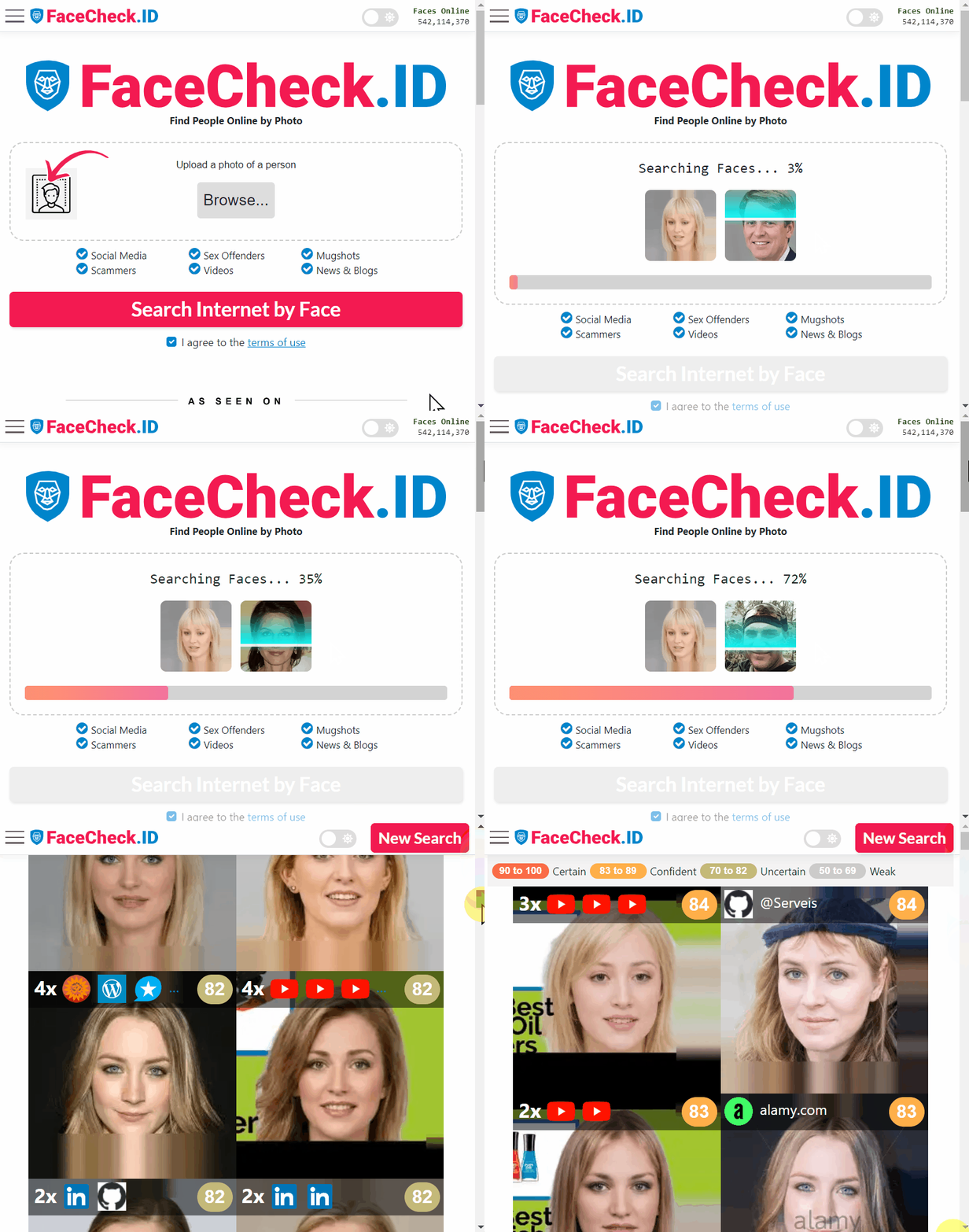
Using AI to Connect Photos to YouTube Personalities. Have you ever seen someone in a YouTube video and asked, "Who is That?" And you wanted to find out who they are? Well, now there's an easy way to do just that - with FaceCheck.ID you can search YouTube thumbnail images by face!
-
Facial Recognition: Understanding the Basics
YouTube video player. YouTube video player. YouTube video player.
-
Social Catfish Review: Is It Actually Worth Your Money in 2026?
Social Catfish is one of the most heavily marketed identity verification services on the internet, with YouTube ads and influencer sponsorships everywhere.
-
How to Find Someone on TikTok by Photo (2026)
More often you will land on the same face on Instagram, YouTube, X or a personal site, and the TikTok handle is sitting in that profile's bio or link list. Most cross-post to Instagram Reels and YouTube Shorts, and most put their other handles in their TikTok bio, so the connection works in both directions. Instagram bios, YouTube "About" pages and Linktree-style pages usually list TikTok explicitly.
-
Stop Romance Scams in 2025: Real Case, Red Flags, and FaceCheck Tips
FaceCheck.ID instantly connected the images to public posts across Facebook, Instagram, YouTube, TikTok, and more. Watch the Full Romance Scam Story on YouTube. YouTube-Videoplayer.