Fansly Face Matches: Reading Results
Fansly profiles often surface in face-search results when someone is trying to identify a creator, confirm whether a dating-app match is actually running a paid account under a different name, or trace whether private images have been reposted to a subscription page without consent. For anyone using FaceCheck.ID, Fansly is one of several creator platforms where a face can appear publicly even when the account holder believes the content is gated.
Why Fansly matters in face-search results
Fansly accounts have public-facing elements: a profile photo, a banner, a username, a bio, and often free preview posts. Search engines and third-party indexers crawl those public surfaces, which means the face used on a Fansly profile photo can become discoverable through reverse image search even if the bulk of the content sits behind a paywall. A FaceCheck query against a casual selfie can return a Fansly hit when the same face appears on the public side of a creator profile, on aggregator sites, or on cross-posted promotional images shared to X, Reddit, or Telegram channels.
This matters in several common scenarios:
- Verifying whether a person on a dating app is the same individual running a paid creator account under a stage name
- Identifying scam accounts that scrape Fansly photos and reuse them as fake personas on Tinder, Hinge, or Instagram
- Helping creators discover unauthorized reposts of their own faces on impostor profiles
- Investigating sextortion or catfishing cases where a stolen Fansly image is being passed off as the scammer's own
How Fansly content spreads beyond the paywall
Even when a creator restricts most posts, their face often ends up indexed elsewhere. Promotional clips get reposted to free tube sites. Profile pictures appear in Fansly directory aggregators. Fans screenshot paid content and leak it to forums. Once an image is on the open web, it becomes fair game for reverse image search and face matching.
For someone running a face search, this has two practical consequences. First, a Fansly-linked match does not necessarily mean the image came from Fansly directly. It may have been scraped, leaked, or posted to a third-party site that happens to reference the creator's handle. Second, the same face can appear under multiple stage names across Fansly, OnlyFans, JustFor.Fans, and similar platforms, which makes a single match an incomplete picture of someone's online presence.
Reading Fansly matches carefully
A face-match against a Fansly profile is a starting point, not a conclusion. Several failure modes are worth keeping in mind:
- Lookalikes. Creator headshots are often heavily edited, filtered, or shot at flattering angles, which can push match confidence higher between two unrelated people who share general features.
- Stolen identity accounts. Catfish operators routinely build fake Fansly or imitation pages using photos taken from real creators or unrelated social media users. A match to such an account does not mean the person in your source photo runs that account.
- Old or recycled images. Promotional photos can stay indexed for years after a creator has stopped posting or deleted the account, leading to matches that no longer reflect current identity.
- Cropped or watermarked sources. Images circulating on third-party reposting sites are often cropped to remove watermarks, which can change how the face matcher scores similarity.
Limits and responsible use
Finding a Fansly profile through a face search reveals that a face appears on a public surface of that platform. It does not prove the person consented to that appearance, that they currently run the account, or that any legal or sensitive claim about them is accurate. Stage personas, content theft, and impersonation accounts are common across adult creator platforms, and treating a single match as confirmation of someone's offline identity is the most frequent mistake people make when reading these results.
Legitimate uses include creators auditing where their own face has been reposted, victims of impersonation gathering evidence, and individuals checking whether a person they are talking to online is using stolen photos. Using a Fansly match to out, harass, or expose a creator against their wishes is a different matter and falls outside what reverse image search is meant to support.
FAQ
What is Fansly, and why might it appear in face recognition search results?
Fansly is a subscription-based creator platform (often used for adult content). It can appear in face recognition search results when your face (or a similar-looking face) is found on a Fansly profile, a preview/marketing post, a repost on third-party sites, or cached/archived pages that a face search engine has indexed.
If a face search result points to Fansly, does that confirm the person has a Fansly account?
No. A Fansly-linked hit is only a lead, not proof of account ownership. The image could be reposted without consent, used in an impersonation, misattributed due to a look-alike match, or attached to a page that includes multiple people. Treat it as a clue that requires verification using on-page context (username, other photos, posting history, and corroboration from independent sources).
Why can a face recognition search engine associate someone’s face with Fansly even if they never used Fansly?
Common causes include impersonation accounts using stolen photos, repost networks that copy creator promos or selfies, screenshots shared on forums, search-engine caching/archiving, and false-positive matches where a similar-looking person is returned. Crops, heavy filters, makeup changes, or low-resolution images can also increase confusion and misassociation.
What are safer steps to verify a Fansly-related face search match before acting on it?
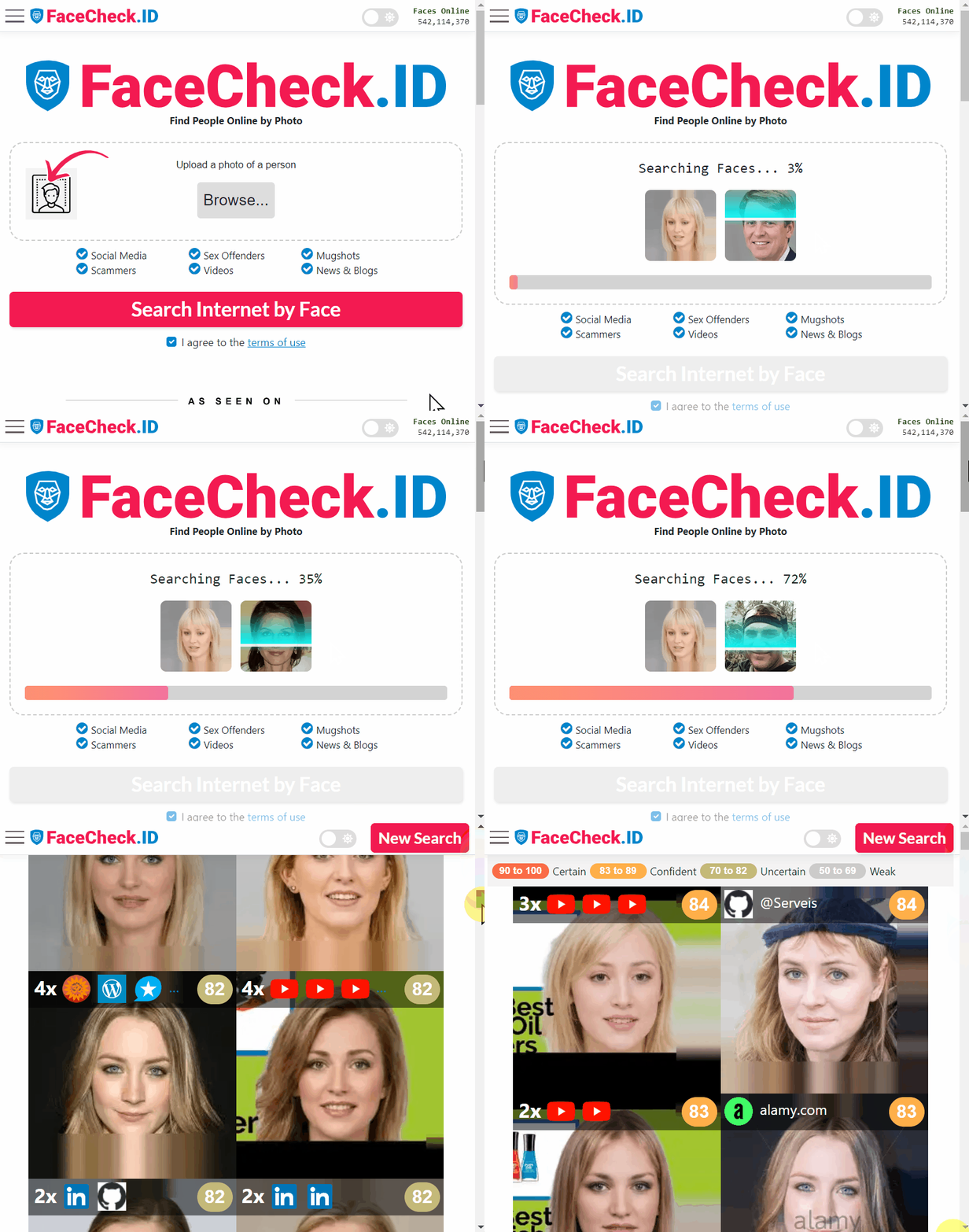
Use a cautious verification workflow: (1) open the result and confirm the face appears clearly and consistently across multiple images; (2) compare distinguishing features (tattoos, scars, moles, ear shape) rather than overall resemblance; (3) check whether the page is a repost/aggregator versus an official creator profile; (4) corroborate with non-adult, independent sources (e.g., the person’s known public profiles) before making any claim; and (5) assume uncertainty if evidence conflicts or is limited. If you use FaceCheck.ID or similar tools, treat high-similarity results as starting points, not identity confirmation.
If my face appears in Fansly-related results and it’s not me (or it was used without consent), what should I do?
Document evidence first (URLs, timestamps, screenshots), then request removal from the hosting site (e.g., report impersonation or non-consensual use through the platform’s reporting process). Also request removal from any third-party repost pages that copied the content. If a face search engine (such as FaceCheck.ID) is surfacing the link, use its available opt-out/removal mechanisms if offered, and consider additional steps like reporting to the relevant social platforms, pursuing DMCA/copyright routes when applicable, and seeking legal advice for impersonation, harassment, or non-consensual intimate imagery situations.

Recommended Posts Related to fansly
-
How to Find Someone on Fansly by Photo in 4 Easy Steps
Fansly doesn’t offer built-in image search, but there are other ways to look for a profile using a photo. Trying to find a specific Fansly profile without a username can be frustrating. Fansly does not currently have a built-in reverse image search feature, so a photo alone usually is not enough to search directly on the platform.
-
Search for Actors by their Face
Facial recognition technology is changing the game in the entertainment industry, not only for fans but also for professionals. Enhancing fan experiences: With the ability to identify actors in a snap, fans can now dive deeper into their favorite movies and TV shows. Enhancing fan engagement with celebrities through image recognition: Fans can now connect with their favorite actors in a whole new way, discovering new content and deepening their appreciation for the actors' work.
-
How to Reverse Image Search from Android in 4 Steps
Hey there, Android fans!
-
Celebrity Romance Scams 2026: How Scammers Use AI Deepfakes and Stolen Photos to Steal Millions
Brad Pitt's team condemned the scam, reminding fans he has no personal social media. Reeves also protects impersonations of people in his inner circle, as he "cares very much about how his fans are treated.". Johnny Depp: Victims send hundreds of thousands for "legal fees"; Depp issues warnings—he never asks fans for money.
-
How to Find an OnlyFans Profile by Photo Using a Reverse Image Search
You can also try searching the same username across platforms, or checking whether they use another creator platform such as Fansly, Patreon, or ManyVids.