Reverse Image Search Free: Face Match Limits

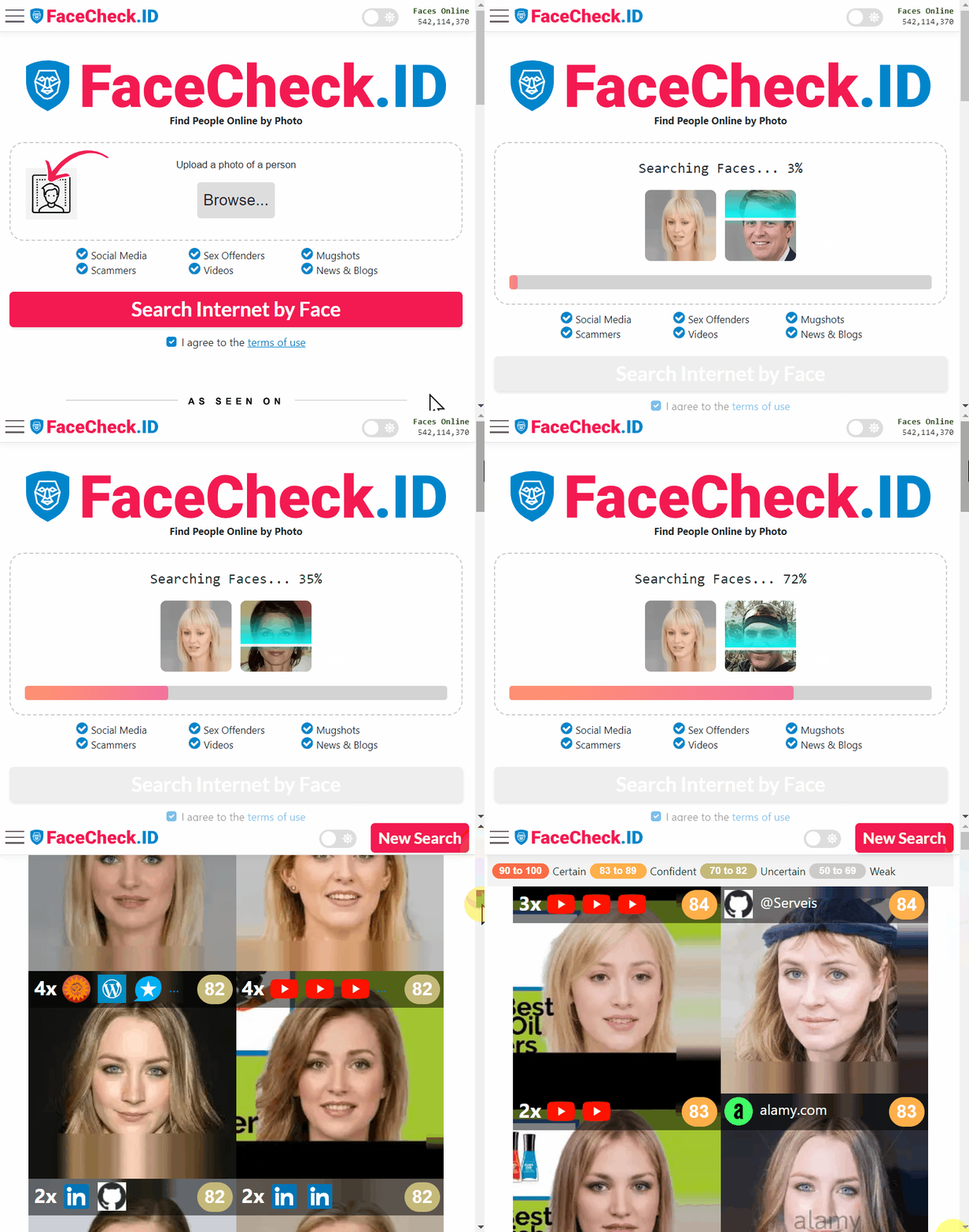
Free reverse image search is the first stop for anyone trying to figure out where a picture came from, who is in it, or whether it has been reused across the web. On FaceCheck.ID, that idea narrows to a specific job: take a face photo and find other places online where the same face appears, without paying for a subscription to start.
How free reverse image search differs from face search
A standard reverse image search looks at the whole picture. It treats the image as a pattern of shapes, colors, and edges, then matches those patterns against indexed images. If you upload a selfie, a generic reverse image tool may return the exact file (same resolution, same crop) or visually similar scenes, but it usually will not connect that selfie to a different photo of the same person taken on another day.
Face search works differently. Instead of matching the whole image, it isolates the face, builds a numerical representation of the facial features, and looks for that face across other images. The background, outfit, lighting, and crop can change, and the system can still surface matches. That distinction matters when you are trying to identify a person rather than trace a single picture.
Free general-purpose tools like Google Lens, Bing Visual Search, Yandex Images, and TinEye each have strengths. Yandex tends to do better with faces from Eastern European sources. TinEye specializes in finding exact copies and edits but does not perform face matching. Google Lens is strong on objects, products, and landmarks but deliberately limits face-based identification.
When free reverse image search is enough
For some investigations, you do not need a face engine. Free reverse image search handles these cases well:
- Confirming whether a profile photo was scraped from a stock photo site or a real person's Instagram
- Finding the earliest known appearance of an image, which can expose romance scammers reusing photos pulled years ago from someone else's social media
- Catching catfish profiles that lift pictures from models, fitness influencers, or military personnel
- Spotting reused press photos in fake news posts
- Tracking unauthorized reuse of your own photos
If a scammer is using a picture exactly as they found it, a free reverse image search will often expose them in seconds. The tool will surface the original source, and the inconsistency between that source and the dating profile speaks for itself.
When you need face search instead
Free reverse image search breaks down when the photo has been altered, mirrored, recropped, or replaced with a different shot of the same person. Scammers have caught on to TinEye and Google, so they:
- Take screenshots of photos to strip metadata and slightly change pixel data
- Crop tightly or apply filters to defeat exact-match detection
- Rotate or mirror images
- Use multiple photos from the same victim's account, so any single reverse search returns nothing
In those cases, only face recognition will tie the new image back to the real person's online presence. A face-search engine can match a cropped, filtered selfie to a wedding photo on a public Facebook page or a LinkedIn headshot, because the underlying facial geometry is what gets compared, not the pixels.
Tips for getting useful results from either approach
- Use the highest resolution version you have. Compression destroys detail that both pixel-matching and face-matching depend on.
- Crop to the subject before searching. A face occupying most of the frame produces better matches than a face buried in a crowd shot.
- Try the same image across multiple engines. Coverage of the indexed web varies widely between providers.
- For face search specifically, prefer front-facing, well-lit photos. Profile shots and heavily shadowed faces produce weaker confidence scores.
What free reverse image search cannot prove
A match, even a strong one, is not identification. Reverse image search shows that an image (or a similar image) appears on certain pages. It does not confirm the person's name, current location, intentions, or whether the linked profiles are authentic. Lookalikes exist. Stolen photos get republished by people who are not the original thief. Old images stay indexed long after the subject has moved on or changed appearance.
Treat results as leads. Cross-check usernames, ages, locations, and writing styles before drawing conclusions, especially when accusing someone of fraud or impersonation. Free tools open the door, but the judgment about what the matches actually mean still belongs to you.
FAQ
What does “Reverse Image Search Free” mean when the goal is to search by face?
“Reverse Image Search Free” usually refers to online tools that let you upload (or paste a URL to) a photo to find where that image—or visually similar images—appears on the web at no cost. For face-focused searching, it may also be used loosely to mean a free face search, but many truly face-recognition-based search engines are limited, partially free (trial/preview), or paid for full results.
Are free “reverse image search” tools the same as free face recognition search engines?
Not always. Traditional reverse image search typically excels at finding exact or near-duplicate images (same photo, resized/cropped, lightly edited). Face recognition search engines are designed to find the same person across different photos (different angles, lighting, aging, makeup, etc.). A tool marketed as “Reverse Image Search Free” may do only duplicate/visual matching, not true face-based matching.
What can I realistically expect from a “Reverse Image Search Free” face lookup in terms of results?
You should expect leads rather than proof: possible source pages where the photo appears, reposts, and visually similar images. For faces, free tools may return mixed results (look-alikes, unrelated people with similar features, or no results at all). Treat matches as starting points to verify with additional context (source credibility, timestamps, consistent biographical details), not as identity confirmation.
How can I use “Reverse Image Search Free” more safely when the image contains a person’s face?
Use privacy-minimizing steps: avoid uploading sensitive images you don’t have permission to share, crop out bystanders, remove obvious personal data (names, addresses, account IDs) from screenshots, and prefer lower-risk test images when comparing tools. Also, don’t publicly share the results, and avoid making accusations or decisions solely from a face match—especially for high-stakes claims like criminality, sex work, or fraud.
If I want a “Reverse Image Search Free” option for faces, when does mentioning FaceCheck.ID add value?
FaceCheck.ID may add value when your goal is face-specific searching (finding the same person across different photos) rather than finding duplicates of the exact same image. It can be useful as a secondary check when free duplicate-based reverse image search tools return nothing or only visually similar-but-wrong people—however, you should still treat any results as investigative leads, confirm with independent evidence, and follow the tool’s terms plus local privacy/consent laws.

Recommended Posts Related to reverse-image-search-free
-
Reverse Image Search FAQ: The Ultimate Guide for 2025
-
Yandex Image Search: Complete Guide to Finding Faces (2026)
Is Yandex reverse image search free?
-
Best Reverse Image Search Engines Ranked (2026)
-
How to Reverse Image Search on Yandex (and How It Differs from Google)
Is Yandex reverse image search free?