How to Use Reverse Image Search to Find LinkedIn Profiles by a Photo
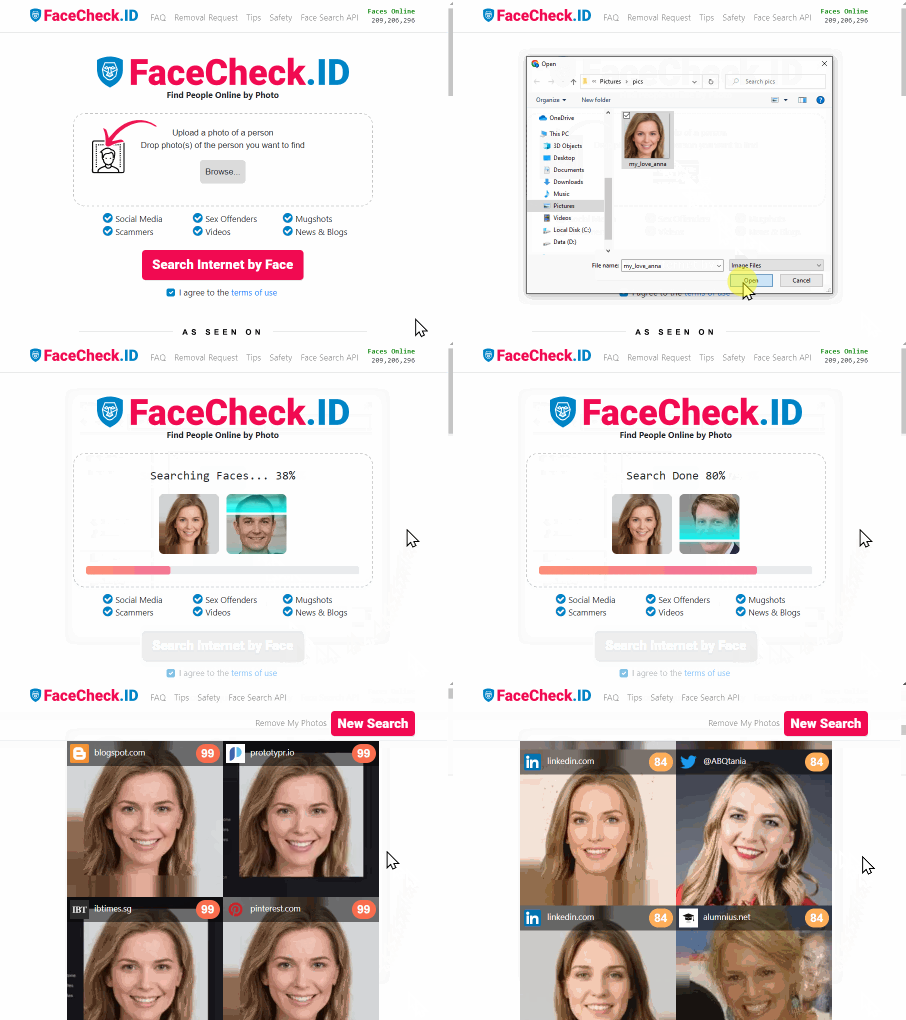
FaceCheck.ID lets you find LinkedIn profiles by photo
The Best Search Engines for Finding LinkedIn Profiles by a Photo
You have a photo of someone. You'd like to find them on LinkedIn. You don't have a name, a company, or really anything else to go on — which is exactly the situation LinkedIn's search bar was not built for. Reverse image search, powered by facial recognition, fills that gap. Here's what actually works.

In this article, we're going to discuss
What is Reverse Image Search?
Instead of typing words into a search bar, you hand the search engine a picture and ask it to go find more of that picture (or that face) elsewhere on the internet. Useful when all you have is a face and a vague memory of meeting someone at a conference whose name you've successfully repressed.
The Power of Facial Recognition Technology
Facial recognition has gotten genuinely good. The algorithms map the geometry of a face — the spacing of the eyes, the slope of the jaw, the shape of the nose — and turn it into something searchable. That mathematical fingerprint is what gets matched against photos scraped from social profiles, including LinkedIn.
Best Reverse Image Search Engines for Finding LinkedIn Profiles
- Google Images is the default everyone tries first. Click the camera icon, drop in your photo, and Google will hunt for pages featuring the same image. The catch: it's looking for the same image, not the same face. If the LinkedIn headshot is a different photo from the one you're holding, Google often shrugs.
- TinEye is built for finding exact duplicates of an image across the web. Great if the photo you have was literally lifted from a LinkedIn profile. Less useful when you're holding a candid shot and the target's profile pic is a corporate headshot from three jobs ago.
- PimEyes uses actual facial recognition rather than image matching. It's marketed mainly as a tool for checking where your own face has ended up online — handy if you suspect someone has lifted your photos for a fake profile.
- FaceCheck.ID is a facial recognition engine pointed specifically at social media. It analyzes the face in your uploaded photo and looks for matches on platforms like LinkedIn, Facebook, and Instagram. This is the one built for the job described in this article's title.
Why FaceCheck.ID is the Best Facial Search Engine for LinkedIn
The short version: it's the only one of the four that was actually designed for matching a face to a social profile. Google and TinEye find images. PimEyes finds your face. FaceCheck.ID finds the person behind the face on the platforms you'd actually want to find them on.
The database is refreshed regularly, which matters more than it sounds — a tool that hasn't crawled LinkedIn in a year is a tool that can't find anyone who joined LinkedIn in a year.
Steps to Find a LinkedIn Profile by Photo
- Step 1. Go to FaceCheck.ID.
- Step 2. Upload the photo. Sharper is better. A clean, well-lit shot of the face beats a heroic-but-blurry zoom from across a banquet hall.
- Step 3. Let the facial recognition do its thing.
You'll get back a list of potential matches with the source profiles attached. No tool is perfect — sometimes the result is a near-miss, sometimes it's nothing. If FaceCheck.ID comes up empty, it's worth running the same image through Google Images, Bing Visual Search, or TinEye on the off chance the exact photo is sitting on a public page somewhere.
One genuine note before you go: facial search is powerful, and that cuts both ways. Use it to reconnect with the person you swapped business cards with, not to track people who have made it clear they don't want to be found.
Find Unknown Person Name and Details With Just a Pictures
FAQ
Can Google reverse image search find someone's LinkedIn profile from a photo?
Rarely, and only by accident. Google Images matches identical or near-identical images, not faces — so unless the exact photo you're holding has been published on a page Google has indexed, you'll get nothing useful. If your photo is a candid snapshot and the target's LinkedIn headshot is a different professional portrait, Google can't connect them. Use a facial recognition engine like FaceCheck.ID for face-to-face matching.
Does LinkedIn itself let you search by photo?
No. LinkedIn's search is built around names, job titles, companies, and schools — there's no built-in feature to upload a face and find the matching profile. LinkedIn also doesn't expose a public photo-search API. To go from a face to a LinkedIn profile, you have to use an external facial recognition tool that has crawled LinkedIn's public-facing pages and indexed the headshots.
What's the difference between reverse image search and facial recognition search?
Reverse image search looks for the same image file (or visually similar images) across the web; facial recognition search looks for the same face across different photos. Google Images and TinEye do the first. PimEyes and FaceCheck.ID do the second. If your photo and the LinkedIn headshot were taken on different days, in different clothes, only facial recognition has a real chance of connecting them.
Why didn't FaceCheck.ID return any matches for my photo?
Usually it means the face hasn't been indexed — either the target's LinkedIn photo is too old, their profile is private, or their headshot is too small or stylized for the algorithm to extract clean facial geometry. Image quality on your side also matters: blurry, heavily filtered, or low-angle shots with one eye obscured often fail. Try a sharper, front-facing photo before assuming the person isn't findable.
How accurate are face matches, and what's the false-positive risk?
Expect a useful but imperfect signal, not proof of identity. Facial recognition engines return ranked candidates with similarity scores, and the top hits are usually correct when the input photo is sharp and front-facing — but lookalikes, siblings, and people with similar features do produce false positives. Always verify a match by cross-checking other details on the LinkedIn profile (location, job history, mutual connections) before contacting someone.
Is it legal to use facial recognition to find someone's LinkedIn profile?
In most of the US it's legal to search public photos with facial recognition, but the rules tighten quickly elsewhere. Illinois (BIPA), Texas, and Washington restrict commercial use of biometric data, and the EU's GDPR treats facial templates as sensitive personal data requiring a lawful basis. Searching for yourself or someone who has consented is generally safe; building dossiers on strangers, especially for hiring or surveillance, can create real legal exposure.
What kind of photo gives the best results?
A sharp, well-lit, front-facing shot of a single face, ideally at least 200 pixels wide on the face itself. Avoid heavy sunglasses, hats that shadow the eyes, extreme side angles, group photos where the face is small, and aggressive Instagram filters. If you only have a group shot, crop tightly to one face before uploading — most engines weight the largest, centered face and may ignore the person you actually want.
Can someone block their LinkedIn photo from being indexed by facial search engines?
Partially. Setting your LinkedIn profile photo visibility to "Your connections" or "Only you" removes it from public scraping, which is the main thing facial search engines index. You can also opt out directly with some services — PimEyes and FaceCheck.ID both offer removal request processes. However, opting out of one engine doesn't remove your face from the others, and any photo that's already been cached may linger for months.
What should I do if FaceCheck.ID finds the profile but I'm not sure it's the right person?
Treat the match as a lead, not a confirmation. Open the LinkedIn profile and check whether other details line up with what you already know — the city where you met them, the company name on their badge, an industry that fits the context. If the photo on the profile is clearly a different person than the candidate result, it's a false positive. Cross-referencing with a second engine (Bing Visual Search or PimEyes) also helps confirm.

Read More on Search by Face
How to Find People on Social Media by Photo
Got a photo but no name? Finding someone across social platforms feels almost impossible when all you have is a picture. Here's how image-based searches can help you reconnect with old friends, verify suspicious profiles, or track down that influencer you spotted - all starting with a single snapshot.
On the subject in other languages

Popular Topics
API Face Recognition Search Face Search Engine Identity Social Media Image Search Facial Recognition Facebook Instagram Facial Recognition Technology Google Images TinEye Image Search Engine Find Someone LinkedIn Fake Profiles PimEyes Facial Search Biometric Fingerprint Find Anyone Photo Search Unknown Person Search by Photo Visual Search Bing Visual Search Face Search Face Match Similar ImagesReverse Image Search Showdown 2026: PimEyes vs FaceCheck - Who Wins?