Fake Profiles on Instagram
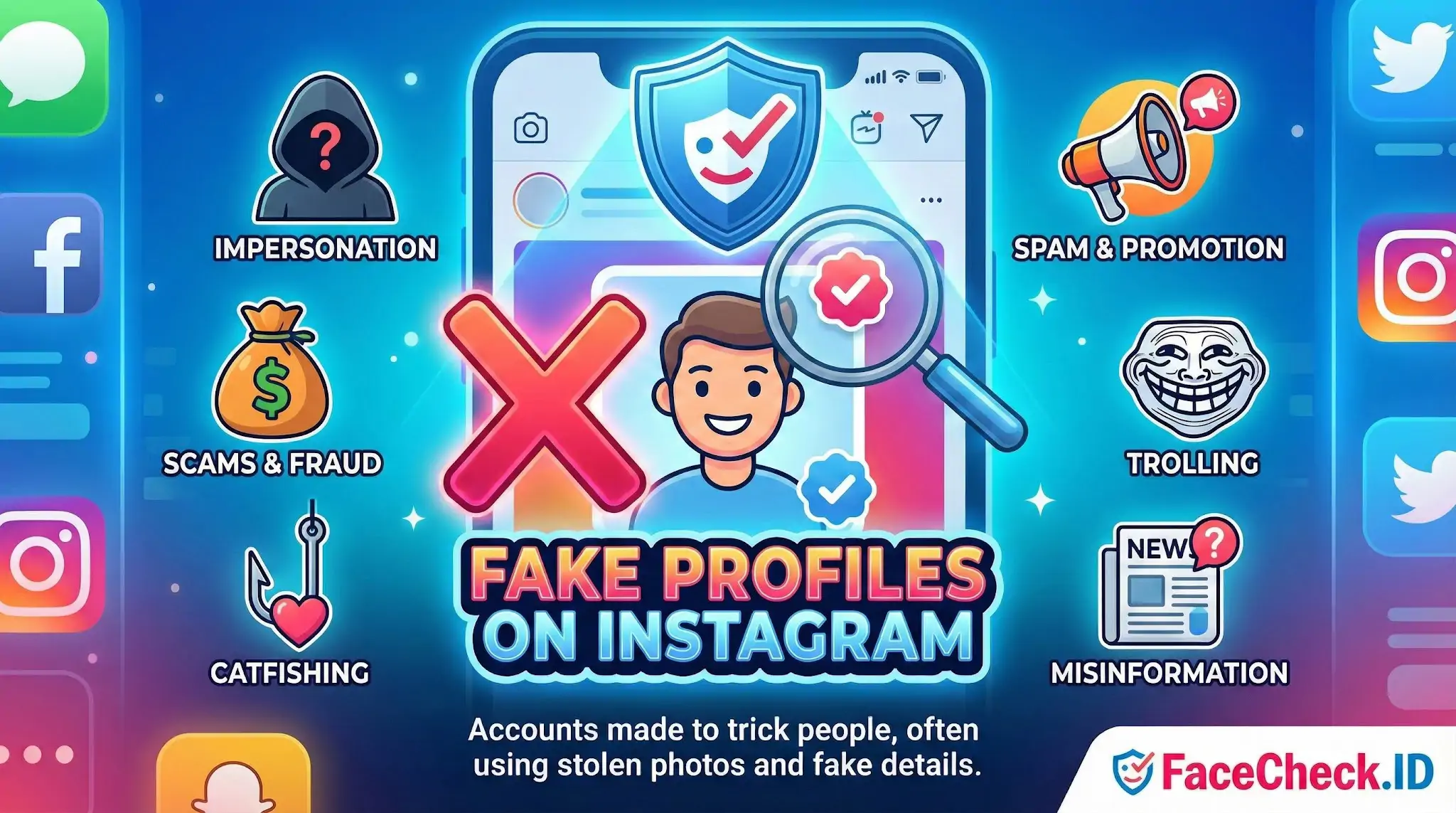
Fake Instagram profiles are one of the most common reasons people run a reverse face search. Someone matches with an account that looks polished but feels off, or a "verified" creator slides into DMs asking for money, and the fastest way to test the story is to see whether the profile photos appear elsewhere on the web under a different name.
Instagram is a heavy source of recycled identity material. Profile pictures, story stills, and grid posts get scraped, reposted, and reused across dating apps, Telegram channels, scam sites, and other Instagram handles. That makes the platform both a major target for impersonation and a useful starting point for face-based investigation.
How face search exposes fake Instagram accounts
A real person's face usually has a traceable footprint. Their photos show up across multiple unrelated platforms over years, with consistent features across angles, ages, and lighting. A fabricated or stolen identity tends to fail this test in specific ways.
When you run a face from an Instagram profile through reverse image search, common patterns appear:
- The same face shows up on a model's portfolio, a stock photo agency, or a Russian or Brazilian Instagram account with thousands of followers and a different name
- The face appears on military spouse scam alert pages or romance scam databases
- The face is tied to an OnlyFans creator or influencer whose images have been scraped and reused on dozens of throwaway accounts
- The face has no other web presence at all, which is suspicious for any account claiming to be a public figure, business owner, or working professional
- The face matches a deepfake or AI-generated portrait set, often visible from artifacts in earlier indexed copies
A genuine account, by contrast, usually returns matches consistent with the bio: LinkedIn under the same name, tagged photos at events, news mentions, or older social profiles with the same person aging naturally.
Image traits that affect match quality on Instagram
Instagram photos are not always ideal inputs for face search. The platform encourages heavy filtering, beauty effects, angled selfies, and group shots, all of which lower match confidence.
- Filtered or AI-smoothed faces often produce weaker matches because facial geometry has been altered
- Sunglasses, hats, and obscured profile pictures reduce the features available to the matcher
- Group photos require cropping to a single face before searching, or the system may lock onto the wrong person
- Story screenshots tend to be lower resolution and compressed
- Front-facing, well-lit posts (event photos, interviews, podcast clips reposted to Instagram) usually give the cleanest results
If a first search returns weak hits, try a different photo from the same account. Scammers often slip up by mixing one or two real-looking images with stolen ones, and only the stolen images will surface elsewhere.
Behavioral signals that pair with face-search findings
Face-search results are strongest when combined with the account's behavior. Patterns worth checking:
- The bio claims a US or UK location but the face is indexed on Instagram accounts in another language
- The account was created recently but the photos appear on indexed pages from years earlier
- Multiple Instagram handles use the same face with different names, often a sign of a scam ring rotating accounts
- The face is tied to a real person who has publicly warned that they are being impersonated
What face search on Instagram profiles cannot prove
A match is evidence, not a verdict. Several limits matter.
A face appearing on another account does not always mean the Instagram profile is fake. People legitimately maintain separate accounts for personal use, business, modeling, or fan content. Couples and siblings can look similar enough to trigger lookalike matches, and identical twins regularly defeat face recognition entirely.
Conversely, no matches outside Instagram does not prove the account is real. Private people often have minimal public footprints, and platforms with strong privacy settings or aggressive anti-scraping measures are underrepresented in any reverse-search index.
Treat face-search output as a lead. Confirm with context: account age, mutual connections, video calls, official verification, and whether the story the profile tells matches the digital trail the face leaves behind.
FAQ
How can face recognition search engines help detect fake profiles on Instagram?
They can reveal where the same face photo (or visually similar versions of it) appears elsewhere online. If an Instagram account uses stolen images, a face search may surface the original person’s profiles, earlier posts, modeling portfolios, news pages, or repost aggregators—helping you spot impersonation patterns. Treat matches as investigative leads, not proof, and verify with additional context (captions, timelines, locations, and consistent usernames).
What result patterns suggest an Instagram profile photo is stolen or part of a fake profile?
Common warning patterns include: the same face appearing across many unrelated accounts; matches that predate the Instagram account’s creation or earliest posts; the face showing up under different names or countries; heavy reuse on scam-report pages or repost/fan pages; and an Instagram account whose photos all resemble studio content with no consistent personal history. Any single pattern can be innocent, but multiple patterns together raise risk.
How do AI-generated or heavily filtered Instagram faces affect face recognition search results?
AI-generated (synthetic) faces may produce few or no reliable matches because there may be no real person behind the image, while heavy filters, beauty retouching, and face-shape edits can shift facial features enough to reduce match quality or increase look-alike (wrong-person) matches. If you suspect a synthetic or over-edited photo, try searching with multiple images from the account (different angles, lighting, and less-filtered frames) and compare consistency across results.
What safe steps should I take before reporting an Instagram account as fake based on face search results?
First, confirm the match using non-face cues: does the linked source clearly show the same person, and does it have consistent context (name, timeline, other photos, friends, or verified pages)? Cross-check with a traditional reverse image search for exact duplicates, review whether results are reposts or screenshots, and avoid public accusations. If it looks like impersonation, use Instagram’s in-app reporting and, if you’re the victim, gather URLs/screenshots and request takedown where the original image appears.
How can FaceCheck.ID add value when investigating fake Instagram profiles, and what should users keep in mind?
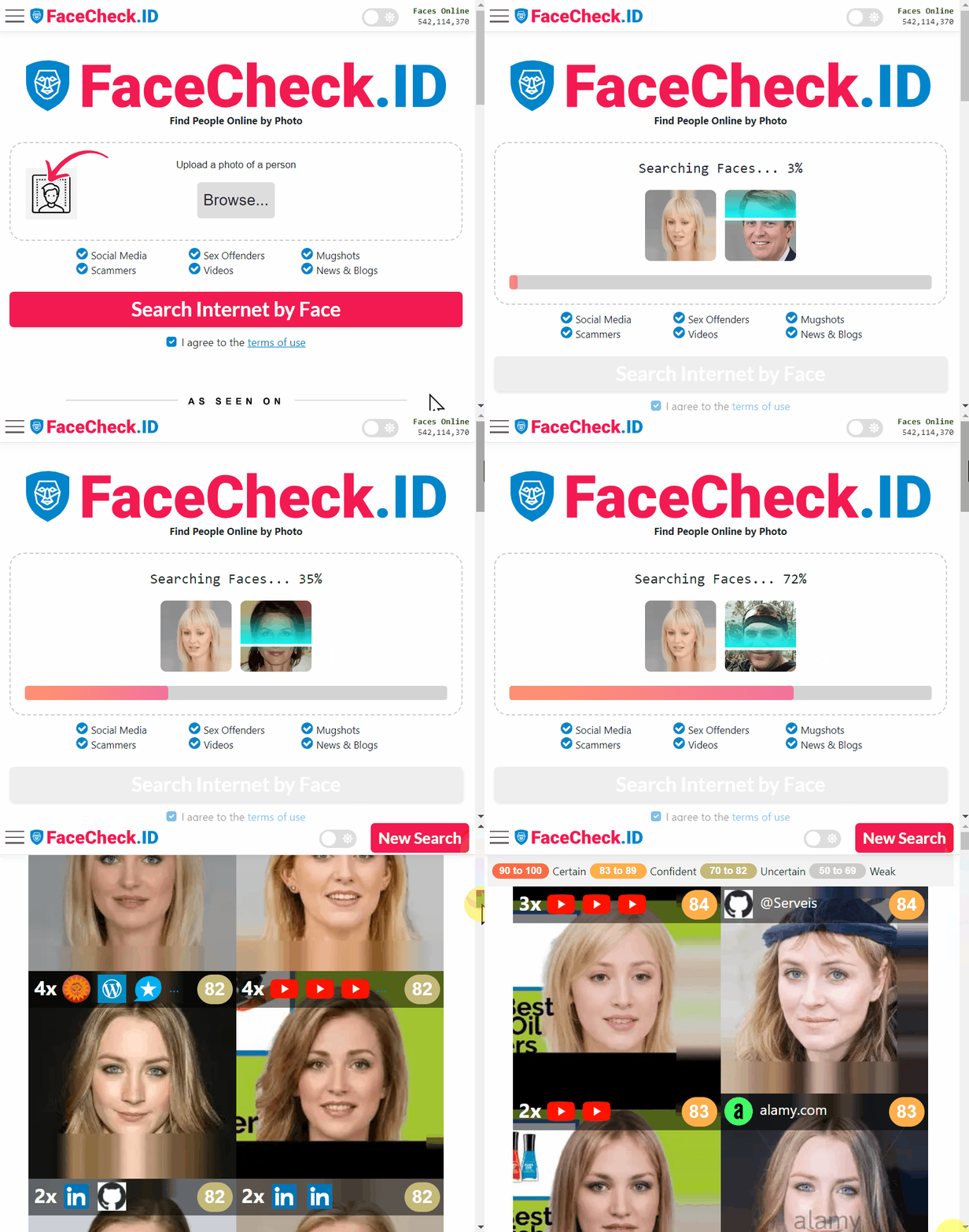
FaceCheck.ID can help by clustering and ranking candidate matches for a face across web sources, which may surface where a profile image has been reused (or where similar-looking images exist). Use it to broaden your leads, then validate each hit manually—especially when results include repost pages, memes, or low-quality thumbnails. Don’t treat a single match as identity confirmation; instead, corroborate with multiple independent sources and consistent biographical details.

Recommended Posts Related to fake-profiles-on-instagram
-
Search Instagram by Photo with Reverse Image Instagram Search Engine
Finding Fake Profiles on Instagram. If you do come across a fake profile on Instagram, report it to Instagram immediately.