Sex Offender Registry Matches in Face Search
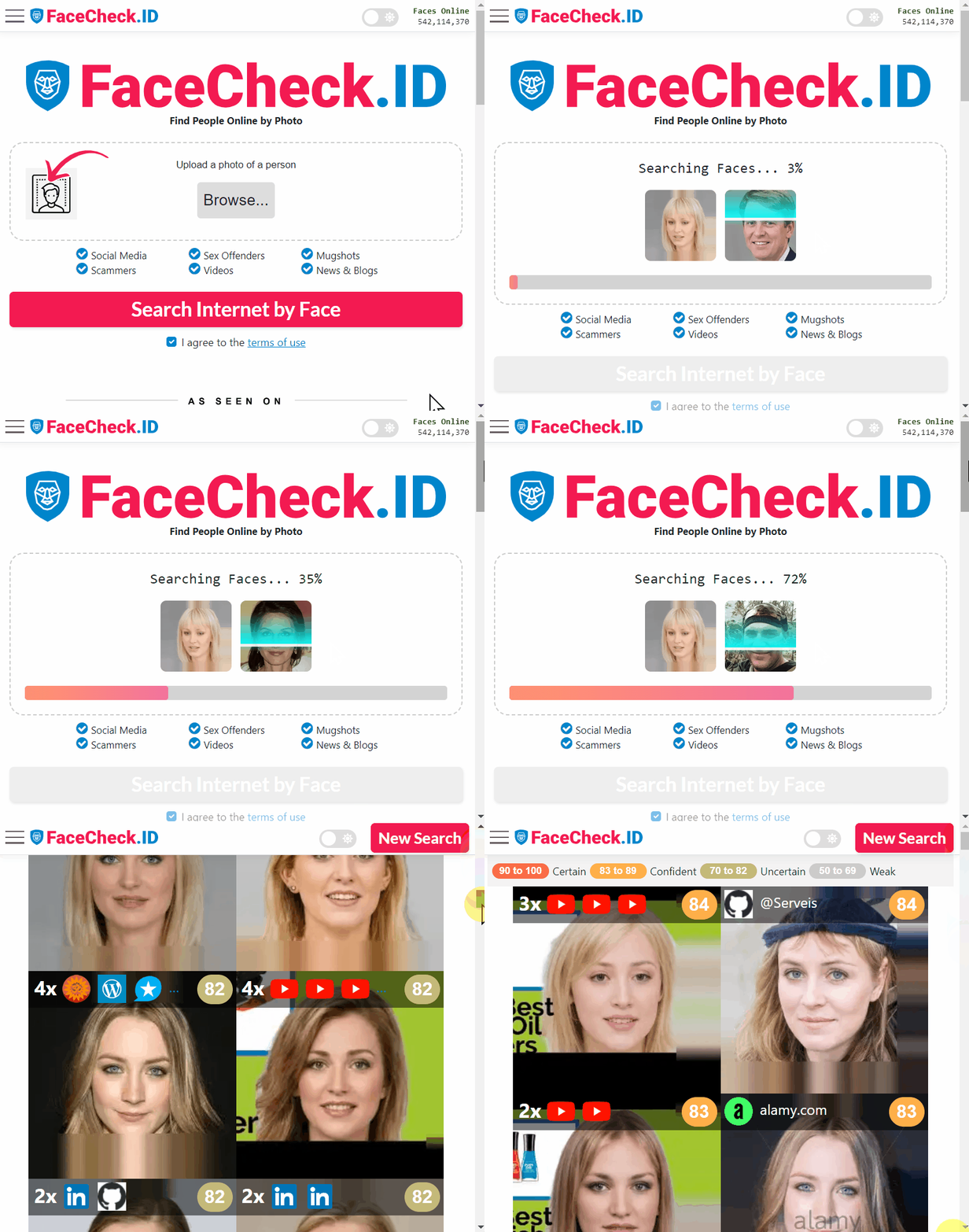
When a face-search result links to a sex offender registry page, it can be one of the most consequential matches a user encounters. Public registries are among the image sources that reverse face-search engines can index, which means a single uploaded photo can sometimes surface a registry listing alongside social profiles, news stories, and dating accounts.
How registry photos surface in face search
Sex offender registry sites publish booking-style photos that are usually front-facing, evenly lit, and tightly framed on the face. Those qualities make them strong candidates for face-recognition matching. They are also hosted on public government domains that search engines and image crawlers index aggressively, so a registry photo can persist in cached copies and mirror sites for years after the original record is updated or removed.
For someone running a face search on a stranger, a dating app match, a new neighbor, or a person who contacted them online, a registry hit is often the highest-stakes result that appears. It can also appear next to seemingly contradictory profiles where the same person uses a different name on social media, lives in a different state than the registry lists, or has photos that look much younger or older than the registry image.
Common reasons a registry image shows up in a face-search result:
- The registry photo was scraped by third-party aggregators and republished across mugshot or background-check sites
- The person reused the same photo, or one taken near the same time, on social platforms
- A news story covered the conviction and embedded the registry image
- Cached copies of an old listing remain indexed even after the person was removed from active registration
Reading a registry match carefully
A face-match to a registry listing is not by itself proof of identity. Face recognition produces a similarity score, not a verdict, and registry photos share the visual traits that drive false positives: similar lighting, similar pose, neutral expression, plain background. Two unrelated people with comparable bone structure and hairline can score high against the same booking photo, especially when the query image is also a frontal portrait.
Before treating a registry match as identification, check the supporting details the registry provides: full name, date of birth, height, identifying marks, current city, and offense date. Cross-reference those against anything else the face search returned. If a LinkedIn profile, news article, or older social account is also matching the same query face and is consistent with the registry record across name, age range, and location, the identification is more credible. If those threads contradict each other, the registry photo may simply be a lookalike.
It also matters which registry the result comes from. Some listings are pulled from official state databases or the federal NSOPW system. Others come from commercial sites that scrape and resell registry data, sometimes long after a person has been removed, had a conviction overturned, or completed their registration period. A face match against a stale third-party copy can point to someone who is no longer legally listed.
What a registry hit does and does not prove
A registry match in face-search results can flag a real risk, confirm a suspicion, or expose a catfish using a fake name on a dating app. It can also misidentify an innocent person who happens to look similar to a registered offender, particularly across age, ethnicity, or photo era differences that face models handle poorly.
A registry hit does not prove:
- That the person you searched is the person on the registry
- That the listing is current or still legally accurate
- That the offense described matches what the person is doing now
- That the photo on the registry is recent enough to be reliable
Treat a registry result as a lead worth verifying, not as a finished investigation. Confirm with name, jurisdiction, and corroborating detail before acting on it, sharing it, or confronting anyone based on what a face-search tool returned.
FAQ
What is a “Sex Offender Registry,” and why might it appear in face recognition search results?
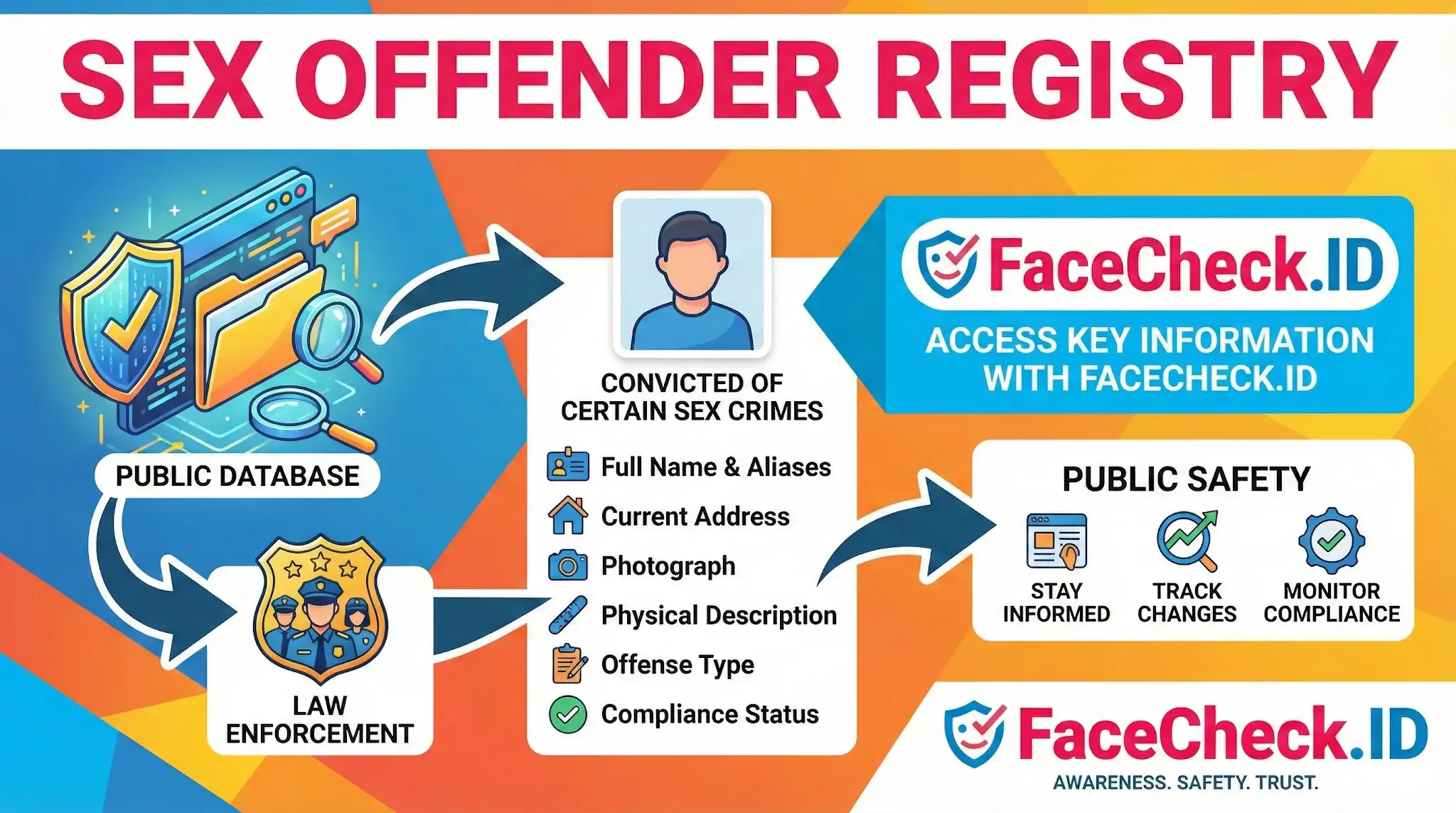
A Sex Offender Registry is an official government-run database that publishes information (often including photos) about certain individuals who are legally required to register. Face recognition search engines may surface registry pages because those pages are publicly accessible and contain clear headshots that are easy for search indexes to detect and match.
Why can a face match to a registry photo be wrong even if the faces look similar?
Registry images can be low quality, old, or taken under different lighting and angles, and many people share similar facial features. A face search match is typically a similarity-based lead, not identity proof—so a look-alike, outdated photo, or mismatched context can produce an incorrect association.
How should I verify a registry-related face-search hit without misidentifying someone?
Treat the result as a pointer to a page, not a conclusion. Verify using multiple non-face cues on the registry page (for example: full name, age/DOB or year of birth where shown, jurisdiction, physical descriptors, tattoos/scars, and last-known location), and cross-check with the official registry source for that state/country. If anything doesn’t align, assume it may be a false match and avoid sharing or acting on it.
What’s the difference between an official registry site and third-party “public record” or repost sites returned by face search?
Official registry sites are operated by government agencies and are generally the authoritative source for that jurisdiction. Third-party sites may republish registry data, scrape older snapshots, add ads, or mix records, which can increase the chance of outdated or misleading context. When a face search result points to a third-party page, confirm the information on the official registry before drawing conclusions.
If a tool like FaceCheck.ID shows a possible registry match, what are safe and responsible next steps?
Use it for cautious screening only: open the source page, verify it’s an official registry, and compare multiple identifiers (not just the face). Do not harass, doxx, or share allegations based on a face match. If you believe you (or someone you know) is incorrectly linked, collect screenshots/URLs for documentation, request correction through the site or the relevant agency, and consider legal advice if reputational harm is ongoing.

Recommended Posts Related to sex-offender-registry
-
A Step-by-Step Guide on How to Search Sex Offender Registry by Photo
The sex offender registry offers vital information on convicted sex offenders in our communities. This article highlights the importance of searching sex offender registry photos using the search-by-face website FaceCheck.ID, offers dating safety tips and suggests everyday personal safety measures. A quick search of the sex offender registry photos can help you check the background of the individuals you encounter, allowing you to build trust and stronger connections.
-
How to Run Background Check Using Face Recognition Search Engine
To see if they're on the sex offender registry.
-
Going on a Date? Lookup Child Sex Offenders by Photo
FaceCheck.ID indexes mugshot databases, sex offender registries, and news articles about arrests, so registry hits will appear in results when the photo matches a registered offender. Why does the sex offender registry miss so many predators?