Image Lookup
Image lookup is how you turn a photo into a search query. On FaceCheck.ID, that query is a face, and the system scans the public web for pages where that same face appears, including social profiles, news mentions, dating sites, mugshot archives, and other indexed sources.
How face-based image lookup differs from generic reverse image search
Standard reverse image search engines like Google Lens or TinEye look for the same image, or visually similar images, based on overall pixels, edges, colors, and composition. If you upload a photo of a person, those tools tend to find the exact file or near duplicates, and they often miss matches where the same person appears in a different photo entirely.
A face-focused image lookup works differently. It builds a numerical representation of the face itself, called a face embedding, and searches for other faces that map to a similar point in that mathematical space. That means a photo from someone's vacation in 2019 can match a corporate headshot from 2024, even if the lighting, angle, hairstyle, and background are completely different.
The practical difference shows up immediately. A generic reverse image search on a Tinder photo might return zero results because that exact image is not indexed elsewhere. A face-based lookup can still surface a LinkedIn page, an old forum profile, or a news article featuring the same person.
What image lookup actually returns in face search
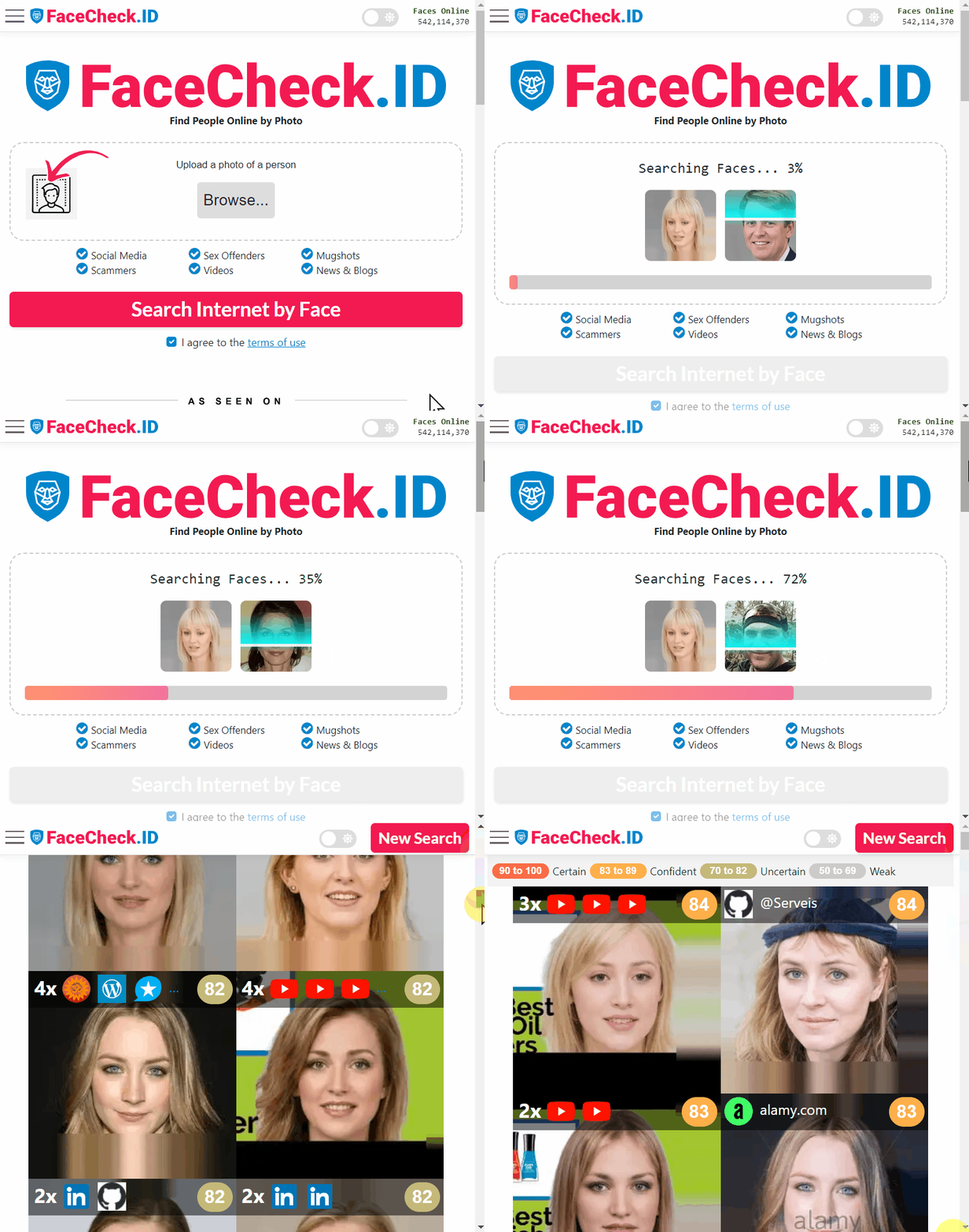
Results come back as a ranked list of pages with confidence scores. Higher scores usually indicate the same person, while mid-range scores often need human review because lookalikes, siblings, and people of similar age and ethnicity can land in that band.
Match quality depends heavily on the input image. Useful inputs share a few traits:
- The face is large enough in the frame, ideally with both eyes clearly visible
- The angle is roughly frontal, since deep profile shots produce weaker embeddings
- Lighting is even, with no heavy shadows across half the face
- Resolution is high enough that facial features are not blurred or compressed
- The person is not wearing sunglasses, a mask, or a hat that covers the brow
A cropped, low-light selfie pulled from a screenshot can still produce hits, but expect more noise and more false positives in the mid-confidence range.
Practical uses on FaceCheck.ID
People run face-based image lookups for reasons that traditional reverse image search cannot handle well:
- Verifying whether a dating-app profile photo belongs to the person it claims to
- Checking if a stranger contacting you on Instagram or Telegram appears under a different name elsewhere
- Investigating romance scams, sextortion attempts, and recruiter impersonation
- Finding old photos of a person whose name you do not know
- Confirming whether a face has appeared in news coverage, court records, or scam reports
- Auditing your own face for unauthorized use, including stolen photos used in fake profiles
Each of these depends on the face being indexed somewhere on the public web. Private accounts, closed groups, and platforms that block crawling generally will not show up.
What image lookup does not prove
A high-confidence face match is evidence, not proof. Identical twins consistently break face recognition. Strong lookalikes appear at rates that surprise people, especially within the same demographic group. A page can also reuse someone else's photo, so a match on a profile does not confirm that the profile is actually controlled by that person, only that the photo on that page is theirs.
Names and biographies attached to matched pages can be wrong, fabricated, or outdated. A LinkedIn match confirms a face was used on that profile, not that the employment history listed is accurate. A mugshot match confirms the photo exists in a database, not that any associated charges remain valid or relevant.
Image lookup narrows the field. Confirming an identity still requires cross-referencing multiple matches, checking timelines, and applying judgment about what the evidence actually supports.
FAQ
What does “Image Lookup” mean in the context of face recognition search engines?
In face recognition search engines, “Image Lookup” usually means uploading (or providing a link to) a photo so the service can search the public web for images that contain a visually similar face. The goal is typically to find other appearances of the same person (or close look-alikes), not just exact duplicates of the same file.
How is “Image Lookup” for a face different from searching by text (name, username, or keywords)?
Text search relies on words (names, captions, usernames, tags) that may be missing, inaccurate, or intentionally misleading. Face-based Image Lookup uses the pixels of the face itself to find visually similar faces, which can surface matches even when the person’s name is unknown or the page is poorly labeled.
What are the main limitations of face-based Image Lookup results?
Common limitations include false positives (different people who look similar), missed matches (the person isn’t indexed or the photo quality is poor), and context errors (a result page may contain the image but not identify the person correctly). Results should be treated as investigative leads, not proof of identity.
How can I improve my chances of getting useful Image Lookup matches without increasing misidentification risk?
Use a clear, well-lit, front-facing image where the face is large and unobstructed; avoid heavy filters, extreme angles, and motion blur. If you only have a screenshot or group photo, crop tightly to the target face and try multiple frames/images of the same person to see whether the same sources repeat across searches.
What should I check before acting on an Image Lookup result from a face search tool (e.g., FaceCheck.ID)?
Verify the match across multiple photos on the source page (not just one thumbnail), look for consistent non-face clues (tattoos, scars, age range, timeline, location, associates), and confirm whether the page is an original post versus a repost/scrape. If the result could harm someone (accusations, doxxing, employment decisions), seek independent corroboration and avoid treating a single face-match as confirmation.

Recommended Posts Related to image-lookup
-
How to Find Pictures of Your Girlfriend Online
Face search, reverse image lookup, social platforms, and EXIF metadata — what actually works.
-
Reverse Image Search FAQ: The Ultimate Guide for 2025
What Is Reverse Image Lookup? Reverse image lookup refers to the process of using an image as a search query instead of text:. Reverse image lookup is a search technique where you provide an image to a search engine, which then returns information about that image, including:.
-
How to Enhance a Low-Resolution Blurry Face like a CSI Detective
How to make Blurry Low Resolution Images look Super Sharp.
-
Face Recognition Online: What Actually Works in 2026
They either run a basic reverse image lookup (which matches pixels, not faces) or they fake the process entirely.
-
How to Search for a Person Online by Photo
Image search compares what an image looks like.