How to Find Pictures of Yourself on the Internet
Discover and Minimize Your Digital Footprint
Somewhere on the internet right now, there's a photo of you that you forgot existed. Maybe it's a tagged shot from a coworker's birthday in 2017. Maybe it's a stock-photo-style headshot a former employer never took down. Maybe — and this is the less fun option — it's on a profile run by someone pretending to be you. Below are the actual ways to find those pictures, plus how to spot when a stranger has helped themselves to your face.
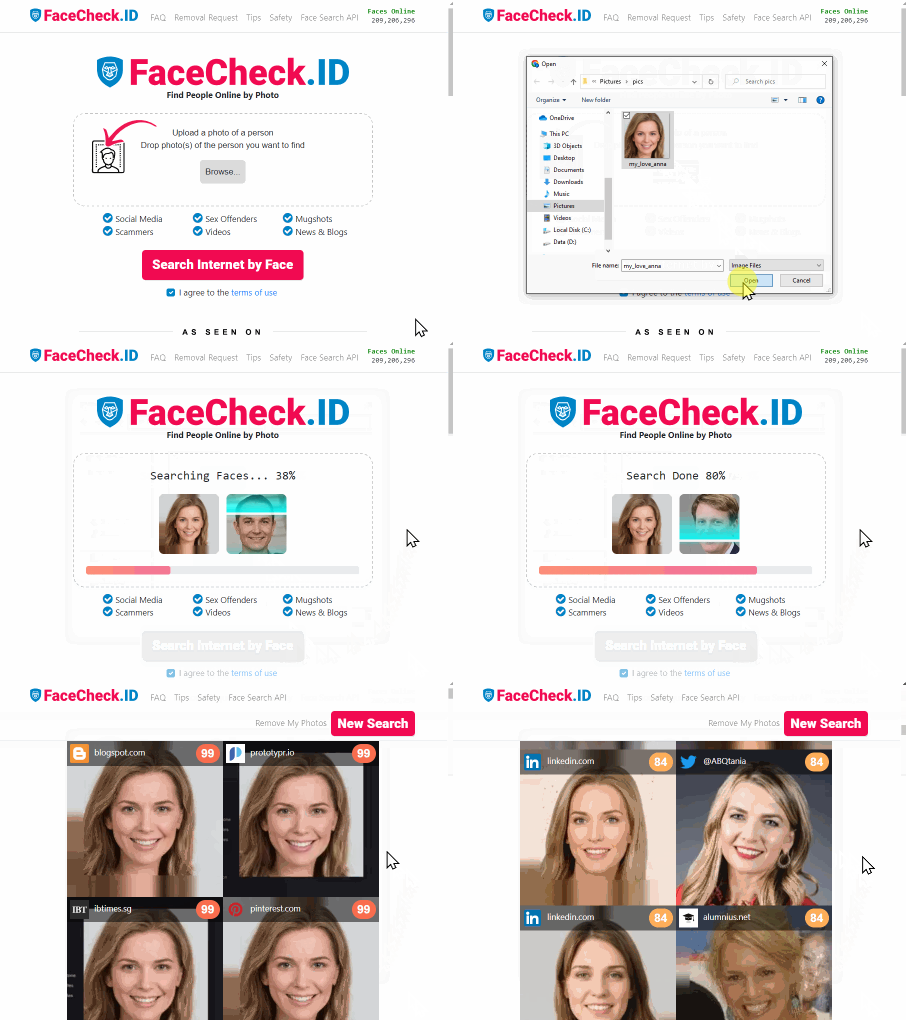
Reverse image search your pics!
In this article, we're going to discuss
- Mastering Search Engines for Finding Personal Photos
- Embracing Social Media Platforms to Locate Your Pictures
- Unraveling the Power of Reverse Image Search
- Exploring Specialized Photo-Sharing Platforms
- Diving into Online Publications and Event Photo Galleries
- Safeguarding Your Online Privacy and Image Rights
- Leveraging AI-Powered Facial Recognition Tools like FaceCheck.ID
- Staying on Top of Your Online Presence with Continuous Scanning and Alerts
- Finding Your Photos and Keeping Strangers Out of Them
- This AI website finds all of your photos
Mastering Search Engines for Finding Personal Photos
Start with the obvious: Google Images and Bing Images. The trick is layering search terms instead of just typing your name and hoping. Combine your name with a city, a former employer, a conference you attended, the name of your college rowing team — anything that narrows the field. Then run it again with nicknames, maiden names, and the misspelled version your aunt always uses on Facebook. The advanced search filters (size, color, usage rights) sound boring but actually do work.
Embracing Social Media Platforms to Locate Your Pictures
A huge chunk of your photo trail lives on Facebook, Instagram, and Twitter/X, and each one needs a slightly different approach.
On Facebook, the "Photos of you" view catches the tagged stuff, but untagged photos in friends' albums won't show up — those you have to find by browsing or asking. On Instagram, search your name as a hashtag, then check location tags for places you've been. On Twitter/X, search your name filter:images and don't forget to include @-mentions. While you're poking around, check your privacy settings. If a stranger can pull your last twelve profile pictures in a thirty-second scroll, so can someone building a fake account.
Unraveling the Power of Reverse Image Search
This is where it gets interesting. Upload a photo of yourself to Google Reverse Image Search or TinEye and they'll surface visually similar images across the web — including ones nobody tagged or captioned with your name. It's the single best way to catch a photo of you living a second life on a dating profile in another country.
Exploring Specialized Photo-Sharing Platforms
Flickr and Pinterest get skipped a lot, which is exactly why they're worth checking. Flickr still hosts a lot of event and conference photography — wedding photographers, meetup organizers, the guy who shows up to every 5K with a long lens. Pinterest is weirder; your photo might be saved to a stranger's mood board for reasons you'll never fully understand. Search both with keywords for events, hobbies, and your name.
Diving into Online Publications and Event Photo Galleries
Make a quick list of places you'd plausibly appear: industry conference recap pages, alumni newsletters, your gym's "members of the month" archive, the local paper's coverage of that charity 5K. These sites rarely get indexed well by Google Images, so you usually have to go directly and use their on-site search.
Safeguarding Your Online Privacy and Image Rights
Finding your photos is step one. Knowing what you can do about the ones you don't want online is step two. Most major platforms have a process for requesting takedowns of images posted without your consent, and copyright law generally favors the person who took the photo — which, if it's a selfie, is you. Save the URLs, screenshot the offending pages, and keep originals where you can.
Leveraging AI-Powered Facial Recognition Tools like FaceCheck.ID
FaceCheck.ID uses facial recognition rather than keywords or visual similarity, which means it can find photos of you where you look completely different — different hair, different decade, different glasses. Upload one clear shot of your face and it searches for matches across public web sources. The same technology, used by less friendly people, is part of why fake profiles using stolen photos have gotten so convincing. Better to know what's out there than to find out from a confused acquaintance.
Staying on Top of Your Online Presence with Continuous Scanning and Alerts
One search is a snapshot. The real goal is an ongoing system, so you find out when something new shows up instead of stumbling onto it months later.
- Google Alerts: Set up alerts for your name, common misspellings, and any unusual identifiers (a rare middle name, a specific job title plus city). Google emails you when new matching content gets indexed. Free, low-effort, surprisingly useful.
- Image Monitoring Services: Tools like Image Raider and Pixsy scan the web continuously for your images. The free tiers are limited but functional; the paid tiers add takedown assistance, which is worth it if you've ever had a photo lifted commercially.
- Social Mention: A real-time social search tool that catches mentions across multiple platforms in one place. Useful if you don't want to log into six apps to check the same thing.
- FaceCheck.ID Integration: Pair facial recognition searches with a recurring schedule so new matches surface automatically instead of waiting for you to remember to look.
- IFTTT (If This, Then That): Build small custom rules — "if my name appears on this site, email me." Niche, but powerful once you set it up.
Finding Your Photos and Keeping Strangers Out of Them
The combination that actually works: a thorough one-time sweep across search engines, social media, and reverse image tools, followed by a few alerts running in the background. You don't need to check every week. You just need to be the first person to know when something new about you shows up — especially if it's someone else using your face.
*
Aria Silverstone is a digital guru with a passion for helping people take control of their online presence. With more than ten years in internet safety, personal branding, and reputation management, Aria works with both individuals and businesses on the messier parts of life online. Off the clock, she travels, takes mediocre but enthusiastic photos, and haunts local bookstores. Follow her on Instagram.
*
This AI website finds all of your photos
FAQ
Why doesn't Google Images find every photo of me online?
Google Images only surfaces what its crawler has indexed and what its algorithm associates with your name. It misses untagged photos, images behind logins (most of Facebook, Instagram, private forums), event galleries on small sites with weak SEO, and any photo where your face appears but your name doesn't. That's why reverse image search and facial recognition tools like FaceCheck.ID catch a different layer — they match the face itself, not the caption.
What's the difference between reverse image search and facial recognition search?
Reverse image search (Google, TinEye) looks for visually similar or identical copies of a specific image — same composition, same lighting, often the same file. Facial recognition search (FaceCheck.ID, PimEyes) identifies your face across completely different photos, ages, hairstyles, and angles. If someone cropped, filtered, or edited your photo, reverse image search often misses it; facial recognition usually still matches. Use both — they answer different questions.
Can I get a photo of myself removed if I'm not the one who took it?
Sometimes, but copyright is not on your side here — the photographer owns the image by default, not the subject. Your stronger angles are platform-specific policies (Facebook, Instagram, and Google all have "image of me posted without consent" forms), privacy laws if the photo is intimate or taken in a private setting, and GDPR-style requests if you're in the EU or UK. Defamation or impersonation gives you additional leverage if the photo is being used to misrepresent you.
How do I find pictures of myself on sites that block Google from indexing them?
Search the site directly using its internal search rather than Google. Conference recap pages, alumni magazines, gym member spotlights, local newspaper archives, and Flickr group pools often deliberately block crawlers or use formats Google handles poorly. A useful trick: search Google for site:domain.com "your name" to confirm what's indexed, then go to the site itself and search its native tools for anything missed.
What should I do if I find a fake profile using my photos?
Screenshot everything first — the profile URL, photos, bio, any messages — before reporting it, because fake accounts often disappear the moment they're flagged. Then file an impersonation report with the platform (every major one has a dedicated form, usually faster than the generic "report" button). If the photos were taken from your own accounts, attach links proving you're the original poster. Run FaceCheck.ID afterward; impersonators frequently run multiple profiles using the same stolen photos.
Are facial recognition search tools like FaceCheck.ID legal to use?
Yes, in most jurisdictions, when used to search publicly available images of yourself or to investigate suspected impersonation. The legal gray area is using these tools to identify strangers without their consent — which is restricted under Illinois's BIPA, the EU's GDPR, and similar laws. Searching for your own face on public web sources is generally fine; building a database of other people's faces is where the rules tighten.
How often should I search for new photos of myself online?
A full manual sweep once or twice a year is enough for most people; alerts handle the in-between. Set Google Alerts for your name plus identifiers (city, employer, unusual middle name), and schedule a recurring facial recognition check quarterly. Increase frequency if you've recently changed jobs, gone through a public breakup, started dating online, or had any prior incident with impersonation or doxxing — those are the windows when new content tends to appear fastest.
Why are old photos of me still showing up after I deleted my accounts?
Deleting an account removes your access, not the data. Cached versions live on in the Wayback Machine, Google's image cache, scraper sites, and third-party archives that copied content while your profile was public. Photos shared by friends remain on their accounts regardless of what you delete. To actually scrub a cached image, you need to request removal from Google's "outdated content" tool and contact each archive site individually — there's no single delete button for the open web.
Do I look different enough in old photos that facial recognition will miss them?
Usually no, which surprises people. Modern facial recognition matches bone structure, eye spacing, and proportions rather than surface features, so it still finds you across decade-old photos, weight changes, different hair colors, and most glasses. Reliable defeaters are limited: heavy facial hair added or removed, significant cosmetic surgery, and obscured-eye sunglasses. If you're hoping an embarrassing 2009 photo is invisible because you look different now — it probably isn't.

More on Facial Recognition Search
How to Find Someone's Instagram Without Knowing Their Username
Got a photo from a party or event but have no clue who that person is on Instagram? Finding someone without a username feels impossible - until you discover the workaround that matches faces to profiles in seconds.
On the subject in other languages
 Como encontrar fotos suas na internet
 如何在互联网上找到自己的照片
 Jak najít své fotografie na internetu
 So finden Sie Bilder von sich selbst im Internet
 Cómo encontrar fotos tuyas en Internet
 Comment trouver des photos de vous sur Internet
 Come trovare foto di te stesso su Internet
 インターネット上で自分の写真を見つける方法
 인터넷에서 본인의 사진 찾는 방법
 Jak znaleźć zdjęcia siebie w Internecie
 Как найти свои фотографии в интернете
 كيفية العثور على صورك الشخصية على الإنترنت
 İnternet Üzerinde Kendi Fotoğraflarınızı Bulma
Popular Topics
Face Recognition Search Identity Social Media Image Search Facial Recognition How To Facebook Instagram Google Images Twitter TinEye Fake Profiles PimEyes Bing Images Fake Accounts Find Pictures Find Photos Image Search Google Reverse Image Search Google Privacy Laws Screenshot Similar Images ImpersonationPimEyes vs FaceCheck: Which is Better for Finding Faces Online?