Scammers
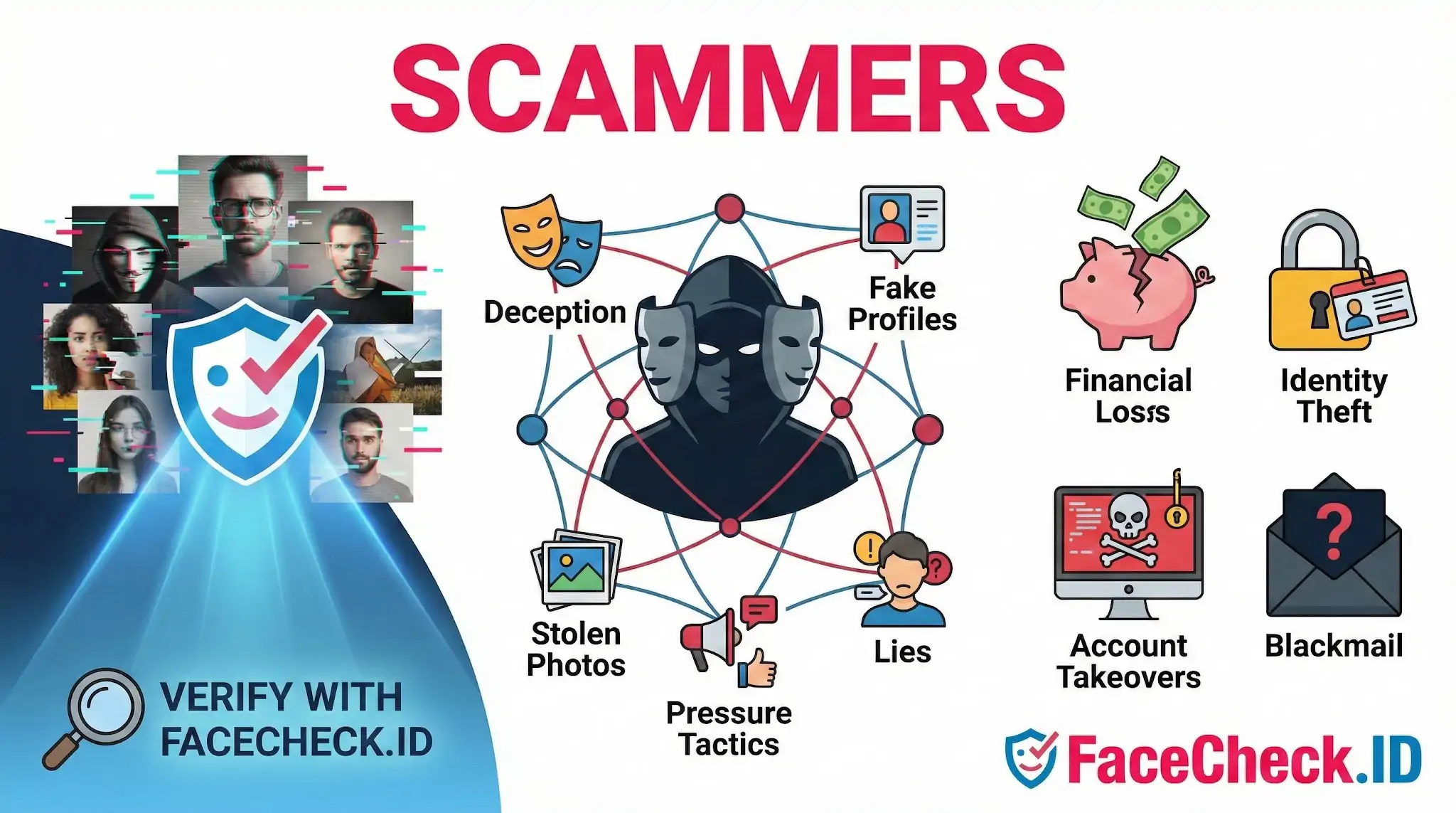
Scammers are one of the main reasons people run a face through a reverse image search. When a stranger online seems too perfect, too fast, or too eager to move money, the photos attached to their profile are usually the weakest link in their story, and a face search is often the quickest way to break it.
How scammers reuse faces across the web
Most online scams depend on a believable face. Building a convincing fake profile from scratch is hard, so scammers take shortcuts. They steal photos from Instagram models, LinkedIn professionals, deployed soldiers, doctors, and small-business owners, then attach those faces to invented names and life stories. The same set of photos often appears on dozens of accounts across different platforms and languages.
That reuse is what makes face-search tools effective against them. A romance scammer using stolen photos of a real oil-rig engineer is fine as long as nobody checks. The moment a target uploads one of those photos and finds the same face on a personal Facebook account in another country, on a Reddit thread warning about scams, or on an unrelated wedding announcement, the story collapses.
Common reuse patterns visible through face search include:
- The same face on multiple dating profiles with different names, ages, or locations
- A profile photo that traces back to a public figure, model, or influencer the scammer is impersonating
- Images that appear on scam-warning forums, anti-fraud blogs, or romance-scam databases
- A face that appears alongside a different real name on long-standing social accounts predating the suspicious profile
What face search can and cannot tell you about a scammer
Face search is good at one specific thing: showing where else a face appears on the public web. That alone resolves a large share of impersonation cases, because scammers rarely take the extra step of generating unique images for every victim.
It is less useful when:
- The scammer uses AI-generated faces that have no online footprint
- The stolen photos come from private accounts that search engines have not indexed
- The real person and the scam profile share a name and basic biography, making it harder to tell impersonation from a genuine account
- Image quality is poor, heavily filtered, or cropped in a way that throws off matching
A clean match to another identity is strong evidence of impersonation. A weak match, or no match at all, does not prove the person is real. It only means the photo has not been indexed in a place the search reached. Lookalikes also exist, so a single low-confidence result on an obscure profile is not enough to call someone a scammer on its own.
Reading face-search results when you suspect a scam
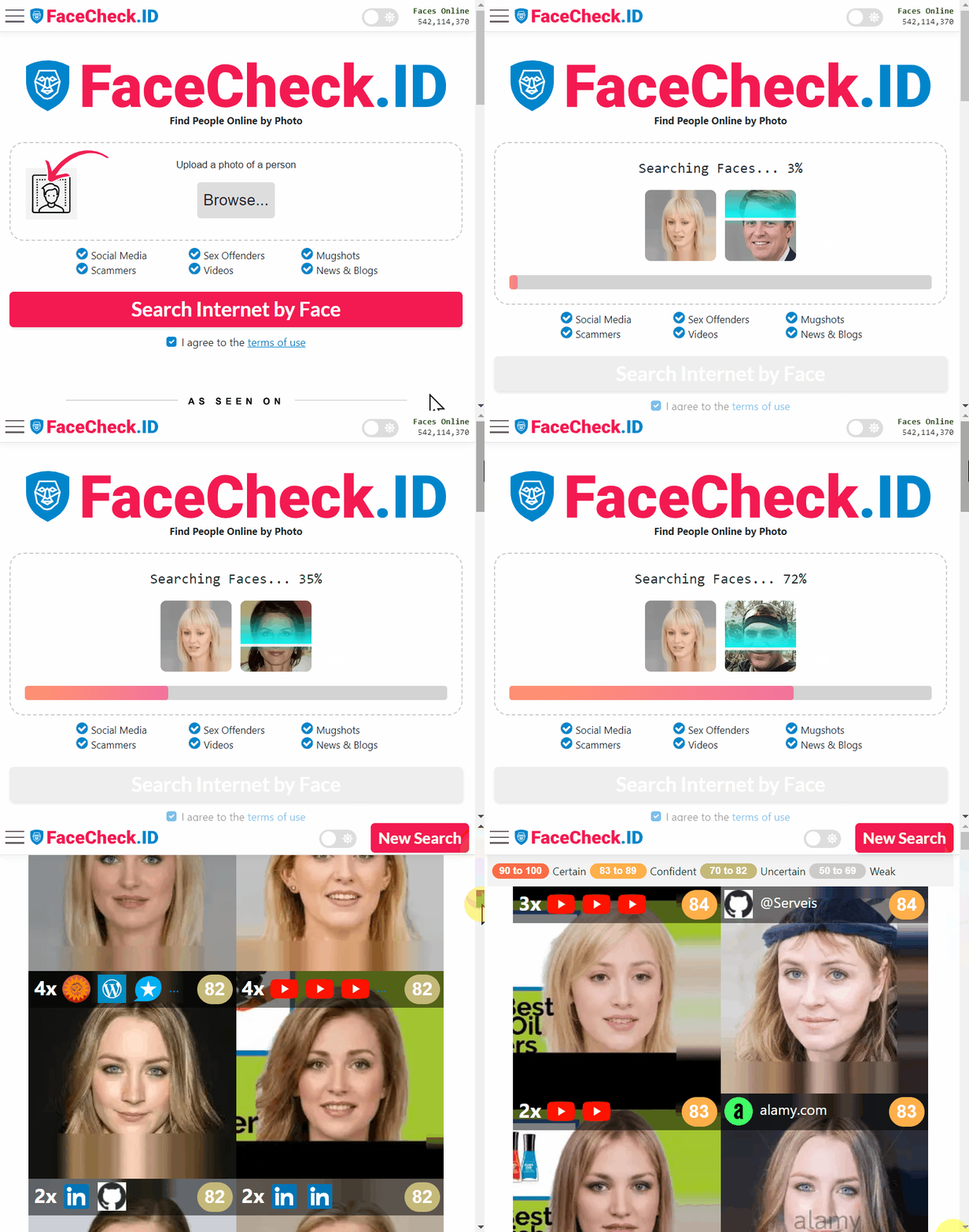
Treat the results as a starting point for verification, not a verdict. Useful signals include the age of the matching accounts, whether the original photos predate the suspicious profile, and whether the matched identity has any connection to the story you are being told. A profile claiming to be a 45-year-old American widower that traces back to a 22-year-old fitness influencer in Brazil is a clear answer. A profile that matches one slightly similar face on a forgotten blog from 2014 is not.
Combine face-search findings with other checks. Ask for a live video call on a platform the scammer did not choose. Look for inconsistencies in time zones, work schedules, or local details. Search the exact phrasing of unusual messages, since scammers often run the same scripts across many targets.
Limits and responsible use
Face search makes scammer impersonation much easier to detect, but it does not identify the actual person running the scam. The face you uncover is almost always a victim too, someone whose photos were stolen and reused without consent. Confirming that a profile is fake protects you from the fraud, but does not tell you who is behind the account, where they are, or how to recover money already sent. That part still requires reporting to the platform, the payment provider, and, where relevant, law enforcement.
FAQ
How do scammers exploit face recognition search engines in online fraud?
Scammers may use face search tools to research a target’s identity (names, workplaces, social profiles), harvest photos to build convincing fake accounts, or check whether stolen images are already associated with someone else. They can also test multiple photos to find the one that produces the fewest matches, making a fake persona harder to verify.
Can a face recognition search engine help me spot a romance scammer or impersonator?
Yes—face search can reveal whether the same face appears under different names, in stock-photo contexts, or across many unrelated profiles. If results show the photo tied to multiple identities, scam warning pages, or obvious reuploads, treat it as a red flag and verify through additional channels (video call, reverse image search, and independent contact details).
If FaceCheck.ID (or similar tools) returns matches, does that prove someone is a scammer?
No. Face search results are leads, not proof of wrongdoing. A match may be the same person, a look-alike, or a misattributed page. To avoid false accusations, corroborate with non-image evidence (consistent usernames, verified links, direct communication using known contact methods, and platform reports) before concluding someone is a scammer.
What are common red flags in face search results that suggest a scammer is using stolen photos?
Common signs include: the same face appearing on many unrelated profiles; the image showing up on modeling, actor, or stock-style pages; results in multiple languages or regions that don’t fit the person’s story; heavily edited/AI-enhanced versions of the same headshot; and pages reporting impersonation. Large inconsistencies in names, ages, or biographies across matches are especially suspicious.
What should I do if I find my photos being used by scammers via a face recognition search engine?
Collect evidence (URLs, screenshots, timestamps), report the impersonation to the platform(s) hosting the fake profiles, and ask for takedown under the site’s impersonation or copyright processes. Consider notifying contacts who might be targeted. If the face search service offers removal/opt-out or reporting, use those channels as well. For persistent abuse, document patterns and consider contacting local authorities or a legal professional.

Recommended Posts Related to scammers
-
How to Uncover a Romance Scammer Using Just a Picture
The power of technology and the internet has made it possible to discover more about individuals, including potential romance scammers. This step-by-step guide will walk you through the process of identifying a romance scammer using just a picture. FaceCheck.ID is made to find romance scammers!
-
Romance Scammer Photos: How to Reverse Search and Expose Stolen Identities
Scammers don't generate their photos from scratch. The Anatomy of a Scammer's Photo Library. Romance scammers operate like content curators.
-
The Rise of Romance Scams: Protect Your Heart and Wallet
The heartless tactics of romance scammers: How they manipulate and deceive their victims. Hey, have you heard about those romance scammers? Learn about Romance Scammers' Tactics.
-
Unmasking Romance Scams: Expert Tips to Identify and Avoid Falling Victim
How Romance Scammers Operate. Instead of inventing a crisis, the scammer manufactures leverage: they coax you into sharing intimate photos or video, then threaten to send it to your contacts, your employer, your family, unless you pay. Services like FaceCheck.ID let you take a photo of your online match and check whether that same face shows up elsewhere — sometimes on known scammer lists, sometimes attached to a completely different name on a completely different platform.
-
Elder Fraud Statistics 2025: FTC Reports $2.4 Billion Lost to Scams Targeting Seniors
The $2.4 Billion Problem: What Scammers Don't Want Your Parents to Know. 📱 How Scammers Make Contact. Social media is now the top way scammers reach older adults.