How to Reverse Image Search from Your iPhone

Reverse image search is the trick of asking the internet "what is this?" by handing it a picture instead of words. Useful for products, places, the dog breed your neighbor refuses to identify, and — with the right tool — actual people.
In this article, we're going to discuss
- Reverse Image Search on iPhone
- Reverse Image Searching from Your iPhone is Easy
- Google Images vs. FaceCheck.ID: Tools at a Glance
- Basic Methods for Reverse Image Search from iPhone
- FaceCheck.ID: The Best Tool for Searching for People
- 4 Steps to Reverse Image Search from Your iPhone
- Specialized Tools, Social Media, and Advanced Tips
- Using Google for Products, Objects, and Places
- How to Reverse Image Search a Screenshot on iPhone
- Unlocking Full Potential
- Ethical Considerations, Legal Compliance, and Safety
- Conclusion
- How to reverse image search on iPhone or iPad
- How to Reverse Image Search on iPhone
Reverse Image Search on iPhone
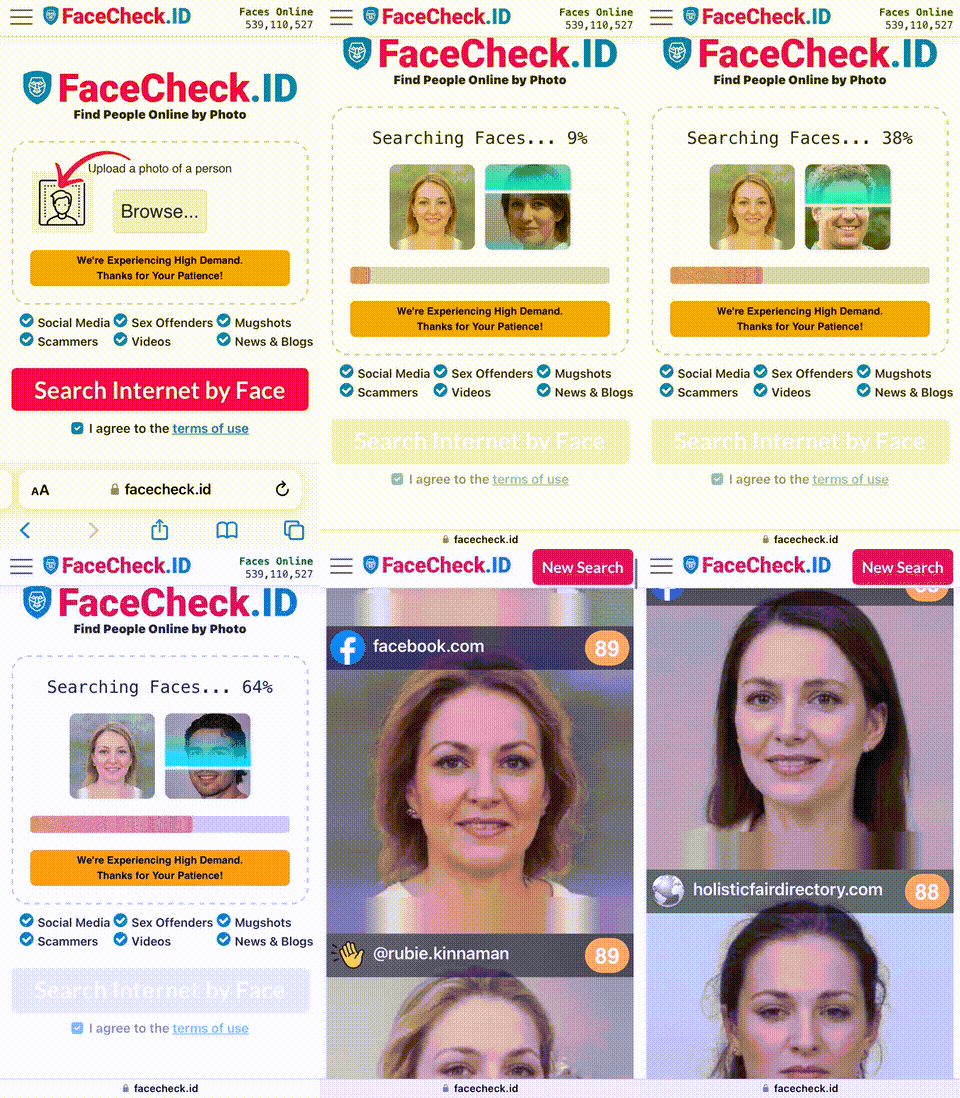
The FaceCheck.ID reverse image search web app works on every recent iPhone, including the iPhone 14 Pro, iPhone 14, iPhone 13, iPhone SE, and iPhone 12.
Reverse Image Searching from Your iPhone is Easy
Your iPhone can do this out of the box. No app, no sideloading, no command line. What you need is the right site for the right job — and those are two different sites depending on whether you're chasing a sneaker or a face.
Google Images vs. FaceCheck.ID: Tools at a Glance
Google Images: best for products, objects, and places.
FaceCheck.ID: built specifically to find people by their face.
Basic Methods for Reverse Image Search from iPhone
For an object, a landmark, or that lamp you saw in someone's apartment, Google Images is the workhorse. It's been indexing the visual web for years, and it's right there in Safari.
FaceCheck.ID: The Best Tool for Searching for People
For faces, Google is the wrong instrument. It'll show you visually similar pixels — same hair color, same lighting — but not the same person. FaceCheck.ID is purpose-built for the "who is this" question.
4 Steps to Reverse Image Search from Your iPhone
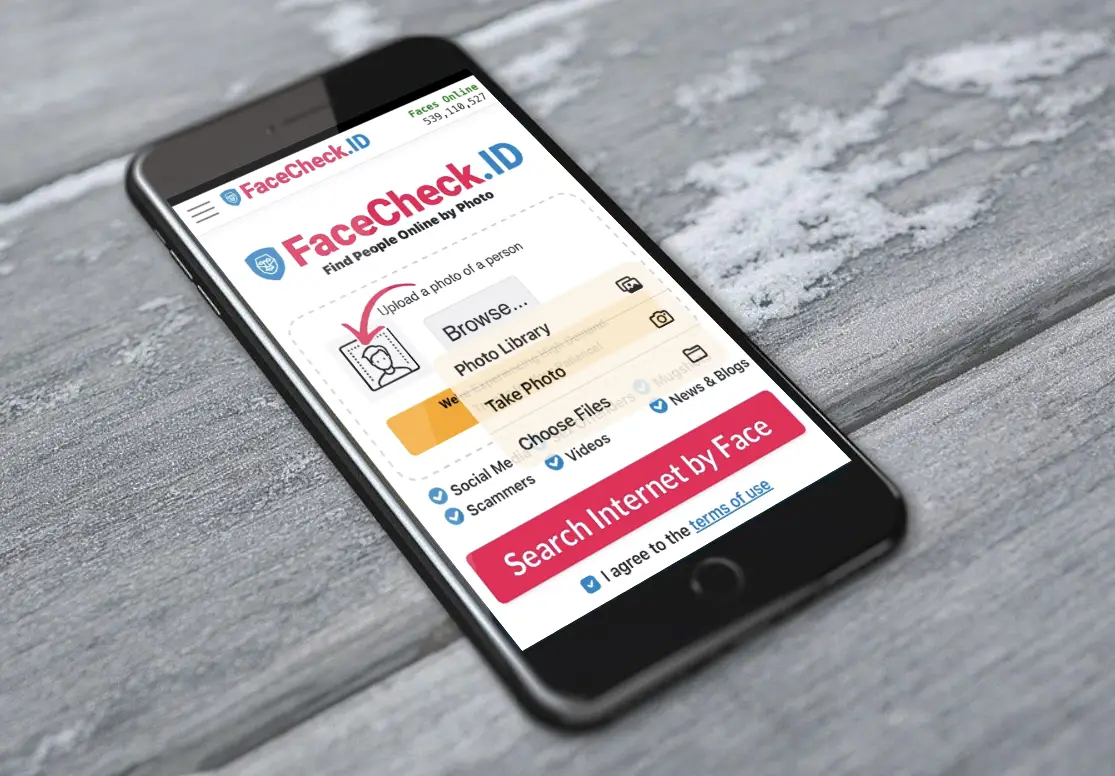 Step 2. Tap the "Search Internet by Face" button
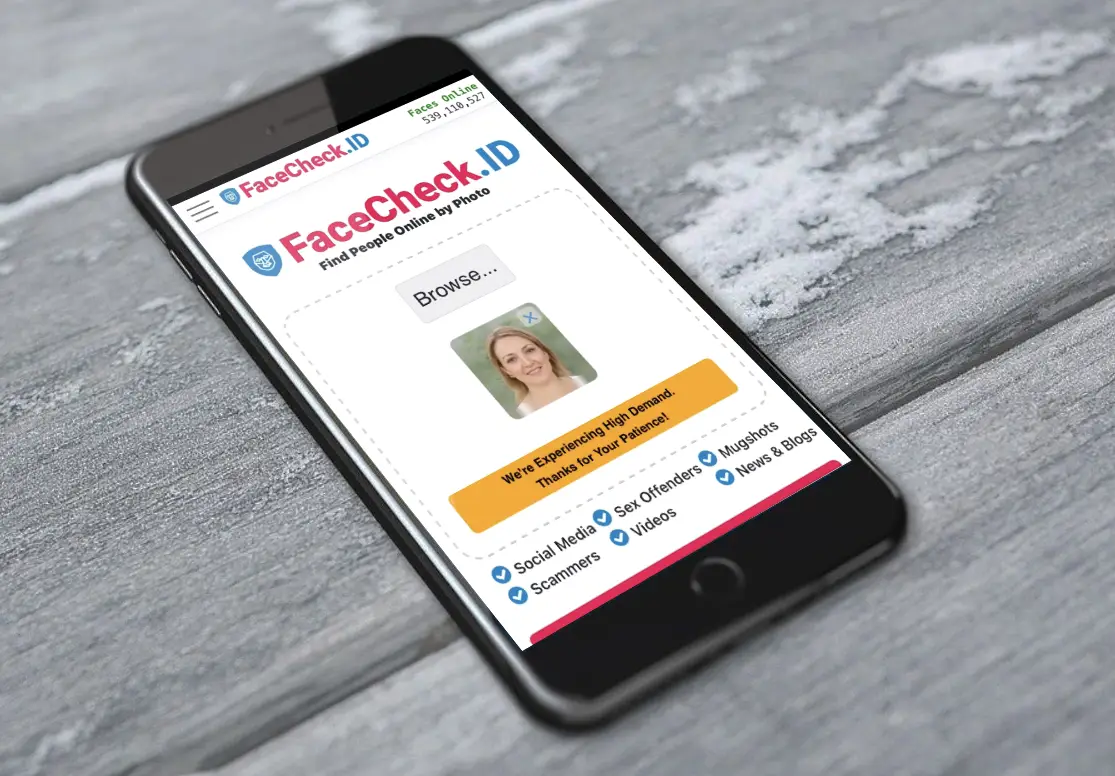 Step 3. Wait about 20 seconds while it searches
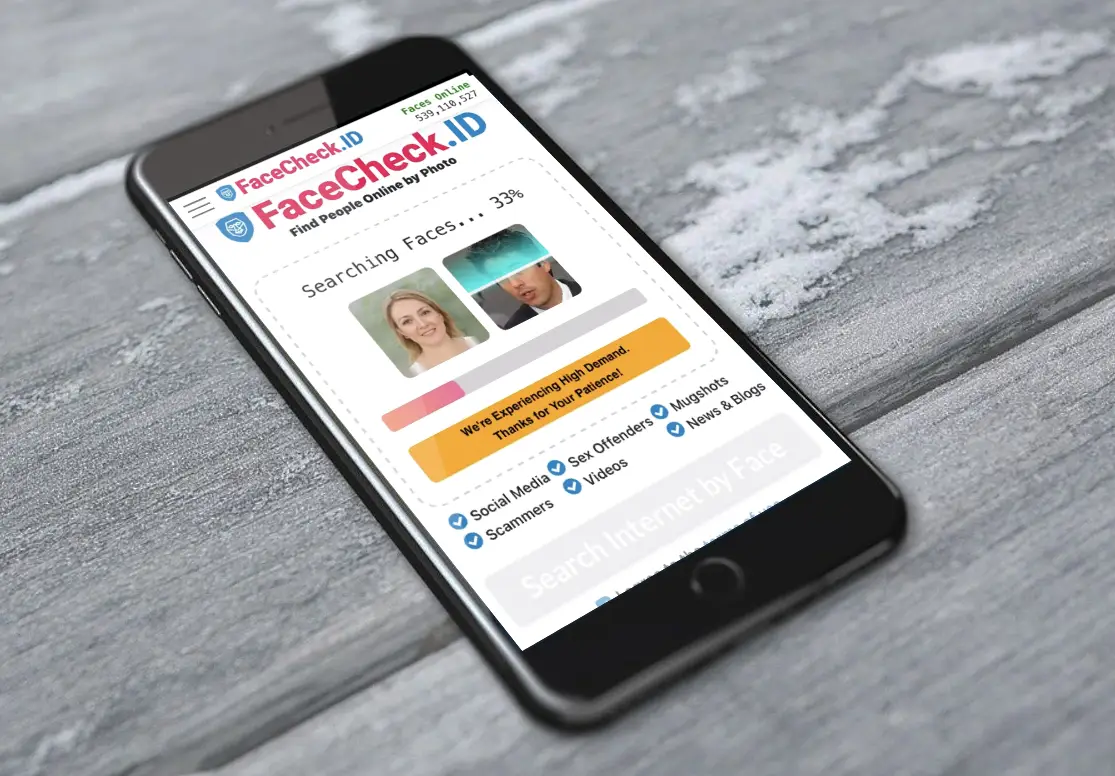 Step 4. Done. Scroll the results.

Two tools, one phone, most of the visual internet. Google for things, FaceCheck.ID for people.
Specialized Tools, Social Media, and Advanced Tips
FaceCheck.ID at a glance
- Built around facial recognition, not generic image matching.
- Designed for responsible use, with privacy guidelines baked in.
- Works in mobile Safari — no app to install.
Other reverse image apps worth knowing
- TinEye: the go-to for finding where an image first appeared online.
- CamFind: snap a photo, get back shopping links and related info.
Social platforms with their own image search quirks
- Facebook: the search bar accepts uploaded images and returns visually related posts.
- Instagram: not a true image search, but hashtags and tagged photos can get you surprisingly far.
Combining methods
- Use Google for the jacket in the photo, FaceCheck.ID for the person wearing it.
- iPhone metadata apps can show you when and where a photo was taken — context that often answers the question before you search.
Using Google for Products, Objects, and Places
- Open Safari and find the image you want to search.
- Press and hold the image, then tap Copy.
- In a new tab, go to Google Images.
- Tap the camera icon in the search bar, choose Paste Image URL, and search.
How to Reverse Image Search a Screenshot on iPhone
Taking the screenshot: on most modern iPhones, press the side button and volume up at the same time. Older models: home button plus the top or side button. You'll hear the shutter click and see the thumbnail slide in.
Uploading it: open FaceCheck.ID or Google Images. On FaceCheck.ID, tap the grey browse button and pick the screenshot. On Google, tap the camera icon, choose Upload an image, and pick the same file. Then wait while the internet does its part.
Unlocking Full Potential
Between FaceCheck.ID for faces and Google for everything else, an iPhone covers the vast majority of "what is this?" questions a person can throw at the internet — research, journalism, online dating due diligence, identifying a houseplant before it dies.
Ethical Considerations, Legal Compliance, and Safety
Ethics
Reverse image search can pull up real information about real people. Before you run a search, be clear with yourself about why you're running it. Looking up the person who matched with you on a dating app is one thing; digging into a stranger you spotted on the street is another.
A few ground rules:
- Have a reason. "I want to know if this person is who they say they are" is a reason. Idle curiosity about someone who didn't ask to be searched is shakier ground.
- Respect privacy. If the situation calls for consent, get it.
- Follow the platform's terms. FaceCheck.ID has guidelines for a reason; don't be the test case.
Legal compliance
Laws around facial recognition and image search vary a lot by country and even by state. The EU treats biometric data differently from the US, which treats it differently from, say, Illinois (which treats it differently from the rest of the US). Know what applies where you are, and check with a lawyer if you're using these tools in a professional context.
Safety
- Use HTTPS connections. Every reputable tool here already does.
- Stick to well-known platforms. If a "free reverse image search" app is asking for your contacts and camera roll, close the tab.
- Check reviews before installing anything new.
Conclusion
Reverse image search on iPhone is genuinely useful, occasionally a little eerie, and entirely within reach of the phone already in your pocket. Google for the things in the world, FaceCheck.ID for the people in the photos. Use both with some judgment about what you're searching and why, and the rest mostly takes care of itself.
---
Two video walkthroughs if you'd rather watch than read.
How to reverse image search on iPhone or iPad
How to Reverse Image Search on iPhone
FAQ
Why doesn't Google reverse image search work well for finding people?
Google Images matches visual patterns, not identities. It indexes pixels — colors, shapes, lighting, hair — so it tends to return photos that look like your image rather than other photos of the same person. A face in different lighting, angle, or age will usually slip past it. FaceCheck.ID uses facial recognition trained specifically to match the same person across different photos, which is a fundamentally different task.
Can I reverse image search directly from my iPhone's Photos app?
Not directly into FaceCheck.ID, but iOS has a built-in shortcut called Visual Look Up that handles plants, landmarks, pets, and some objects — tap the info (i) button on a photo and look for a small sparkle icon. For faces or anything Visual Look Up can't identify, open Safari, go to FaceCheck.ID or Google Images, and upload the photo from your camera roll using the browse button.
How accurate is FaceCheck.ID compared to other face search tools?
FaceCheck.ID is generally strong on indexed faces — public social media, news photos, mugshot databases, and similar open sources — but it can't find someone who has no photos online. Accuracy drops sharply with low-resolution images, heavy filters, sunglasses, or extreme angles. Front-facing photos at roughly 200x200 pixels or larger give the best results. Expect a confidence score with each match; treat low-scoring matches as leads, not confirmations.
Is it legal to reverse image search someone's face without their permission?
In most of the US it's legal to search publicly available images, but Illinois (BIPA), Texas, and Washington have biometric privacy laws that can apply, and the EU's GDPR treats facial data as a special category requiring a lawful basis. Personal use to verify someone you're already interacting with — a date, a buyer, a tenant — is generally on solid footing. Commercial use, surveillance, or building a database is where you need a lawyer.
Why do I get "no results" when I know the person is online?
The most common reasons are image quality, profile photo settings, and platform coverage. FaceCheck.ID can only match against images its crawler has indexed, so locked Instagram accounts, private Facebook profiles, and freshly uploaded photos won't appear. Try a clearer, larger version of the face, ideally one where it occupies most of the frame, and run two or three different source photos before concluding the person isn't findable.
What's the difference between copying an image URL and uploading a file on iPhone?
Uploading a file from your camera roll is more reliable. The "Paste Image URL" method only works if the original image is still hosted at that exact link and isn't behind a login wall — Instagram, Facebook, and most messaging apps serve images through expiring URLs that break within hours. For screenshots, photos you took yourself, or anything sourced from a logged-in app, save it to Photos first and upload the file.
Can I reverse image search a video or a frame from a TikTok?
Not directly — every reverse image tool needs a still image. The workaround on iPhone: pause the video at the moment you want, take a screenshot (side button + volume up), then crop it to the face or object using the Markup tool before uploading. A tight crop around a single face gives FaceCheck.ID much better results than a full screenshot with UI elements, captions, and other people in the frame.
Does using FaceCheck.ID notify the person I'm searching for?
No. The person whose face you upload is not notified, and the platforms where their photos live (Instagram, LinkedIn, news sites) don't see your query — FaceCheck.ID searches its own index of previously crawled images. That said, "they won't know" isn't the same as "it's appropriate." The ethical bar is whether you have a legitimate reason to identify them, not whether you'll get caught.
How long does a face search actually take on a mobile connection?
About 20–30 seconds on a normal 5G or LTE connection, occasionally longer during peak hours. The upload itself is the slow part on mobile — a 4MB iPhone photo takes a few seconds to send. If you're searching repeatedly, resize photos to around 1000 pixels wide before uploading; you'll lose nothing in match quality and cut upload time noticeably.

Learn More...
How to Reverse Image Search a Screenshot with FaceCheck.ID
Got a screenshot but no clue who's in it? Regular search engines aren't great at matching faces to identities, which can leave you stuck. Here's a step-by-step workaround to turn any screenshot into useful search results - whether you're trying to verify someone's identity or just curious.
On the subject in other languages
 Como Fazer uma Pesquisa de Imagem Invertida do Seu iPhone
 如何从你的iPhone进行反向图片搜索
 Jak provést obrácené vyhledávání obrázků z vašeho iPhone
 So können Sie die Rückwärtssuche von Bildern auf Ihrem iPhone durchführen
 Cómo hacer una búsqueda inversa de imágenes desde tu iPhone
 Comment faire une recherche inversée d'image depuis votre iPhone
 Come effettuare la ricerca inversa di immagini dal tuo iPhone
 あなたのiPhoneから画像検索を逆さにする方法
 아이폰에서 역 이미지 검색 하는 방법
 Jak przeprowadzić odwrotne wyszukiwanie obrazów z Twojego iPhone'a
 Как выполнить обратный поиск изображений с вашего iPhone
 كيفية البحث عن طريق الصورة المعكوسة من الآيفون الخاص بك
 iPhone'unuzdan Ters Resim Araması Nasıl Yapılır
Popular Topics
Identity Social Media Image Search Facial Recognition Reverse Image Search How To Facebook Instagram Google Images TinEye Find Someone LinkedIn Mugshots Online Dating Biometric Image Search App Privacy Laws Screenshot iPhone Face SearchBest Reverse Image Search Engines: PimEyes vs FaceCheck Review