Romance Scams: How to Spot and Stop Them in 2026
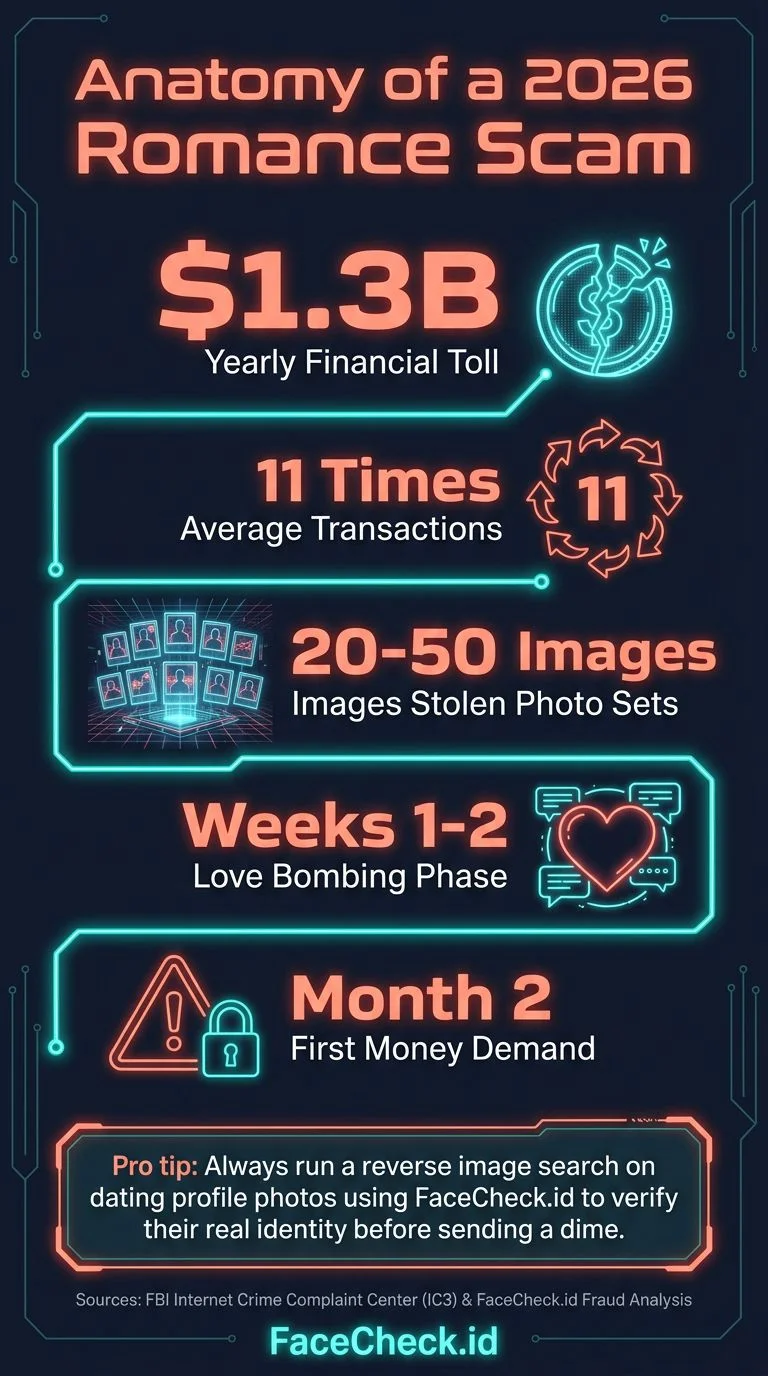
In January 2026, the FBI's Internet Crime Complaint Center released its annual report. Romance scams hit $1.3 billion in reported losses for the third consecutive year. But here's the number that doesn't make the headlines: the average victim sends money 11 times before realizing they've been scammed. Not once. Not twice. Eleven separate transactions to someone they've never met in person.
That gap between the first "hello" and the moment everything clicks is where scammers operate. And it's getting wider, not narrower, because the playbook has changed.
In this article, we're going to discuss
The 2026 Romance Scam Playbook
Five years ago, romance scams were clumsy. Stolen military photos, broken English, "I'm on an oil rig and can't video call." Those still exist, but the scammers who make real money have upgraded.
The Photo Game
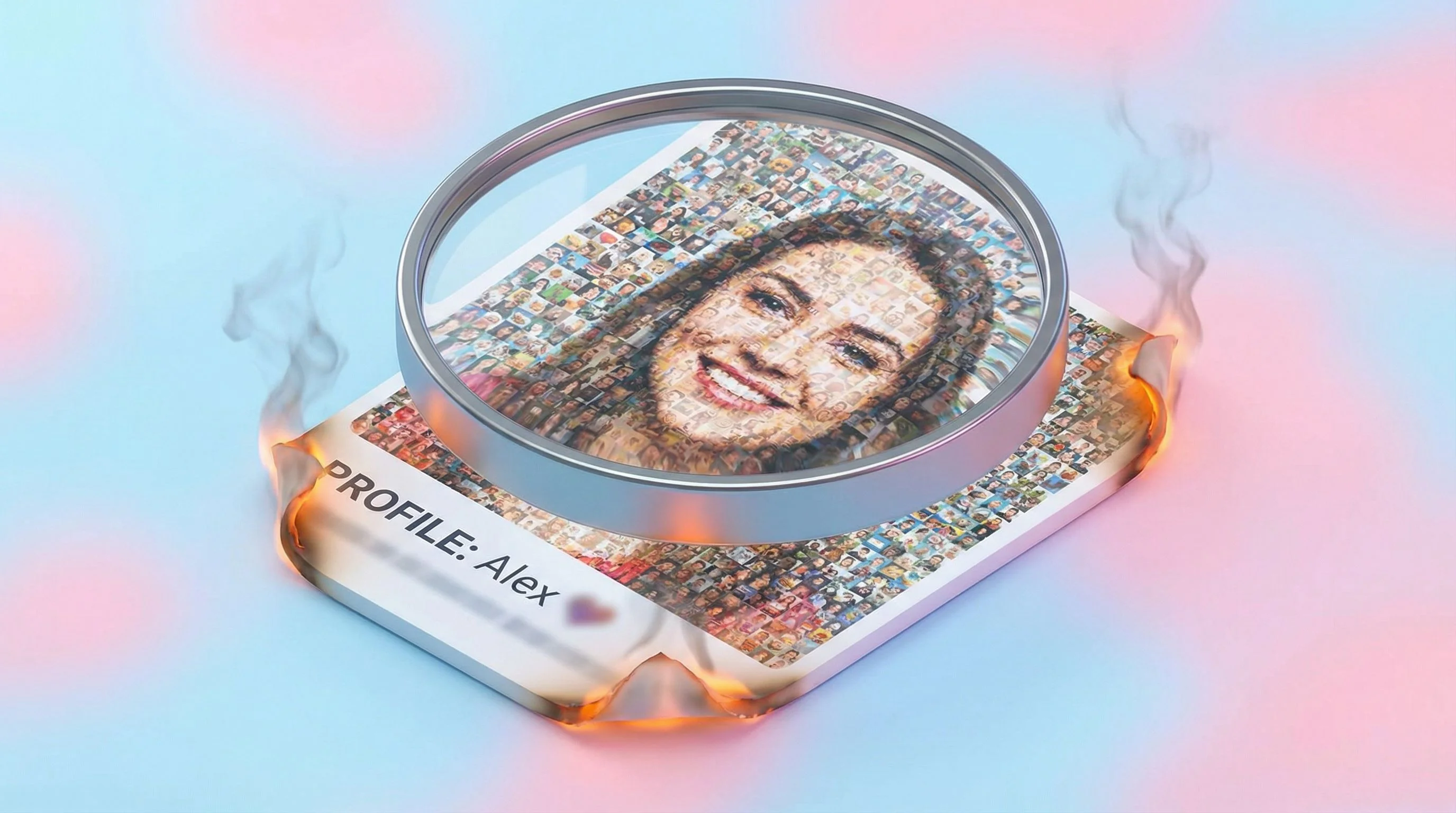
Modern romance scammers don't just steal one photo. They build entire fake lives using 20-50 images pulled from a single real person's social media. A Tuesday gym selfie. A Saturday brunch photo with friends (cropped). A holiday snap at the beach. The result looks like a real person's profile because the photos are from a real person.
The person whose photos get stolen is almost always an attractive but non-famous individual: a fitness coach with 8,000 followers, a travel nurse who posts frequently, a retired military officer with a public Facebook page. Famous enough to have lots of photos online, obscure enough that their target won't recognize them.
The Script
Scammers follow documented scripts that get shared and sold in fraud communities. The pattern:
- Week 1-2: Intense messaging. Compliments. "I've never connected with someone like this." They ask about your day, remember details, respond quickly.
- Week 3-4: The relationship escalates fast. Talk of a future together. "What if I visited?" or "I could see myself moving there."
- Month 2: The first crisis. A medical emergency, a frozen bank account, a business deal gone wrong. The ask is small: $200-500.
- Month 3+: Escalation. Bigger amounts, more creative stories. Cryptocurrency "investments." Gift cards (untraceable). Wire transfers.
"He told me his daughter needed surgery and his accounts were frozen because he was overseas. I sent $3,000 that day. Looking back, I can't believe how obvious it was. But when you're in it, you don't see it." Posted on r/Scams, 2025
AI-Generated Photos and Deepfakes
The newest threat: scammers who don't steal photos at all. They generate them. Tools like Midjourney and Stable Diffusion can create photorealistic faces that don't belong to any real person. No reverse image search will find a match because the person literally doesn't exist.
Some warning signs of AI-generated profile photos:
- Asymmetric earrings or accessories
- Background details that blur or morph (look at edges of hair, teeth, fingers)
- Skin that looks slightly too smooth, like a magazine cover
- Only headshots available, no full-body or candid photos
Deepfake video calls are also emerging. They're still imperfect in 2026 (watch for lag when the person turns their head, or lighting that doesn't match the background), but they're good enough to fool someone who wants to believe.
The Red Flags That Actually Matter
Forget the obvious ones. Yes, someone asking for gift cards is a scam. Here are the subtler signals that catch people earlier:
They Resist Anything Verifiable
- Won't do a live video call, or the "call" has suspicious quality issues
- No social media presence outside the dating app, or an account created recently with few connections
- Photos that look slightly too polished for casual selfies
- Can't meet in person, always with a plausible excuse
The Emotional Manipulation Pattern
- Declarations of love within the first two weeks
- Isolation attempts: "Don't tell your friends about us yet, they won't understand"
- Guilt when you ask reasonable questions: "Don't you trust me?"
- Creating urgency around money: "If I don't get this by Friday, I'll lose everything"
Financial Red Flags
- Any request for money, regardless of the story
- Cryptocurrency "investment opportunities" they want to teach you
- Requests for gift cards (Amazon, Google Play, Steam, iTunes)
- "I'll pay you back double" promises
- Asking you to receive and forward money (this makes you a money mule, which is a federal crime)
How to Verify Someone You Met Online
You don't need to be a private investigator. You need about 10 minutes and a clear head.
Step 1: Reverse Search Their Photos
Save their profile photos (screenshot works fine) and run them through a face search tool. FaceCheck.id searches across social media, news sites, and public databases to find where a face appears online. If their photos show up linked to a completely different name, location, or dating profile, that's your answer.
This is different from a regular reverse image search. Tools like Google Lens match images, not faces. If the scammer cropped, filtered, or slightly edited the stolen photo, Google won't catch it. Face search matches the actual geometry of the face, so edits don't matter. For context on why this distinction matters, here's how face search actually works.
Step 2: Check for AI-Generated Images
If the face search returns zero results, that's suspicious on its own. Most real people have some photo presence online. Zero matches could mean the photos are AI-generated. Look for the visual tells mentioned above, and try searching a different photo from their profile.
Step 3: Verify Their Story
- Google their name + city + profession. Real people leave digital footprints.
- Check LinkedIn for their claimed employer and job title.
- If they say they're military, the Department of Defense does not confirm or deny service members' identities to random callers. But you can check if the unit they claim exists.
Step 4: Insist on a Live Video Call
Not a pre-recorded video. Not a voice call. A live video call where you can ask them to do something spontaneous (wave, hold up a specific number of fingers, turn their head). Refusal is a dealbreaker.
What to Do If You've Already Sent Money
If you realize you've been scammed, speed matters. Here's the priority order:
- Stop all contact immediately. Block them everywhere. They will try to re-engage with guilt, threats, or a new crisis.
- Contact your bank or payment provider. Wire transfers can sometimes be recalled within 24-72 hours. Credit card charges can be disputed. Cryptocurrency transfers are almost always unrecoverable.
- File reports:
- FBI's IC3: ic3.gov
- FTC: reportfraud.ftc.gov
- Your local police (get a report number for your bank)
- Document everything. Screenshots of conversations, transaction receipts, profile details. Don't delete anything.
- Tell someone you trust. Scammers rely on shame and isolation. Talking about it breaks both.
Will You Get Your Money Back?
Honestly, probably not. The FBI's recovery rate for romance scam funds is low, especially for wire transfers and cryptocurrency. But filing reports does two things: it creates a paper trail for your financial disputes, and it helps law enforcement track and eventually shut down scam operations.
Who Gets Targeted (It's Not Who You Think)
The stereotype is a lonely elderly person. The data tells a different story.
According to the FTC's 2025 consumer report:
- Adults 18-29 reported romance scams at nearly the same rate as adults 60+
- The 30-49 age group lost the most money per incident (median $9,000)
- Men and women are targeted equally, though the scam scripts differ
- LGBTQ+ communities are disproportionately targeted, particularly through apps with smaller user bases where verification is weaker
Scammers target vulnerability, not demographics. Someone going through a divorce, someone who recently moved to a new city, someone who just lost a spouse. The common thread is emotional availability, not gullibility.
The "Pig Butchering" Variant
The fastest-growing romance scam variant in 2025-2026 isn't just about love. It's called "pig butchering" (sha zhu pan), and it combines romance with fake cryptocurrency investment.
The pattern:
- Romance scammer builds trust over weeks
- Casually mentions making money with crypto trading
- Shows you their "portfolio" (a fake trading platform)
- Convinces you to "invest" through their platform
- You see fake gains on screen, invest more
- When you try to withdraw, the platform demands "tax payments" or "verification fees"
- The platform disappears, along with everything you deposited
These operations are often run by trafficking victims forced to work in scam compounds in Southeast Asia. The human cost runs in both directions.
FAQ
How common are romance scams?
The FBI reports over 19,000 romance scam complaints annually in the US alone, with losses exceeding $1.3 billion. But these numbers only capture reported cases. The actual figure is estimated at 5-10x higher, since many victims never report out of embarrassment.
Can scammers fake video calls?
Yes, though imperfectly. Deepfake video in real-time still has tells: slight lag when moving, lighting inconsistencies, and difficulty with spontaneous gestures. Always ask for something unscripted during a video call. If they refuse or the call "drops" when you ask, that's a red flag.
Should I confront the scammer?
No. Confrontation gives them information about what tipped you off (which they use to improve their scripts for the next victim). It also sometimes triggers threats or harassment. Block, report, and move on.
Is it illegal to search someone's photo online?
Searching a publicly available photo through tools like FaceCheck.id is legal. You're searching public data. The legal issues arise from what you do with results: stalking, harassment, or discrimination. Using face search to protect yourself from fraud is exactly the kind of use case these tools are built for.
What if they've already sent me money?
If someone you met online sends you money and asks you to forward it, stop immediately. This is money laundering. The funds are likely stolen (from other scam victims or compromised bank accounts). You could face criminal charges as a money mule even if you didn't know the money was dirty.
Protecting Yourself Going Forward
The single most effective habit: run a face search on anyone you're talking to online before you develop feelings. It takes 30 seconds with FaceCheck.id and could save you months of emotional investment in someone who doesn't exist. Think of it like checking reviews before buying something expensive, except what you're protecting is worth a lot more than money.

Read More on Search by Image
140+ Common Romance Scammer Lines, Excuses & Red Flags to Watch For in 2026
Romance scammers keep using the same tired scripts—fake emergencies, "classified" military jobs, and crypto schemes. Learn to recognize 140+ real phrases they use so you can spot the con before your heart (or wallet) takes the hit.
On the subject in other languages
 Golpes românticos: como identificá-los e impedi-los em 2026
 网恋骗局:2026 年如何识破并阻止它们
 Romantické podvody: Jak je v roce 2026 rozpoznat a zastavit
 Liebesbetrug: So erkennen und stoppen Sie ihn 2026
 Estafas románticas: cómo detectarlas y detenerlas en 2026
 Arnaques sentimentales : comment les repérer et les arrêter en 2026
 Truffe sentimentali: come riconoscerle e fermarle nel 2026
 ロマンス詐欺:2026年に見抜き、阻止する方法
 로맨스 사기: 2026년에 식별하고 막는 방법
 Oszustwa romantyczne: jak je rozpoznać i powstrzymać w 2026 roku
 Романтическое мошенничество: как распознать и остановить его в 2026 году
 عمليات الاحتيال العاطفي: كيف تكتشفها وتوقفها في 2026
 Aşk Dolandırıcılıkları: 2026'da Bunları Tespit Etme ve Durdurma Yolları
Popular Topics
Deepfake Video Deepfake Identity Social Media Image Search How To Facebook Image Search Tool LinkedIn Scammers Law Enforcement Romance Scammers Romance Scam Reverse Search Screenshot Google Lens Face Search Ai-Generated Image Pig ButcheringHead-to-Head Comparison: PimEyes vs FaceCheck for Face Searches